By Adagbo Onoja
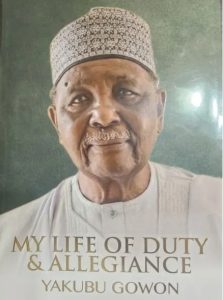
It has always been clear that General Gowon would provoke standpoint responses should he ever choose to write his memoir. The obviously deliberate delay in releasing the autobiography has done nothing to dampen his predictable critics. There’s nothing wrong with the criticisms coming his way following release of the autobiography if the criticisms are taken as a healthy sign of a community that is alive and living up to the discursive nature of society.
Ever at the center of history!
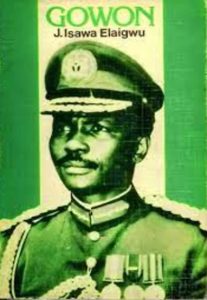
Although General Gowon was standing at a vantage point from which he could see more than anyone else what was going on in Nigeria as long as he was Commander-in-Chief of the armed forces, the problem is that truth is specific. In other words, he could only see the truth Dodan Barracks enabled him to see, not the truth of someone else in Owerri or Aba or Onitsha at the time. So, his own version of the truth is bound to come under fire.
But, leafing through (as opposed to reading) Gen Gowon’s massive autobiography, one immediately comes across a succession of tension, bloodshed, disruption, betrayal and misery even on the federal side. In one instance, the Commander-in-Chief himself was overthrown in a plot in which two of the ring leaders were his own creations, so to say. It was worse on the secessionist side where, other than misery, the war went to as far as shooting of those Ojukwu read treason into their conduct of the war.
All such terrible manifestations of war leaves one with no other option than agreeing with Bongos Ikwue, the artistic philosopher and music man in Otukpo, Benue State that the only war anyone ever wins is the war never started at all. There is no knowing where Bongos Ikwue assembled his large stock of wisecracks but anyone who goes to him will encounter quite a number of them. The one under reference now is the one which General Gowon’s autobiography makes referencing compelling. It is Ikwue who told Intervention in a 2024 interview that once there is a war, it cancels out the notion of one side emerging as victor and another as the vanquished.
One finds Bongos’ analysis to be an interesting one because it is the same point which students of Global Ethics encountered in the post-Cold War. The post-Cold War was a glorious moment for that field of study as the theory of ‘Just War’ made its way back into academic prominence. But that was also the time critical security studies was picking its way into prominence. The dynamics worked out in such a manner that critical security studies spotted the contradictions of ‘Just War’ theory, took aim and punctured it.
The masterminds of the Welsh School of critical security studies (scholars falling back on critical theory (with capital ‘C’ and based mainly at the University of Aberystwyt in the UK) particularly argued that there can be no such thing as a war which is just. The debate went into many rounds, including vicious attacks on established names in that realm in political theory. One could conclude that the ‘war’ ended with Terry Nardin’s short but powerful journal article titled ‘Humanitarian imperialism’ which was itself a response to another article that was arguing a humanitarian prism for US invasion of Iraq. His was such an epistemic hit at wars seemingly fought in the name of saving stranded populations but which were cases of clothing imperialism in humanitarian garbs. Even though imperialists still went ahead to enact the so-called ‘Responsibility to Protect’ edict, ‘they’ left the academic war over ‘Just War’ theory and such stuff bloodied.
 Both Bongos and critics of ‘Just War’ theory have the same point: if both the victorious and the vanquished sides encounter the same features, then what we have is where defeat is not the opposite of victory as each of the two words experienced the same defining features. And Nigerians who have difficulty in coming to grips with Gowon’s ‘No Victor, No Vanquished’ framing of the Nigerian Civil War are in that condition only because of our upbringing in binary reasoning.
Only those brought up on that binary staple of meaning-making could find it a curious linguistic joggling how a war which lasted three years could end without a victor or vanquished. For them, the victorious stands at the gate opposite the vanquished.
Unfortunately, reality doesn’t work that way. In war, everyone suffers even as the degree or magnitude may differ. The earlier every player in the key centres of power in Nigeria – the think tanks, academia, the armed forces, ‘big’ business and the larger civil society – understands this, the better. Only then does Nigeria have a guarantee against a different ‘Biafra’ the next time.
In other words, there was something of a genius in Gen Gowon’s leadership, particularly in his ‘No victor, No vanquished’ frame game. This is because the frame game recognised the futility of the distinction between winners and losers in any war. How great would it be today if we all learn from the futility of a sustainable distinction between victor and vanquished and, by implication, the unwarranted search for who, between Ojukwu and Gowon, is telling lies or telling the truth about the Nigerian Civil War. And then come to terms with very timely demonstration of creativity in leadership in Gowon’s ‘No victor, No vanquished’, uttered at a time those regarded as the most resourceful in political theory in the best of Western universities were still celebrating ‘Just War’ theory. ‘No victor, no vanquished’ represents a unique or original African, nay Nigerian contribution to theorisation of peace and war.
Biafra is still an unfinished business in Nigerian politics today only because the condition which would have made Gowon’s reflexivity meaningful never materialised. It is the three ‘R’ discourse – the reconciliation, reconstruction and rehabilitation – which didn’t follow. If that had followed, no one would still have the empirics to show that there was a war. The memories might still be there but not the sites of destruction that are serving as empirics for those not born till well after the war.
It is paradoxical Nigeria at work: the Nigeria that could not deliver on the three ‘R’ promise went on to deliver what it did not promise: opening the political space to the Igbos barely a decade after the war. That is to say that as symbolic as Dr Alex Ekwueme’s becoming was, it did not cancel the case for reconstruction that would have so renewed the entire Southeast beyond recognition and erased the perception of the war among the Igbos. To make matters worse, Nigeria did not do to the Igbos what it did to the Yorubas in 1999: restricting the president’s office to only Yoruba aspirants as compensation for ‘June 12’.

A country soon to be the 3rd most populous in the world ought to watch its level of ethno-regional bickering!
When the military commanders of the generation which fought the war started talking about opening the doors to the Igbos in terms of the presidency, it was thought the Super 5 would bring that about. That is, enforcing a consensus among the power elite in 2019 or 2023 in relation to leaving the space to the Igbos and then investing the return of the Igbos to the centre of power with some creativity that makes it a turning point in terms of the symbolism for national unity. Of course, symbolism is everything. That way, the Igbo president would have come as a product of national acclamation, not of ‘bolekeja’ politics which it would be even if Peter Obi were to win in 2027.
Unfortunately, that consensus is what may never happen once it had not been done by the caucus of the Super 5. Notwithstanding the individual and collective role of the caucus of Super 5 in Nigeria’s transition from a rising to a ruined regional power, they have remained the only such caucus whose members fought openly on the pages of the newspapers but still reach consensus on issues of national importance as in the case of a Nigerian president of Igbo identity by acclamation. The Super 5 would have become history in the event of Tinubu’s return in 2027 because they cannot still be a collective factor by the time he (Tinubu) is done with power.
Meanwhile, ethno-regionalism is a rising temperament in Nigerian politics. So much so that Prof Adele Junaid had to draw the attention of the radical assemblage to that the other day. His intervention ought to strike at important centres of power in this country because Junaid is a good example of an intellectual of statecraft rather than just another observer. By age, he has not only been a star witness to all of Nigeria’s upheavals, he is among the few who have tried to interrogate some of the received concepts and theories about bureaucratic management of diversity, especially in relation to managing elections. In addition to that, he has the epistemic capability to ‘’read’ the ethno-regional temperature authoritatively. Not only did he attend Oxford, he obtained his PhD from an American university whose products – from Jenny Edkins, Tarak Barkawi, Jutta Weldes, Mark Laffey to Karin Fierke – are the pace-setters in critical constructivism in all of Europe.
As such, it cannot be a case of reading too much to his warning as he seems to be saying that a country heading to the position of the third most populous nation in the world in just two decades away ought to have no business with the ethnic bickering dominating Nigerian politics. The level of the bickering today is such that will make nonsense of that demographic advantage. Although ethnicity works, it is one of the easiest threats to handle. All it needs is a just diversity and inclusiveness framework and nobody would need to be absolutising all the ethnically inflected narratives of fullness we hear in Nigeria today.