It is just not clear why some two Marxists spread across both sides of the Atlantic chose a Sunday when all Heaven minded souls were supposed to be in Church to go to war over an old review piece. But that is what Prof Alex Callinicos, the hard headed, hardworking white Zimbabwean who used to teach at King’s College London and Prof Branko Milanovic of the City University of New York have done. Ours is to sit back and enjoy being taken back to Trotsky as seen by Kolakowski and co in the late 1970s. Enjoy them!
More on Trotsky and Interpretation of Trotsky: A Quick Reply to Alex Callinicos

Prof Branko Milanovic
By Branko Milanovic
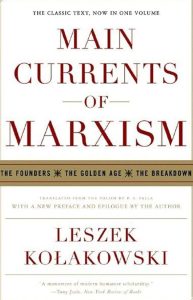
Several years ago when I was rereading Kolakowski’s Main Currents of Marxism, I was struck by his pitiless portrait of Trotsky. Kolakowski was scathing. And it was not that Kolakowski was scathing of every Marxist who came after Marx because at that time, after 1968, when the Main Currents were written, Kolakowski was still transitioning from Communism of his youth toward what he later in life became, a conservative and religious fanatic. Thus his judgment on many of the thinkers discussed in The Main Currents (Lukacs, Gramsci, Plekhanov, even Lenin) is much more balanced and often full of admiration. But Trotsky, for Kolakowski, was a “poseur” and as for later Trotskyists: “(t)here was never any such thing as a Trotskyist theory—only a relapsed leader who tried desperately to recover his role, who could not realize that his efforts were vain, and who would not accept responsibility for a state of affairs which he regarded as a strange degeneration”. (Vol. 3, p. 219)
The question I asked myself was, why? I tried to explain it in the essay that I wrote in August 2021 and that I recirculated yesterday—for no other reason that a reader liked it, mentioned it to me, and this reminded of the piece. (By the way, the essay is not included in my World Under Capitalism because I decided not to include book reviews and this could be, in a way, considered one.) Alex Callinicos, whom I very much admire, wrote today a deeply critical essay on my piece (here). This short Substack is my attempt to explain to Alex and to the others some parts of my thinking, a view of Trotsky and Trotskyism that they find erroneous, both as formulated by Kolakowski and the way I interpreted it.
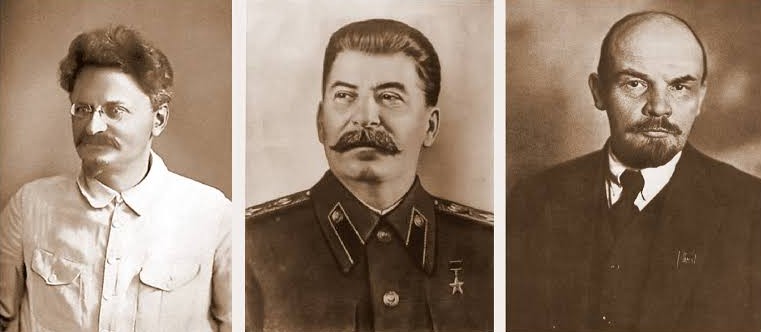
What drove Kolakowski to such a contemptuous attitude, I wondered? There was something deeply problematic with Trotsky despite many extraordinary qualities that I list in my original piece: intelligence, bravery, ability to manage people, armies and diplomatic negotiations (the first Soviet in 1905, the Red Army, Brest-Litovsk), excellent writing skills, general culture. His qualities came to the fore only when he played No.2 role under somebody whom he respected. That somebody was Lenin. In my view—which is not original—Trotsky never wanted to be No. 1, a position that of right belonged to him after Lenin’s death. One needs only to remember that Bolsheviks’ meeting rooms were routinely decorated by only two portraits: those of Lenin and Trotsky. The party was also colloquially known as the party of Lenin and Trotsky.
With Lenin, Trotsky’s huge qualities were on display; without Lenin, Trotsky’s flaws came to the fore: his arrogance, impatience with less well-educated Bolshevik cadres, certain hauteur that all contemporaries noted; so much so that at the Central Committee vote in May 1924 (just four months after Lenin death) Trotsky received the second lowest number of votes. His tribulations with the Party continued: he was offered to be the head of the Sovnarkom, he declined; he created, half-heartedly and not very effectively, a faction within the Communist Party of the USSR (as it become known) and all the way to 1927 the struggle continued. It is at the time of the tenth anniversary of the October Revolution that Trotskyists for the last time gathered freely and organized an alternative celebration. A year later, most of them were in jail even as Stalin, in an abrupt volte-face, decided to go for industrialization at all costs, argued by Trotsky and Preobrazhensky, and originally rejected by Stalin.
 Why do I go through all these details? Because I think they are important to understand what later became of the Trotskyist movement. Despite the extraordinary courage of Trotsky himself (who sacrificed himself and his entire family), and many other members of the movement, the “original sin” was reflected in that unwillingness to take responsibility and power when the occasion presented itself. There was, I think, always a seed of defeatism in the movement: they liked to discuss, argue, pontificate, “couper les cheveux en quatre” but not to take power and rule. This is true despite doubtless personal qualities of its members. Let me give three examples about which I wrote: Trotsky himself and his first-rate book on the Soviet system The Revolution Betrayed reviewed here; Victor Serge, a man imprisoned by all regimes, including Stalinist and his beautiful and dark diaries (reviewed here), and Wang Fan-his a brilliant Chinese Trotskyist, a man of warmth, bravery and erudition (his memoirs reviewed here). I could go on listing other Trotskyists, equally extraordinary people. But the movement, spread to five continents, never came close anywhere to taking power—and this is my contention—it did not want to take power. Not even in China where it had a strong base in the industrial areas, but was sidelined by Mao’s accent on peasant rebellion. Perhaps the only important role that it ever played was in the Spanish Civil War, and had the republicans won that war, it might have fought seriously for the role in government, against more moderate socialists and Stalinists alike.
Now, I am fully aware that my statement that the Trotskyist parties did not want to seriously struggle for power can be challenged. They never said so explicitly—and it would be folly to do so. My impression is just an impression. But I do think that this reluctance to accept responsibility of governing, to take the bull by the horns, first time displayed by Trotsky, seeped afterwards to other parts of the Communist movement, even when they had nothing to do with Trotsky himself or with Trotskyism. I do not think that it is particularly controversial to claim that the Italian Communist Party (PCI) really liked being in opposition rather than governing, even when in 1976 it obtained 35% of the popular vote and became the second largest party (4 percentage points behind Christian Democrats). Indeed, it was not easy to govern Italy, not the least because of country’s “limited sovereignty” that it enjoyed with respect to the United States. Yet a combative “Leninist” party would have gone for power. PCI did not. The same is true of the PCF in 1968. Many, including de Gaulle and Raymond Aron thought that the communists would go for the jugular. They had control of the industrial proletariat while the youth totally disorganized le bloc bourgeois. But de Gaulle and Aron (politically so different) quickly realized that PCF was, in fact, a party of stability, a party that would not rock the boat, would extract some concessions for workers (as they indeed did), but would “vote” for the maintenance of capitalism.
The point is, I think, that many in the worker’s movement ceased believing that transcending or overthrowing capitalism is possible. They fled from responsibility and action that an alternative belief would have required. And I thought that the first who clearly declined to take the responsibility for governing a socialist state, when it was given to him on a silver platter, was precisely Lav Trotsky. And that that decision opened the way to Stalinism.
A Reply to Branko Milanovic on Trotsky
Emeritus Prof Alex Callinicos
By Alex Callinicos
Branko Milanovic, whose writings I enjoy and whom I greatly respect, has written a scathing attack on Trotsky and Trotskyism https://open.substack.com/pub/branko2f7/p/trotsky-after-kolakowski?r=oy52j&utm_medium=ios. Here is a brief reply.
Dear Branko,
I studied with Leszek Kolakowski at Oxford and attended the seminar course at All Souls on which Main Currents of Marxism is based. He was a brilliant man whom I liked, but the book isn’t impressive – I found it full of inaccuracies. The story you tell of Trotsky is often told and it’s certainly true he was a bad politician who made a lot of mistakes. He and Lenin complemented each other.
But, his real intellectual achievements aside, Trotsky is immortalised by his moral and political stance in the 1920s and 1930s – standing almost alone during the Midnight of the Century against the corruption of socialism by the Stalin regime and for the classical Marxist tradition. It’s thanks to him that Marxists, whether or not they call themselves Trotskyists, can hold their heads up high. For this, he, his family, and his comrades paid a terrible price. There’s a moving passage in Trotsky’s Diary in Exile where he expresses his awareness of this personal cost. He also was an extremely prescient observer of the rise of National Socialism in Germany. His warnings and calls for a united front of Social Democrats and Communists against Hitler went unheard, but that doesn’t diminish their prophetic quality.
You have some fun with the Trotskyist movement, but some of what you say is just absurd – the idea for example that the PCF (the PCF!!!) and the PCI were influenced by Trotskyism in the 1960s and 1970s! You cannot be serious. And spare us the canard about neoconservativism being a product of Trotskyism. A few neocons had a brief brush with Trotskyism in their youth – that’s all. Leo Strauss was a much bigger influence on the neocons, as he is on the contemporary US far right.
Yes, the Trotskyists failed, but so too did the Maoists who were much more influential in continental Europe, for example. That broader failure of the post-1968 far left needs to be reckoned with. I’m still proud of what we have achieved – for example in the movements against racism, fascism, and war here in Britain. The future as far as I’m concerned remains open. But, please, spare us also the cracks about cappuccino. I prefer espresso myself. I hope to buy you one sometime.
Best wishes,
Alex
Trotsky after Kolakowski: Why is Kolakowski so Dismissive of Trotsky?
Aug 06, 2021
As people who follow my feed know, I have recently reread the three volumes of Leszek Kolakowski’s magisterial Main Currents of Marxism. I read them first in the mid-1980s (the date when I bought them, inscribed on my copy, is June 1982), and rereading the book almost forty years later, I find it even more impressive now—because I know more and because the world has changed. I will write more about that in another post.
Kolakowski discusses many writers, from the Greek founders of dialectics and Hegel to Mao Zedong. (Kolakowski’s knowledge is simply astounding.) With many of them he disagrees strongly, and yet Kolakowski is –discussing them on their own terms, not his—at times admirative. This is the case of Lukacs (especially) and Lenin. Lukács indeed is, after Marx, the most impressive thinker, among more than a hundred discussed in the three volumes. Young Kolakowski was, it seems evident, very influenced by Lukács.
But the person of whom Kolakowski is probably the most contemptuous (leaving aside Marcuse—who is not worth discussing) is…Trotsky. If I were to summarize it in one sentence, I would say that it is because Trotsky was Stalin without Stalin’s convictions, or rather without Stalin’s readiness to make difficult decisions when left alone (i.e. without having Lenin to back him up).
How do we reconcile this with (I think) undeniable fact of Trotsky’s brilliance in many spheres, from writing to war-making, and his particular attraction to intellectuals? Indeed, when intellectuals who dream to change the world, think of an exemplary life, it is hard not to see that Trotsky’s probably fits the bill as one of the most brilliant such lives in history. How many intellectuals are there sipping coffee in Café Zentral in Vienna on a Friday, and leading to victory the largest army of workers and peasants in the world next Monday? How many are there writing book reviews on a Saturday, and taking hostages on the next Tuesday? Is it common to go to an art exhibition in Paris on Sunday, and to negotiate a peace treaty that gives away a third of a country’s industry on Wednesday?
The extraordinary combination of a brilliant intellectual life (for Trotsky was indeed an excellent writer) with the life of a man of action, not being afraid or deterred by obstacles, is straight out of Greek playbook of heroic lives.
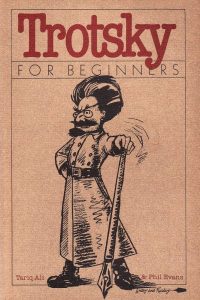
Can we turn to Tariq Ali and Phil Evans for a more truer account of Trotsky?
What went wrong? Why is that that the architect of Bolshevik victory, already by 1924 received the second least number of votes in the elections for the Central Committee? A person who was clearly number 2 to Lenin was already in May 1924, No. 2 from the bottom in terms of Bolshevik’s top echelon’s preferences.
The reason is that Trotsky’s manifold abilities could only be fully displayed and used so long as he was put in position of command, and was ultimately controlled by, a person whom he saw as his intellectual and political equal or superior. That was Lenin. As soon as Lenin was gone from the scene, all the negative features of Trotsky’s came to the fore: his haughtiness, conceit, arrogance. His ideologically extreme positions (collectivization, willing contempt for the trade unions and workers) were later applied by Stalin, and Trotskyists—many of them in labor camps across the Soviet Union—briefly rejoiced in their ideological victory over the “grey blur” of bureaucracy, Stalin.
It was never clear if that extremism in the 1920s was true or fake. And this is where we come to Kolakowski’s contemptuous judgment: Trotsky was a poseur. After the anchor of Lenin was gone, he did not want to take any responsibilities: he was the head of the Red Army, technically commanding millions of people, yet he refused to attend meetings; he would decline positions he was offered, including the one of Prime Minister; he would treat his comrades with contempt, so much so that they would stop talking to each other as soon as they would see him walking the corridors of the Kremlin, afraid of his biting remarks. (All of these examples are from other writings, not Kolakowski’s book.)
His unwillingness to take charge when it was manifestly his duty to do so sowed the seeds of later defeatist outlook, and not only of the Trotskyist movement, which broke up in ever smaller groupuscules. It affected many left-wing movements that preferred to claim grandiose ideas, but were unwilling to even try to take power. Examples include the French and Italian Communist parties in the 1960-70s which totally gave up the idea of winning elections, or gaining power.
Trotsky personally did not want this to happen: he continued fighting to the end, including against his own assassin, a strong men thirty years his junior, whom Trotsky, with his bleeding head, was able to wrest to the ground. Yet by avoiding the responsibility when it was his for the taking, he charted the future path of many left-wing parties. It was reinforced by Gramsci’s oft-repeated defeatist “pessimism of the intellect, optimism of the will”. All of that meant that many left-wing politicians lost any desire to win.
“Trotskyism” eventually became a “movement” (if this term can at all be applied) of Western intelligentsia that wanted to pretend they were doing something—while in reality doing nothing. It made no inroads anywhere in the world, with the possible exception of the Spanish POUM in the 1930s. It became after World War II a useful “movement” to have nice dinner conversations and to meet clever girlfriends and boyfriends—it might have served as an eHarmony of post-war Western Europe—but it was little else. Even worse, in its US form, it converted itself from the left to the extreme right as many formerly young Trotskyists ended up, not only supporting, but defining, the neocons’ imperialist project.
Trotsky still haunts the left: if you really do not want to win, you never will. If it is more fun to drink cappuccinos on a square at noon then to get up at 6 am to canvass support, you will end up drinking cappuccinos.