Power Game
Nigeria’s Vice-President, Prof Yemi Osinbajo arrived Jos yesterday as an envoy of peace in a state lost in violence that none of the stakeholders except one has spoken but a dangerous truth.... Read more
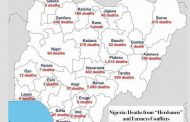
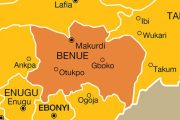
All eyes are on Plateau State in central Nigeria which is reeling again in violence in three local government areas of Barkin Ladi, Jos South and Riyom where police figures of death now offi... Read more
In this last of a three-part series which started on June 5th with “Does the Nigerian Media Amplify or Downplay Boko Haram?”, continued on June 8th with “When Journalists Reflect on the Medi... Read more

The last day of the burial rites of Dr Bala Takaya, the late leader of the Middle Belt Forum, (MBF) provides an occasion for reflection on the intelligentsia and Nigeria’s future. It does so arising from the situation whereby none of the prominent regional platforms today – ACF, Afenifere, Ohaneze, SSPF and the MBF – is headed by anyone less than a well heeled member of the intelligentsia. Dr. Takaya was an academic, an author, a technocrat and a politician. At death, his significance, however, lay more in his leadership of the MBF.
Ordinarily, that ought not to have been a cause for worry. After all, there is something called emancipatory ethnicity where ethnicity is instrumentalised against structural violence in favour of emancipation. Where that is not the case, it could be in its facilitation of the celebration of group self: narratives of origin, symbols, totems, festivals, language and so on. In such cases, ethno-regionalism becomes emancipatory by guaranteeing the human family as an ensemble to which every culture, group or identity has contributed something. That is why the Unite Nations fights so that no language dies, for instance, because when that happens, humanity loses something. Ethno-nationalism is thus not automatically contradictory of nationalism or of progress or we would not have such emergent concepts as multicultural constitutionalism.
In the case of Nigeria today, none of the above scenarios is the case. Instead, the ethno-regional platforms and their leadership have emerged as platforms for resisting the state by not only posing the questions in maximalist, exclusionary terms but framing the resistance in terms of decentering the state altogether. As such, Nigeria is, today, effectively a stalemate between the unformed BreakNigeria Movement and the equally unformed BuildNigeria Movement. The former covers all those on their marks and set to hit the ground running should anything trigger Nigeria into unraveling while the latter covers all those who argue that the coming global order out of the current interregnum would be one of mega states for which a strong, purposeful but centralised state is required for survival in a difficult world. None of the two is new.
BreakNigeria is an idea which has been sedimenting in the popular press and in the minds of all manners of circles, some of whom are already enacting it now in various forms of confrontation with the Nigerian military, from the forests of Sambisa to the Southeast and the swamps of Niger Delta. BuildNigeria rests on the wager that only a national elite of a strange constitution could, for any reasons, be thinking of walking away from a ready made mega state such as Nigeria, with all its potentials for coming first from behind. Instead of talking about difficulties in inter-group relations, it would have been best to keep investing in the search for models of managing the national question such as what the eggheads who came up with the Zoning Principle accomplished.
Many of the camps in BreakNigeria do not argue against the global movement towards mega statism in which the strong, centralised state is the defining feature. They are also not ignorant of the plausible benefits of such an alternative future. The argument from that quarter now is that ‘Restructuring’ or ‘True Federalism’ has been imposed on them and that herdsmen violence is not an innocent happenstance but the departure tunes of those they are holding responsible for that.

The late Dr Bala Takaya
The argument here is that those who read any of these claims as anything but discourses would be making a big mistake. None of these has anything to do with who is speaking the truth and who is telling lies. They are all about power and power relationship, a continuation of the historical contestation between the regional entities the British constituted Nigeria into. The danger, however, is that discourses can be productive of the reality they speak of. The implication is that the rhetoric as well as the ‘silences’ attendant on the contestation could trigger a convulsion of imponderable proportions. This is simply because there is a fluidity now that never existed. Although those for Nigeria’s continuity are also working hard, the forces of breakup are more assertive, vocal and persistent. It is not just the fear of the worst in terms of Nigeria breaking up but the possibility of the precarious balance between the Quitters and the Remainers degenerating into an outcome we cannot live with. Rwanda remains the best reminder of that sort of scenario. Yet, Rwanda is not as big as some states in Nigeria.
It is in this context that the denial attitude to break-up intentions on all sides in this country today, openly and routinely declared in media interviews must be the most incomprehensible reality of our time. Again, it is the intelligentsia. Is there time left for denial without each and every one of us being complicit in horror, genocide or whatever such fate that could befall Nigeria? This country is paying a price for past military regime’s governance practice of banning political parties, leaving the space open for the emergence of ethno-regional platforms for agitation. But there should be a way of managing their self-understanding away from the current conscious and unconscious decentering politics. It is not unheard of for an intelligent state or ruling group to make a virtue of strategic concession such as the Chinese State grants her minorities. Unfortunately, neither the state nor any other set of actors have any open mechanisms for doing that in the Nigerian case. That Nigeria has no formal and open arrangement for engaging manifestations of sub-nationalistic self-understanding is not a measure of the unreasonableness of those who share such understanding but, even more importantly, a measure of Nigeria’s own impoverished conflict management orientation.
There is still every basis to stand with Nigeria. Nigeria has not been able to operationalise much of her potentials mainly because it has not been governed or guided as is required for the transition from semi-industrial entity to an industrial society. Instead of being governed, it has been ruled by another set of the intelligentsia constrained by their own professional orientation and complexes from taking a constructive view of history as well as Nigeria’s diversity the same manner the founding fathers of the United States, for example, did by constructing her in a global leadership gaze. We call it imperialism, they call it ‘the city on the hill’. It was by that constructivism, more than anything else, that her rise from a colonial entity to a super power can be explained. The national imagination that would have acted as a glue has been missing in the case of Nigeria. It is thus not in the nature of the Quitters or of the Remainers alone that we can trace all the decentering pressures.
Still, it is not national chauvinism to argue that Nigeria is the guarantor state of the black world. There are just too many for whom the disintegration of Nigeria will be so colossal a symbolic and cultural loss, from North America to Latin America/Carribeans; from Europe to Australia; from the Middle East to Asia. In other words, there are so many who, along with their Nigerian counterpart, would become permanent bystanders in world affairs because the world is still a world of power and into which only mega states have been admitted in the post Cold War. Nigeria is heading there at current demographic stature but more than demography is required.
The intelligentsia in Nigeria will, therefore, be making the mistake of their life if they walk Nigeria into just any careless pragmatic accommodation with problems of the moment. The task at hand calls for a strong but informed, sensitive and balanced state in which everyone has a stake. Nothing stops the emergence of a clearer set of the intelligentsia from mapping and marketing a new future. Front or back, it is the intelligentsia.
While condoling the Middle Belt Forum, Intervention feels it is important for the region to rethink its analysis of contemporary Nigeria from decentering Nigeria to recentering itself in the heart of Nigerian politics. By the history of its contributions to nation building, it is not proper if its narrative of today is such that makes her a baby of Nigerian politics tomorrow. The contingency of meaning entitles the Middle Belt and its leaders as well as every other region to hold a specific notion of Nigeria. That should not include anything that could remotely suggest or unintentionally produce disintegration of the country, now or in the near future. Nigeria cannot break without strategic impasses. Without suggesting an imperialistic bearing, Nigeria should be aiming to become bigger, not smaller. And if that doesn’t happen, we have the intelligentsia to hold. There is nothing radical or idealistic in all these!
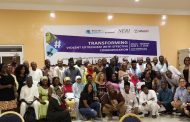
For a country brimming with diverse forms of violence informed by extremism of one type or the other, (resource nationalism insurgency, jihadist insurgency, armed banditry, kidnapping and the rest), it was the ‘NGO Paradigm’ at its best for Search for Common Ground, Northeast Regional Initiative, (NERI) and the United States Agency for International Development, (USAID) to seek to produce a critical mass of journalists who can penetrate the complex nexus between the media, conflict and Nigeria’s future. As Lena Slachmuijlder, the programme facilitator, was heard saying along the line, there is no greater impediment to progress in human development than poor management of conflict in any society, a process in which the primacy of journalists has no equal anymore. If conflict management is what makes or unmakes a country and a critical mass of journalists is what makes or unmakes conflict management, then it makes sense to take the collective agency of journalists seriously.
 It ought to be recognised that something very positive has been inaugurated in that direction at this programme which can, in academic terms, be equated roughly to a Masters Degree in Conflict Reporting, all things considered. Between 8 O’clock in the morning and 5 O’clock in the evening for three days, the sessions went on, packing and unpacking concepts and practices through lecturing method, ‘active learning’ sessions and group works. There were no easy answers anywhere as the very senior journalists from government owned media, private media establishments and social media platforms contested, confessed as well as fought on thorny areas in the practice of journalism in the recent past while eyeing the future. They lived up to the billing of Nigeria as that country that nobody can claim to understand in the sense in which Bill Clinton used that phrase during General Abacha’s reign. The then US president said they just couldn’t understand Nigeria.
Reconnecting Nigeria as a Task
The country whose break-up is the staple of everyday narratives is also the country whose most active journalistic collective privileged the elimination of near total ignorance of each other by the ethno-regional components as a major impediment against improved reporting of conflicts. That cannot be taken lightly because of the confessions that followed. Someone whose education and experience places comfortably in the middle class is still constrained from ever travelling to Maiduguri because the mother says he should not attempt that. Meanwhile, the mother who is the source of the ‘directive’ has never been anywhere near the North. In fact, the fellow in question is still the only one from the family to have been to the North and the farthest he has gone in the North is Abuja. It was seeing very normal human beings from Maiduguri at this training session that shocked him into a countervailing, more positive narrative of Maiduguri.
Another testimony came from the participant who grew up into the orientation that the Hausas are such a horrible set of human beings; they would put you in a sack and run away. Then she got involved in gender politics and started going up North. Her encounters challenged the narrative of the North she grew up with. She encountered a different human agency of the Northerner. The trips became life-changing for her in terms of perception.
There were more such stories as in the case of yet another lady, this time from the North who, each time she travelled down south, was always confronted with the question: which part of Hausa are you? I am not Hausa, I am Kanuri, she would reply but only to get her interrogators more confused because they have grown up with the idea of the North as a place where everyone is Hausa and Muslims. Someone also told the story of when they had a programme somewhere down south and the response of the environment was: we don’t need this type of programme here, take it to the Northeast because that’s where they had violent extremism. The speaker tried to educate those behind the reactions the fact that there is thuggery in Ibadan, ‘Badoo’ in Lagos, etc and that they all take origin from variants of extremism.
So, the huge gulf of ignorance and fear of each other is part of the problem. It is not clear what the one sidedness of the repertoire of regional ignorance and fear of each other points to regarding which region is more ignorant of the other. What came out clearly is how ancient notions of Otherness mixed with colonially created narratives from colonial ethnic profiling, how all of those became powerful constructs in the hands of politicians who have recycled them in the media ever since independence. One outcome of that is the territorialisation of violent extremism. That refers to the tendency to think of certain conflicts as natural to certain places. Resource nationalism is something that Niger Deltans employ insurgency to pursue; Islamicist insurgency is a Borno/Northeast affair. It is the sort of thing the country could pay dearly for in the era in which re-territorialisation is a key feature. Nothing is specific to anywhere in today’s world and this is a major theme that has not caught on in Nigeria’s conflict management circles yet.
The Big Question for the Media
The leading question it raised was: how do Nigerians who have rarely interacted with each other on a mass scale come to acquire the Otherising notions exemplified above? They came through narratives which the media has, in contemporary times, been the strongest conveyor belt. It was thus important to pose the question as to whether journalists are in the mood to help Nigeria and Nigerians to ‘refuse to be enemies’. The response was a massive yes with no dissention. How is that to be accomplished? Either based on accumulated wisdom or the much of dosages of Peace Journalism, (PJ) that had been injected, the response again was: by changing the narrative. But what is a narrative? Here, a clarity hitch could be observed in that what came out from the individual answers clearly took the idea of a narrative as a story on the face value. It was thus life-changing experiences that were passed off in conceptualising narrative, not the deeper meaning of the word ‘story’ as a truth claim or a perspective and which determines how an individual sees his or her place in the world, who is a liberator, who is victim; who is a friend and who is an enemy and paves the way for one’s sense of destiny. The caution was that conceptual clumsiness could have implications for the journalistic peace practice of transforming violent extremism by changing the narrative from oppositional calculus to win-win outcome.
 Someone asked how win-win outcome might look like between Nigeria and Boko Haram, for instance. Does it mean that Nigeria will concede to part with a portion of its territory to Boko Haram? No, came the answer. Win-win does not mean compromise and accommodation that grants every demand. Rather, it is about shifting the framing of the conflict in such a way that that allows conflict parties to understand their differences and identify shared interests and underlying needs.. Peace, not the ‘enemy’ is what is at stake in empathy and every other peace practice informed by PJ. The idea is that all wars do end, the winner/loser binary is always an invitation to another cycle of violence and everyone wants to move away forward. In this context, the fine line to work in highly polarising conflicts is a question of the frame journalists choose and by which they give voice or reveal causal factors. For this reason, PJ rejects the single story syndrome, (SSS), meaning that a PJ minded editor or reporter will not cast a headline which says one conflict party is winning. That would not be accepted as a peaceful framing of a conflict worthy of the journalist as an enabler rather than a watchdog, a communicator rather than a commentator and an observer rather than an independent as well as interdependent actor. In all cases, Peace Journalism insists against oversimplification that comes about when journalists represent a conflict in terms of black and white. Conflicts are rarely between two parties but many, many parties, many of the parties fuelling the violence from behind the scene.
PJ seeks to rescue journalism from positivist entrapment and its objectivity credo, partly because objectivity itself doesn’t exist and partly because objectivity is unjust. Objectivity could enable a journalist write about a fight between one weak, famished fellow and one hefty, strong guy as a fight between persons when in truth, it was a fight between two unequal parties. This was Christiane Amanpour’s defence against attacks of lack of objectivity in her coverage of the Balkan wars.
PJ and the normative sensibility it reflects are still under attack from the camp of Realism and their objectivity credo. Some of them even say that, without objectivity, there is nothing called journalism. The expectation is that, Realism in the Intensive Care Unit and Constructivism on the rise, objectivity in journalism will have shrunk to insignificance in the very near future, although habits die hard
In countries such as Nigeria, the greater threat to PJ ideals come from outside the media. It comes from neoliberalism and the destruction it has wrought on meaning. The problems might have arisen from shocks from retrenchment, massive unemployment, real poverty but it is in insular frameworks such as ethnicity, religion and villagism they are framed. Where it is framed in religious terms, then the polarity is such that the ideals of PJ have difficulty in finding purchase. It becomes a contest between the sacred and the profane.
If these are some of the contextual issues, how come journalists are confident they can counter-message violent extremism? Does counter-messaging work? What is the evidence from the field? Can Nigerian journalists guarantee Empathy? What is the scorecard for the social media at this point in time? Should it be regulated or not? Why is mainstreaming women in terms of voices such a difficult thing in conflict reporting? Why is the government media such a restrictive space for creativity in conflict reporting? And what sort of programmes are there by which counter-messaging can be achieved? Does the Nigerian media amplify or downplay Boko Haram? (this has been published as a standalone reportage on this platform) and how different was MEND from Boko Haram in the world of conflict reporting? The last report in the series will cover how the journalists answered these questions, the conclusions they reached and the puzzles they threw up.

It is the Nigerian equivalent of the overarching question in the aftermath of the seductive thesis of ‘CNN Effect’ which argues that media reporting of humanitarian crises shortly before and immediately after the end of the Cold War were such that constrained powerful states to hasten their intervention and restore peace in far flung corners of the world. British journalist, Nik Gowing problematised this claim, went to work researching it. He came out with a devastating conclusion that almost dismissed ‘CNN Effect’. The way the media report (humanitarian) crises only pushes a government to act if the government itself did not already have a position was what his evidence told him. Where that is not the case, said Gowing’s report to the Carnegie Commission on Preventing Deadly Conflict, no amount of front page stories or editorials would move the hard headed realists in Pentagon or the EU bureaucrats in Brussels to move troops to any and every flash points. His research report was in 1997.
 In 2007, there was a powerful support for Gowing’s position when General Romeo Dallaire, the Canadian Commander of the UN troops in Rwanda wrote in the Introduction to a book on the Genocide by another British journalist that because all the great powers had decided against sending troops to Rwanda, no media reporting or misreporting changed anything. Since then, only journalists who have not acquainted themselves with the literature go about endlessly hawking the idea of the power of the media to set agenda without connecting such claims to the power context within which such could happen. It is only now that the Nigerian variant of that question is being posed. That is understandable in the sense that it was only with Boko Haram insurgency that Nigeria came face to face with the question of how the media could play its role in transforming the violent extremist convictions that drive the insurgent impulse. In this case, the issue was whether the media, on balance, has been amplifying the insurgency and insurgents or been hindering them, consciously and/or professionally?
It was not a secret session but an understandably discreet, reflective exercise within the context of transforming violent extremism and inclusive peace by the Nigeria Office of one of the conflict transformation and peace building INGOs. But, instead of a single journalist researching and writing a report on the question, the NGO gathered selected journalists across Nigeria to turn on themselves and see how well or otherwise they have fared and how far the media still have left to go. So, what did they find in the self-reporting?
From universities to think tanks, government departments and sundry actors, some of the world’s best brains are still wrestling with the slippery concept of Terrorism. Up to a point, the United States alone had four different definitions. When is an act terrorist? Journalists, media advisers and many government officials hardly distinguish between a guerrilla tactic and a terrorist act. Experts have been worried that an attack on a military check-point, for instance, ends up being reported in the media and spoken of by senior government officials as terrorism. The discussion in this reflective session showed that Nigerian journalists are no exception to this confusion. But while most global media establishments have responded to the confusion by alerting their reporters worldwide that ‘one man’s terrorist could be another man’s freedom fighter’, that appears not too well done yet at home. That is probably because Boko Haram presents no difficulty. It is a classic terrorist organisation given its explicit political goal of seeking to decenter the state and in pursuit of which it attacks groups so as to send violent messages to the Nigerian State to make a choice.
A major presentation to the session threw a number of charges on the media: taking pictures of genocide in Rwanda and passing it off as a Boko Haram atrocity; some journalists sitting down in a newsroom in Abuja or Lagos to imagine and script a story of a Boko Haram attack somewhere in the Northeast; media houses with journalists without clarity and/or research capability, among others. Set against this lead paper as it were and led by an energetic session coordinator, the discussion began. The lead question for this segment was for journalists in session to search their conscience and bring out what they think the media might be getting wrong.
Only a few out of the points raised can be taken here. One of such is the notion of the media being stuck to a reporting pattern structured by stereotypes and polarities. But there was no agreement although the ‘ayes’ were more vocal than the ‘nays’. The only one voice that did not accept that charge against the media could not win because the speaker had no empirical evidence beyond stressing that best practices in conflict reporting forbids stereotyping. Someone replied by citing a recent major television network’s story that he claimed used an ethnic identity, going ahead to say that the use of ‘Muslim fundamentalists’ or ‘Fulani herdsmen’ are good examples of stereotyping. Someone else said reporting that made no distinction between kidnapping and terrorism is an example of a stereotyping and polarising journalism which could have the effect of crediting Boko Haram with more capacity than it has.

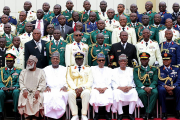
Gen Tukur Buratai, Nigeria’s Chief of Army Staff, (COAS)
Second poser for reflection was: Is the media amplifying the claims of insurgents. Again, there was no consensus. The critics of the media on this said all the major newspapers would come out with double-decker headlines the next morning whenever Abubakar Shekau, Boko Haram leader made any claims. This, said the contributors, is journalistically bad because similar prominence is rarely accorded similar claims by the military. “When the military makes a claim about 5, 10, 20 Boko Haram leaders killed, it is not reported as Shekau’s”, another voice was heard thereto. Yet another speaker said “some media go extra mile in reporting figures of death thereby assisting the terrorists”, arguing how such is how the terrorists always feel and say they have registered what they always call a maximum damage.
The opponents then took their turn. One wanted the earlier speakers to tell him how journalists were to verify what Shekau might be claiming in a video outing. “Send someone to Sambisa?”, Sambisa being the forest Boko Haram commanders have reportedly converted into their operational base. The most vicious upper cut came from the voice that said it didn’t make journalistic sense to ignore a man the military claimed to have killed but only for him to reappear, sometimes with video showing embarrassing balance of power between his forces and the military. A tie!
A subset of this question was whether the Nigerian media reports sometimes back that Boko Haram was better armed than the Nigerian Armed Forces should ever have happened. Earlier on, someone said it should never have happened and that it was lack of patriotism. Contrary argument said all such reports were corroborated by subsequent events neither the military nor the government could even cover up. Nobody remembered to mention that this idea of insurgents being better armed than the Nigerian military was also the basis of animus against the global media coverage of MEND’s insurgency. If that had been brought in, then it might have contributed to showing how persistent this propaganda has been. But it remains propaganda because insurgents do not normally engage established militaries in conventional warfare for the sole reason that they can never win such wars. So, they rely more on improvisation. That makes it it odd to compare most insurgent groups with most national armies.
In all, the tension between the different standpoints in the reflective sessions mirrors problem with reporting terrorism. Failure to report terrorism is complicity in creating a false sense of security or of misleading the public, the results of which could be imponderable, especially for women and children. At the same time, however, reporting terrorism is inherent complicity in terrorism because terrorism is almost completely dependent on being reported. If an attack by Boko Haram is denied media coverage, it would amount to a severe de-oxygenation of the insurgency, although this has to take note that today’s terrorist organisations come along with own media pack.
The last poser was: what is the great thing the Nigerian media has been doing as far as reporting Boko Haram insurgency is concerned. For some, that must be exposing the conditions of the IDP camps, especially the lack of schools for those in the age bracket. For others, it is the concentrated focusing on rape in those camps which goes against the collective conscience of Nigerian journalists. The verdict on this seemed to be the point by the fellow who said that, in spite of everything, the Nigerian media has kept the Boko Haram story going. The inference is: imagine what Nigeria would be today if there is no coverage of the insurgency, leaving room for rumours and all manners of speculations.
It was a many sided debate from which only the thematic samplers bound to interest other stakeholders within the wider agenda of deradicalisation and peace has been highlighted. The sharp and rich repertoire of the attendees shows an active media constituency at work in the search for peace in Nigeria. It would be best if the exercise is widened in terms of participation, (the media, the military, civil society, academics, etc) and held more frequently. Then Nigeria’s engagement with transforming violent extremism would have become a most robust and rounded one.

There is now a distinctly Catholic voice and practice on the insecurity crisis in Nigeria. Until the procession across the country yesterday, this was not the case although individual and group voices of Catholics have been heard, now and then. An emergent Catholics theory and practice in response to contemporary insecurity in Nigeria is a complicated issue because Catholicism, one of the eight civilisations in Huntington’s schema, is about difference/diversity on a global scale and, therefore, an issue in global security to the extent that diversity defines security today.

Nigerian Catholic Bishops with the Pope
Now, the global and the local are indistinguishable in this case because an event that took place in Abuja, the Federal Capital city, Lagos, the commercial capital, symbolic capitals such as Ibadan and Enugu and far flung corners such as Benin, Minna, Uyo, Auchi, Yola, Lokoja, Warri, amongst others, is a serious early warning in national security, more so if it is by a distinct community as the Catholics. This complexity stretches far into faith because, if the voice of the people is the voice of God, then the spread of the procession cannot but be understood as God speaking to Nigeria and its centres of power.
It is interesting and elating that the Catholics have never called for violence, suggesting their interest in inter-subjective approach to threat management which violence would have foreclosed. This analysis is no more an academic claim after yesterday’s procession passed without any slight incidence of violence. Instead, some leaders of the Catholic establishment such as John Cardinal Onaiyekan were calling on Nigerians to transcend ethno-religious fault lines and retrieve Nigeria from drifting into anarchy, anarchy being the ultimate sort of chaos that every human group must work against. And the slogans, all socially critical but emphatically consensual on one Nigeria! All these speak to a contextually radical praxis as far as popular responses to the on-going impasse in Nigeria is concerned.
If the procession is an early warning sign, then the complication can be reduced to a security complication. What is security is, however, always a question of who is securing whom from what. It is not a technical, specialist or objective matter of spies and men under arms. Otherwise, the defunct USSR would not have suffered what the inheritors of the Soviet State came to call “the greatest tragedy of the 20th century” because it had the most proficient spies, commanders and fighter pilots. But the Soviet State, like the Roman Empire before it, collapsed without anyone firing a shot. Both empires collapsed in that manner because all societies in decay are vulnerable to such shocks, shocks which spies, commanders and fighter pilots are never ever able to make sense of because, like beauty, security is in the eye of the beholder. Security is not an objective practice but always one essentialism or the other.
 The implication of that as far as yesterday’s procession is concerned is for the Nigerian security establishment to transcend whatever its essentialist hook-up might be and open up the space for a dialogue on the spate of killings. In contemporary times, that is the only approach to conflict management that never fails because it provides space for the feelings of live human beings instead of paradigms and grand narratives produced by powerful people who neither have any experience of what is happening nor are disinterested parties to such crises. It means a better way to resolve the impasse of this magnitude is to allow for inter-discursive engagement with the threat at hand. It is a threat the solution to which must reflect the subjectivity of protest groups, religious and otherwise, in an open process that can re-assure all Nigerians in every corner of the country.
It is no use playing up any particular segment of Christianity and its entry point in a crisis situation but, in this context, the subjectivity of the Catholics has become a key factor, they being the chief mourners of the two priests who were killed as targeted victims in a spate of killings that has generated a siege unknown in the history of the country. That siege is not unconnected with this being the first time the Nigerian State looks incapable of framing a threat to state survival in a way satisfactory to all stakeholders, much less confronting the threat. Yet, it has the monopoly of not only legitimate use of force but even of discourse. The implications of such a state and situation must be frightening to everyone except those reading partisanship to it, either out of false sense of security or a famished threat analysis or just narcissism.
Above all, both those who are Catholics and those who are not and even non Christians listen to Catholicism because, as one of them argued recently, Catholic Humanism has always provided the world with a discourse of ‘security as emancipation’. That was Bishop Mathew Kukah speaking at the First National Conference of the Centre for Peace and Development of the Catholics’ own university – Veritas University, Abuja – in November 2017. It is such a weighty claim that would have been the subject of a lively debate if it had been made when Nigeria were still its ebullient liberal self. But the times are uninviting of such debates basically because security in its various dimensions is on leave in Nigeria. There is no human segment where the Catholics who assert the competence of its social teachings to serve humanity at every turn, before, during and after the Cold War can or should be ignored if peace is to be guaranteed.
It is still possible to really re-define Nigeria in a way which would excite all those who have perished in the current siege in their graves. But such would not come from essentialism. In moments of social impasse, essentialism is necessarily an invitation to more crisis because it is essentialism that created the atmosphere for the impasse in the first case.

In what add its own dimension to the social unease in Nigeria, Christians are expected to embark on a procession tomorrow across the country. The procession is anchored on expression of deep... Read more

A loose collection of Nigerian civil society organisations, (CSOs) might have ignited a transnational advocacy dimension of activism in the West African sub-region by demanding the release f... Read more

So much seems to be happening so fast on peace in the Korean Peninsula: from a quick train journey to Beijing late last month to announcement of a summit with Donald Trump, suspension of fur... Read more