Introduction to the Forum By David Kalman, Guest editor
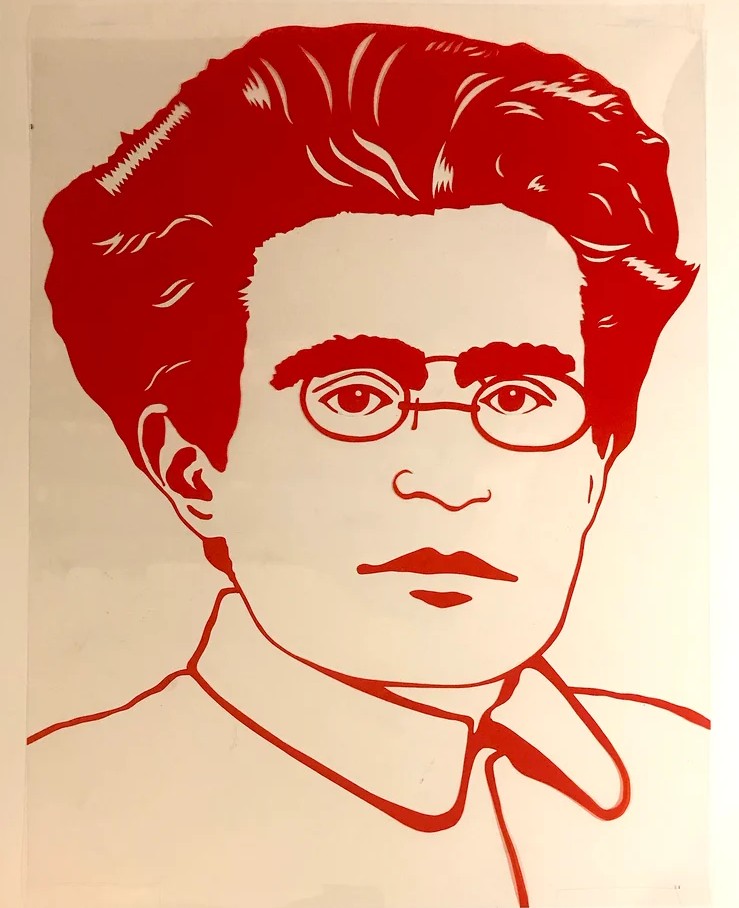
On the evening of November 8, 1926, Italy’s Fascist police arrested the leader of the Communist Party of Italy, the revolutionary intellectual Antonio Gramsci.1 Imprisoned in Regina Coel, the largest prison in Rome, Gramsci saw not just another dozen comrades arrested but the state’s outlawing of the entire Communist Party (this forced the remnants of the party underground, though they would ultimately play a crucial role in the antifascist resistance). In a declaration that now rings with prophetic irony, Gramsci’s prosecutor is said to have proclaimed: “For twenty years we must stop this brain from functioning.”
Gramsci’s body would not last 20 years. He died, worn and weary, on April 27, 1937, after nearly a decade in prison and two years hospitalized in Rome’s Quisisana clinic. Yet Gramsci’s time incarcerated had proved the most creative, dynamic, and systematic period of his intellectual production. Indeed, it was precisely under these conditions of debility and captivity that Gramsci produced his greatest intellectual accomplishment: the 33 Prison Notebooks, which, as the late Asad Haider observed, aimed at nothing less than “thinking through politics anew.”
November 2026 marks a century since Gramsci’s fateful imprisonment. And today, once again, we find the world-historical conjuncture echoing with Gramsci’s words: “the old is dying and the new cannot be born.”
“Gramsci’s Imprisonment @ 100” asks: What lessons, if any, can be learned from Gramsci’s life and work today? Stuart Hall famously suggested that we cannot turn to Gramsci for a set of ready-made concepts, analyses, or programmatic propositions that can be simply transposed onto our times; instead, Hall argued that we must work to “‘think’ our problems in a Gramscian way.” How, then, might we bring Gramsci’s distinctive “rhythm of thought” to bear upon the present? What part can the “open work” that is the Prison Notebooks play in revitalizing concepts such as “Fascism,” “imperialism,” “hegemony,” or “crisis”? How can thinking in a “Gramscian way” help us navigate a terrain of struggle that is markedly different from Gramsci’s time?
These are the questions taken up by the contributors to this roundtable. Nikhil Pal Singh opens our dialogue with the provocation that neither the Left nor the Right “possesses a theory of change adequate to the current crisis.” If the late 20th and early 21st centuries witnessed the “unraveling” of US hegemony, we would do well to remember, Singh stresses, that hegemony on any scale has historically been the exception rather than the rule. Robyn Marasco cautions that although Gramsci is indeed “the man of our moment,” too often it is the myth rather than the substance of Gramsci’s thought that predominates in contemporary discourse. For Marasco, the very existence of “the Gramsci myth” is testament to the central place of culture in what Gramsci called the “war of position.” Departing from the fashionable “Left lament that ours is an era of ‘hyperpolitics,’” in which “everything is politicized, but nothing really matters, politically,” Marasco reminds us that, for Gramsci, “everyday life has always been at the heart of politics.” Alberto Toscano homes in on the nature of “the fascist interrex, the potentate of the interregnum.” In Toscano’s account, the dialectical entwinement of “organic” and “conjunctural” crises that marks the present interregnum has differentially reprised a “Caesarism,” which “is a ‘fix’ but not a true resolution or reconstruction” of the crisis. Hence “the incessant and capillary policing of the interregnum,” the “hypertrophy” of apparatuses of repression already ubiquitous under capitalism but now coupled to a “cynical philosophy of violence” amid widespread “political disaffiliation and demoralisation.”
And yet none of the contributors’ reflections on Gramsci’s relevance view these foreboding struggles as absolute barriers to the cultivation of dynamic and effective revolutionary praxes. Sara Salem returns us to a speculative dialogue between Gramsci and the Black anticolonial revolutionary Frantz Fanon and asks what sort of praxis might emerge from the encounter between “Fanon’s call to stretch Marxism when it comes to the postcolony” and what Gramsci, indelibly marked by his Sardinian roots, called the “Southern question.” Rereading Gramsci and Fanon in dialogic concert today, Salem suggests, drives home the necessity of “fusing … anti-fascist and anticolonial struggles,” of setting our sights on “a hegemony that is both socialist and anticolonial.” Finally, Sharad Chari traces the currents of a “Gramscian oceanics,” a rhythm of thought informed by Gramsci’s practiced “attention to geo-historical waves of imperialism, as well as his call to gather and make directive submergent forms of subaltern will.” Chari stresses Gramsci’s articulation of a “philosophy of praxis” that is at once “absolute mondanizzazione and earthliness of thought.” Drawing on the insights of contemporary dockworkers in Genoa striking against immiseration, war, and genocide, Chari suggests that “across seas that connect genealogies of praxis is a vein that excavates a conception of the world in which Palestinian liberation signifies both a specific and generalized demand.”
Each contribution to this roundtable reminds us that, for Gramsci, “the only ‘philosophy’ is history in action, that is, life itself”—a philosophy that is immanent to the unfolding of an “ensemble of historically determined social relations” made and remade through struggle. Gramsci was clear that “an historical act,” not least the fashioning of a praxis capable of facing the ravages of a crisis-ridden age, “can only be performed by ‘collective man.’”
Nevertheless, in our efforts to return to the radical historicity of Gramsci’s philosophy of praxis in our own “moment of danger,” we should perhaps still take stock of the singular generosity of spirit by which his life was animated. What can such generosity teach us about sustaining an “instinct of rebellion” in this time of terror and uncertainty?
—David Kalman, guest editor
 Contributors:
Nikhil Pal Singh: Interminable Interregnum
“The crisis consists precisely in the fact that the old is dying and the new cannot be born; in this interregnum a great variety of morbid symptoms appear.” This, Gramsci’s description of the crumbling of the old liberal, European order, written from a Fascist prison cell in 1930s Italy, has become one of the most widely (if often wrongly) cited political quotations of our own times. A resurgent right raises the specter of “cultural Marxism” as it relentlessly pursues a vision that all politics is downstream from culture. A weakened Left laments the intractability of “hyperpolitics” while waxing nostalgic for “New Deals” and civic infrastructures supportive of popular, counter-hegemonic politics. Both sides seek to occupy the vacuum of (neo)liberal politics by resolving its collective action/actor problem. Neither possesses a theory of change adequate to the current crisis.
In the prison house of liberalism’s decline, it might be said that we are all Gramscians now. Vulgar Gramscianism, however, lightly glosses many of Gramsci’s highly versatile methodological lessons. Gramsci did not merely attend to the cultural and ideological dimensions of social life against the simplified class presumptions of vulgar economism (in the context of a national society); he pursued a more thoroughgoing, historical materialist “analysis of situations,” one in which the question of the balance and “relations of forces”—structural (i.e., production related), political, military—national and international—was paramount. Leaving this kind of analysis mostly to the side, today’s thin, national populisms of the Left and Right are no more likely to organize consent at societal scales than the dying center they decry.
One of Gramsci’s most important Anglophone interpreters, Stuart Hall, was among the first to identify an emerging crisis of hegemony in Western societies in mid-1970s Britain. Hall argued that a new hegemonic form he dubbed “authoritarian populism” was crystallizing via Reagan, Thatcher, and the Washington consensus. The real bequest of the emerging period, however, was arguably buried in Hall’s earlier, subtle and prescient coauthored work, Policing the Crisis, which observed that “the repertoire of hegemony through consent” had irrevocably changed. What would come to be known as the neoliberal state in this view was less the face of a new hegemonic order than the refractory expression of a permanent crisis of governability, one increasingly reliant upon the management and manipulation of internal dissensus, and the normalization of the use of exceptional powers against representative institutions.
It has been tempting for many on the Left and center-left to understand this situation through analogies of historical regression. But what if the problem we now face is not what the South Asian Marxist Ranajit Guha called “dominance without hegemony” (glossing Gramsci for colonial situations), let alone emergent Fascism, but a more aleatory project of governance without hegemony? In 2003, with the onset of the Iraq War, Giovanni Arrighi, among the foremost thinkers to adapt Gramscian ideas to international political economy, again perceived “hegemony unraveling”—this time, US hegemony at the international scale. Arrighi’s grand theory viewed history as a series of global cycles of capital accumulation, unfolding via the hegemonic ordering of a dominant guarantor, paralleling Gramsci’s notion of a historical bloc mastering the relation of social forces—structural, political, and military. In the wake of the Iran War, it is perhaps finally clear that Arrighi’s last hegemonic order—the Pax Americana—has finally arrived at its long-anticipated terminus.
Alive for Europe’s second thirty years’ war, Gramsci knew that “interregnums” could last a long time—that hegemony itself was exceptional. As we sit on the precipice of World War III, in the midst of catastrophic climate emergencies, we can perhaps see that we have not yet really grasped the nature of our crisis. For the problem we face is not about liberalism’s waning legitimacy, or the collapse of rule-bound order, but the fact that, for perhaps the first time since World War II, the balance and relation of forces that the US (and European) dominated world presumed, have become fully indeterminate at national and international scales. The proliferation of terms like “polycrisis,” “ungovernability,” “multipolarity,” even “hyperpolitics” suggests the characteristic feature of our time is a more intractably non-hegemonic world. In the spirit of Gramsci’s method, to think as such is less hopeless than the condition of possibility.
Robyn Marasco: The Gramsci Myth
Antonio Gramsci is the man of our moment. In the pages of the Wall Street Journal, he has been christened MAGA’s favorite Communist and cited as inspiration for a cultural politics of counterrevolution. Christopher Rufo invokes the Gramscian idea of “the long march through institutions” to make sense of why the New Left of the 1960s still shapes our politics, despite consistent defeat in the electoral arena, and how it can be crushed once and for all.
Like so many other slogans attributed to Gramsci, however, he never actually used the words “the long march through institutions.” They were coined by Rudi Dutschke, a militant of the German New Left, in 1967, likely referencing Chairman Mao’s “Long March” from the military campaign of 1934–5 to the Chinese Cultural Revolution, not the ideas of Gramsci. Nonetheless, “the long march through institutions” has become shorthand for what Gramsci called the “war of position”—or, the protracted effort to gain hegemonic control of culture and to shape common sense. Gramsci distinguished the “war of position” from the “war of maneuver”—or, the more direct and confrontational effort to seize or wield state power. For Gramsci, both the war of position and the war of maneuver were essential to any organized political struggle. For Gramsci’s followers on the Right, they have been losing a war of position for more than half a century, despite their successes in the war of maneuver. The cultural counterrevolution is thus centered on two principal institutions: higher education and media. These are the institutions that the Right believes key to the cultural hegemony of the Left.
In short, what the Right wants from Gramsci is fuel for the culture wars it has been fighting for decades. None of this should be terribly surprising to the Left, which has long turned to Gramsci to think politically about culture and long battled the Right on this uneven and shifting terrain. Cultural studies, as envisioned and practiced by Stuart Hall, is one the great legacies of this encounter with Gramsci. And Hall’s writings on Thatcherism, which revolve around the thesis that the Right is an ever-changing political target and that the Left must be agile and reflexive in response, offer a model and a method for making sense of these ongoing culture wars.
Hall’s writings on Thatcherism are also the point of contact with another Gramsci, not the theorist of culture but the theorist of the conjuncture and the critic of Fascism. This is the Gramsci invoked by many on the Left today. “The old is dying and the new cannot be born”—this is how Gramsci described the interregno that produced Fascism, said to be a time of monsters. Again, this was not the word Gramsci used. Instead, he describes “morbid phenomena” (fenomeni morbosi) observed in Fascist leaders, yes, but more importantly, in the death march of the masses toward their own destruction. Gramsci saw that Socialist politics was the only antidote to these symptoms.
Gramsci is the intellectual lodestar for both the revival of democratic socialism and its left opposition in our era. Let us look to the Prison Notebooks to guide our debates about political strategies and tactics, the structure and significance of political parties, and the role for intellectuals in politics. In the century since his arrest, this is the position that Gramsci has consistently assumed for the Left, his legacy claimed by different camps and his concepts clarifying the practice of politics in the Marxist tradition. Even Gramsci’s critics on the Italian Left—Galvano Della Volpe, Mario Tronti, and Antonio Negri, to name a few—share his investment in the distinctly political questions raised by Marx and Marxism. Gramsci is for us what Machiavelli was for him: the proper name for the question of politics itself.
How can we build this capacity? What gives durable form and direction to the people’s passions? What enables its conversion into the exercise of power?
Many on the Left lament that ours is an era of “hyperpolitics”—everything is politicized, but nothing really matters, politically. Politics becomes sport, fashion, diet, lifestyle, and entertainment. Anything but actual politics. For some, this is also a legacy of the New Left and its focus on the transformation of culture. For others, the problem is a more pervasive nihilism in late modernity. Reading Gramsci suggests something else: Everyday life has always been at the heart of politics. Everything is political. Politics is not downstream from culture; culture is an arena of political struggle. This is arguably what Gramsci learned from the conservatives and reactionaries who were his contemporaries, a lesson now being rediscovered by the Right through him. Politicization is not the problem; powerlessness is.
Politicization presents opportunities. The challenge for the Left remains the more direct and confrontational effort to seize and wield power. How can we build this capacity? What gives durable form and direction to the people’s passions? What enables its conversion into the exercise of power? What are we going to do with power if we get it? And how do we intend to use the power that we have? These were Gramsci’s questions, too, for which he found answers in the synthesis of Marx and Machiavelli, what Althusser termed Gramsci’s “utopian realism” and defended as a partisan political science. Thinking with Gramsci today, against the conservatives and reactionaries who are our contemporaries, involves the active pursuit of antifascist political science.
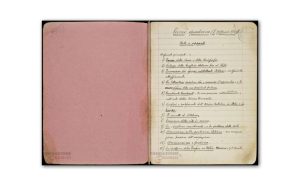
Alberto Toscano: In memory of Peter Thomas (1973-2026)
In these times of turbulence and destruction, genocide and impunity, interminable but perhaps terminal crisis, the idea that we are living in a global interregnum seems to be everywhere. In the mouths of countless analysts, journalists, bankers, and social theorists (even the French president), a dictum extracted from Gramsci’s carceral writings—“The crisis consists precisely in the fact that the old is dying and the new cannot be born; in this interregnum a great variety of morbid symptoms appear”—is relentlessly invoked, notwithstanding the unusual source of auctoritas (an imprisoned Communist).
In a curiously obstinate apocryphal turn, the second clause is often abridged to “now is the time of monsters,” eliding the interregnum and its symptomatology for the thrill of a much more spectacularly ominous image. An epoch of multiple, compounding upheavals and cataclysms has generated its own anxious, restive structure of feeling. We might even call it a destructuration of feeling that is in its turn a feeling of destructuration, if not necessarily its thought, and rarely its theory.
The interregnum (a term Gramsci only used twice in his writings, and thus not exactly a concept) is a name for that shifting and treacherous historical terrain that combines “organic” with “conjunctural” crises. Some, like historian Adam Tooze, have criticized the interregnal doxa for seeking consolation in the idea that what we are witnessing are birthing pains or systemic readjustments that will of necessity see the emergence of a new order. But this was not Gramsci’s perspective in the 1930s, oriented instead toward accounting, both in the longue durée and in the wake of recent political defeats, for the interregnum’s emergence and for the politics operative within it, namely Fascism, the bearer of “passive revolution” and a species of “Caesarism.”
Headed by what we could term the Fascist interrex, the potentate of the interregnum (which exhibits an absence as much as a metastasis of powers and authorities), Caesarism is a “fix” but not a true resolution or reconstruction, whence its incessantly repressive character, its ability to leverage “the relative weakness of the rival progressive force,” to “preserve this weakness.” This is why, as Gramsci’s imprisonment painfully emblematized, “modern Caesarism is more a police than a military system.”
The police, which Gramsci conceived in an expansive sense, not just as a specific uniformed branch of the state’s repressive apparatus, suits the amorphousness and ambiguity of the interregnum—we might argue that this is due to what Walter Benjamin named as the police’s spectrality and its ignominy, anchored in the fact that “in this authority the separation of law-making and law-preserving violence is suspended.” The modern, which is to say the capitalist interregnum that Caesarism and its police seek to stabilize and exploit, therefore differs radically from the ancient Roman or mediaeval forms taken by the lacuna or interruption of potestas or kingship; the interregnum that Gramsci limns in his notebooks is not a juridical or political-theological institution.
In effect, Caesarism is in a way nothing but the incessant and capillary policing of the interregnum—something with which we are all too familiar today, with the hypertrophy of repressive reactions to any challenges to the elite status quo, from climate to Palestine, not to mention grotesque revivals of the red scare. It is in the knotting together of a prolonged “organic” crisis, the “morbid” symptoms of political disaffiliation and demoralization, and Fascism’s temporary yet potentially durable Caesarist fix, with its cynical philosophy of violence, that we can locate the core of Gramsci’s political interpretation of the interregnum, understood as the hostile terrain in which the construction of a collective emancipatory project and a “new culture” means that one has to make one’s path by walking it.
Sara Salem: On Gramscian Re-readings
Antonio Gramsci’s work has inspired generations of revolutionaries and writers alike, culminating in rereadings that stretch his work and create a living tradition that is invaluable to the Left. In an imagined conversation between Gramsci and Frantz Fanon, I explored the first and only time in modern Egyptian history when we saw a period of political hegemony, soon after independence in 1952. Gamal Abdel Nasser, riding a wave of anticolonial nationalist sentiment and embarking on a program of nationalization, industrialization, and welfare, completely transformed Egypt in the space of two decades. Coercion was ever present, particularly against the Communists and Socialists, as well as against Nubian communities who were displaced to build the Aswan Dam; but precariously balanced alongside it was a significant amount of consent. Rereading Gramsci alongside Fanon, we see that it was colonization and the ensuing anticolonial struggle that produced the conditions for hegemony.2 This consent had as much to do with the historical moment as with Nasser himself; it was the era of Third World liberation, of anticolonial fever dreams.
This imagined conversation engaged in Fanon’s call to stretch Marxism when it comes to the postcolony, to take seriously the ways in which our Marxist analysis was fundamentally altered in spaces that were colonized. For it was colonization that produced the conditions for the anticolonial struggles that went on to create powerful political projects that continue to haunt the present. Fanon, in his note to stretch Marxism, gave the example of South Africa, through which he addressed all colonized places. Yet this move to stretch Marxism applies to Europe and North America too, if we consider that the entire world was transformed by colonialism and decolonization. In this sense, to think of Gramsci’s hegemony today is to always think of colonial pasts and presents, as well as anticolonial resistance, both of which continue to fundamentally shape our world.
Gramsci’s thought is enriched here by conversing with Fanon and with the postcolonial world more broadly; though his writing on Southern Italy made it easier for his theories to travel globally, given his attention to internal colonialism, his conceptualization of hegemony shifts when it comes to the question of colonialism and anticolonialism. In thinking about Fascism and antifascism today, it may be that this coming together transforms the way we think of power configurations in our present moment. From Israel’s brutal genocide in Palestine to the rise of Hindutva in India, from white nationalism in the UK and Europe to state and corporate extractivism in the Congo, the colonial underpinnings of our moment are clear to see. What rereadings of Gramsci’s work attune us to is the possibility of a left-wing hegemony, as distant as it seems today; yet when we read Gramsci through thinkers like Fanon, we become equally attuned to the anticolonial nature hegemony can and should take. The 20th century witnessed the coming together of anticolonial and antifascist forces; left-wing hegemony was imagined as resisting both colonialism and capitalism. To continue an imagined conversation between Fanon and Gramsci suggests that this is where our hope lies today: in a return to this fusing of antifascist and anticolonial struggles, and the embrace of a hegemony that is both Socialist and anticolonial.
Sharad Chari: Gramscian Oceanics
On this centenary of Gramsci’s steadfast refusal of the Fascist attempt to shut down his capacity to think, what kind of revolutionary praxis is imaginable? Gramsci’s rhythms of thought, I suggest in a pamphlet, are “oceanic” not just in direct reference to the sea but in his attention to geo-historical waves of imperialism, as well as his call to gather and make directive submergent forms of subaltern will.3 What remains puzzling is Gramsci’s geographical imagination in his revision of Marxism as a philosophy of praxis:
The philosophy of praxis is absolute “historicism,” absolute mondanizzazione and earthliness of thought, an absolute humanism of history. Along this line, one must excavate the vein of the new conception of the world (my translation).
We might read “absolute historicism” as Gramsci’s call to rescue the injunction to historicize from (Croce’s) speculative idealism and (Bukharin’s) metaphysical materialism, and “absolute humanism of history” as part of his formulation of socionatural entanglement in this historicization.5 The phrase in between is curious, as is its standard English translation as “absolute secularization and earthliness of thought.”6 Indeed, Gramsci does not use the word secolarizzazione, nor mondiale (world, worldwide), or mondanità (worldliness, with its classist connotations) to parallel terrestrità. The unusual mondanizzazione should give us pause when the Left, the international, and the transnational-popular remain hamstrung in being able to stop genocide in Palestine.
Mondanizzazione: the capacity for world-making. Or its evisceration. La mondanizzazione e terrestrità assoluta del penseiro: the capacity for world-making and earthly thought while witnessing settler-colonial genocide as it hollows out the mere avowal of solidarity.
At the “Planet in the Port” workshop organized by Penelope Papailias with comrades George Mantzios, Pantelis Probonas, Conor Smith, Penny Paspali, Dimitra Morosou, Katerina Giannitsi, and Antonis Petras, José Nivoi of the Collettivo Autonomo Lavoratori Portuali (CALP) spoke with Chloe Howe Haralambous about how dockworkers came to understand the erosion of their conditions of work as part of the global war economy, prompting them to strike against handling arms for genocide.7 Nivoi posed this militancy as shaped by waves of prior struggle, from worker-partisans of Genova forcing the first Nazi surrender, to dockworkers striking against munitions bound for the Vietnam War. A militant of Sardinian origins, his itinerary is intertwined with Gramsci’s, but so is his rhythm of thought. The experience of working on the edge of the sea, in Nivoi’s imagination, evokes a particular imaginary. This militant conception of an outside, mediated by the earthliness of dockside labor, rhymes with the praxis through which so many Palestinians remain attached to al ‘ard (the earth / land / ground) subject to obliteration, as Samera Esmeir argues.8 Across seas that connect genealogies of praxis is a vein that excavates a conception of the world in which Palestinian liberation signifies both a specific and generalized demand.
- The illegality of Gramsci’s arrest shows that police power requires the regular transgression of its formal juridical constitution and constraints, undermining how liberals represent Fascism as the monstrous antithesis of constitutional democracy. This truism should acquire new gravity today in an interregnum (interregno), to use Gramsci’s word, in which the absence of authority issues forth a constitutive indistinction between the violent making, breaking, and preservation of law, as Alberto Toscano thoughtfully observes by way of Walter Benjamin ↩
- See Sara Salem, “Gramsci in the Postcolony: Hegemony and Anticolonialism in Nasserist Egypt,” Theory, Culture & Society, 38(1) (2021), pp. 79–99. ↩
- Sharad Chari, Gramsci at Sea (University of Minnesota Press, 2023). ↩
- Antonio Gramsci, Quaderno 11, §27, 1932–3, in Quaderni del Carcere II, Quaderni 6-11, a cura di Valentino Gerratana, Einaudi Editore, 1975. ↩
- Peter Thomas, The Gramscian Moment: Philosophy, Hegemony and Marxism (Brill, 2009), 269, and chapters 7 and 9; Alex Loftus, “Gramsci, Nature, and the Philosophy of Praxis” in Michael Ekers et al., eds., Gramsci: Space, Nature, Politics (John Wiley & Sons, 2013), 179. ↩
- Antonio Gramsci, Selections from the Prison Notebooks, ed. and trans. Quintin Hoare and Geoffrey Nowell Smith (International Publishers, 1971), 465, read with 417 (Notebook 15, §61). ↩
- Pelion Summer Lab, June 26–July 6, 2026, Neochori, Greece. ↩
- Samera Esmeir, “The Days Before,”In the Midst Blog, Critical Times: Interventions in Global Critical Theory, August 21, 2025. ↩