By Prof Hassan A. Saliu
Introduction
Diplomacy has undergone significant transformation since the Vienna Convention on Diplomatic Relations (1961) introduced orderliness into its practice. After modern states attain independence, one significant step expected of them is to announce their arrival on the world stage. Foreign policy provides a veritable platform for doing so. Nigeria did not depart from this tradition after acquiring independence in 1960 (Balewa, 1960).
Its diplomatic practice predates independence. The pioneer Foreign Service officers, about twelve in number, were recruited in 1957, followed by later batches. These initial officers trained in British embassies, which limited their diplomatic horizons to British diplomatic traditions (Adeniji, 1990). A few years into independence, however, the country faced the reality of maintaining diplomatic relations with other parts of the world, notably the Union of Soviet Socialist Republics (USSR), although Nigeria’s foreign policy had already firmly established a pro-Western orientation (Aluko, 1981).
What began as a purely career service later, especially after independence, opened its doors to non-career ambassadors. This development began under the Balewa Government, ushering in the dichotomy between career and political ambassadors—a persistent and emotive issue in Nigeria’s diplomatic conduct. Several other concerns afflict the country’s diplomacy, including the rationale for a single agency to recruit, transfer, discipline, and perform other regulatory functions for home ministries and Foreign Affairs. The question of cross-service posting also remains a tradition (Saliu, 2015).
While several dimensions of the country’s Foreign Service merit exploration, this intervention focuses on the high number of missions beyond Nigeria’s capacity to sustain. As of the last count, the country maintains over one hundred diplomatic missions worldwide. Some are befitting, while others are in a deplorable state and lack the tools and infrastructure to function optimally (Iweala, 2006; Ashiru, 2011; 2013). These conditions prompted President Goodluck Jonathan to order the renovation of one mission during his 2013 state visit to the host country, São Tomé (Jonathan, 2011). Persistently, arising from the poor state of the missions and the consequential lack of funds to maintain them and, lately, to post ambassadors to them, there has been agitation and advocacy for a reduction in their number to be in tune with the nation’s economy (Tuggar, 2024).
At one point, President Buhari expressed concern and argued that their number should be reduced to reflect the economic realities at home. Indeed, he pruned down the number and withdrew the country from numerous but less significant international organisations and institutions during his tenure (Saliu, 2016a). As for the former, only a few missions were affected, though not as significantly as one might have expected. Since then, the debate has persisted over whether Nigeria should close some missions or consider the concept of smart missions proposed by Balewa House.

Foreign Affairs Minister, Bianca OJukwu
Representation and the Changing Functions of Diplomacy
Representation is the hallmark of diplomacy. Since sovereignty cannot physically move, it was conceived that domestic sovereignty at home could be extended to other jurisdictions (Adeniji, 1990). That conception gave rise to diplomatic missions, which express a state’s sovereignty abroad. The history of diplomatic relations is as old as the relations among states themselves. Before the advent of modern states, empires and kingdoms also maintained diplomatic missions that represented them. However, as relations expanded, diplomacy has shifted to cover areas not anticipated in the old order (Saliu, 1994).
One modern requirement is to attract economic benefits and defend citizens abroad more astutely. Some scholars have argued that emphasising these areas/issues does not mean diplomacy has been transformed (Akinyemi, 1994). What is observable reflects changing times. Diplomacy remains diplomacy with many facets. It is inconceivable for a diplomat to claim indifference to these requirements because his state has not launched an audacious scheme of economic diplomacy or citizen diplomacy (Akinyemi, 1994). All these, and others, fall naturally within his diplomatic repertoire. Still, the contemporary diplomat is expected to cope with varied issues that have arisen in diplomatic practice. This development compels any assessment of diplomatic missions to consider other parameters.
In the United States and Britain, with longer histories of diplomatic practice, there is widespread lamentation that diplomacy cannot cope with the dynamics of modern state relations. This is not surprising, given the increased movement of people across countries, which tasks diplomacy far beyond its limits. Accompanying this is the perception that diplomatic missions are not serving the purposes associated with the singular thrust of representation. A few years ago, former Edo State Governor Adams Oshiomhole berated the country’s diplomatic missions for failing to follow travelling Nigerians and represent the nation effectively, especially amid rising consular demands. On that occasion, he eulogised the victorious national female soccer team for projecting more image than Nigeria’s numerous diplomatic missions did in 2010 (Oshiomhole, 2010).
Can it be true that Nigeria’s numerous missions are punching below their weight in their representational capacity? The answer may not be as straightforward as Oshiomhole suggested. There is the issue of capacity. There is also the issue of the resources available to the missions to fulfil their diplomatic responsibilities. It has been observed that, given the declining productivity of diplomatic staff and, more importantly, the downturn in the national economy that often raises red flags, Nigeria should take a second look at its diplomatic missions and prune the number to reflect its current capacity. These environmental factors have fundamentally lowered Nigerians’ enthusiasm for travel and made the missions their first point of call (Saliu, 2018). The perception that the missions will not be there for them has shaped the stories they tell about Nigeria’s diplomatic missions and the poor services they render. Consequently, a debate has ensued over whether Nigeria should continue to maintain its current high number of diplomatic missions, slightly above one hundred, amid their less-than-satisfactory performance.
The Executive Response and the Origins of Proliferation
In the presidency’s view, especially under President Buhari, and even before him, Nigeria should make the hard decision to cut the number of its diplomatic missions. The Tinubu administration has not yet expressed any public opinion on the matter. However, one can assume that the high number remains a concern, given the time it took to announce new ambassadorial appointments and its eventual resort to phased appointments and postings as an indication of distress on the diplomatic turf (Saliu, 2026a).
For these reasons, this intervention assumes that the issue remains relevant. It should be noted, however, that the materials relied upon here were derived largely from President Jonathan and the late President Buhari regimes, especially the latter first term in office. The latter regime had argued that, given a less-than-buoyant economy at home, it would not be necessary to continue with so many missions. This rationale extended to ECOWAS relations when, in 2016, he told a bewildered Nigerian public that, because of the poor state of the economy, Nigeria could no longer carry the burden of ECOWAS (Buhari, 2016; Saliu, 2026b). That showed how serious his government was about cutting costs in external relations.
On diplomatic missions, he was determined to reduce the number of countries it maintained relations with. Other developments, such as the lack of reciprocal relations between Nigeria and some other nations, the lack of evidence of tangible diplomatic gains, and waning interest in Nigeria’s global agenda, compelled the decision to cut costs under the Buhari civilian regime (Saliu, 2026b).
A little recourse to history will help to explain how the country came to have so many diplomatic missions it could not sustain. Three factors are important to recall in this connection. These were:
First was the oil windfall that left the country awash with petrodollars. Suddenly, and thanks to oil exports, foreign earnings increased many fold, enabling the country to make a powerful incursion into the international system and leading to the reckless opening of diplomatic missions without regard for their value to Nigeria, particularly in the long run (Jega, 2010).
Second, because of this first factor, the nation demonstrated readiness to pursue a global agenda in Africa and, indeed, the world. For instance, to further the goal of liberation, some distant countries, such as the Nordic countries, were wooed to support the Nigerian agenda, and missions were consequently opened with them. In terms of tangible benefits, they offered little, yet the country opened diplomatic missions in these countries to complement the popular causes it was pursuing worldwide (Olusanya, 1986).
Third, the military that ruled the nation for many years, particularly the regimes of Murtala Muhammed and Olusegun Obasanjo, were impervious to anything but Africa and were ready to do anything for the continent and the black world. This manifested in the Festival of Arts and Culture (FESTAC) held in Lagos in 1977 (Garba, 1987; Obasanjo, 1990). Reflecting this commitment, they advanced Gowon’s push for global visibility by expanding Nigeria’s diplomatic missions (Ogunsanwo, 1986). Global concern became an issue and a commitment, and money was available to implement it (Jega, 2010). Successor administrations were, however, less buoyant, although some also opened new missions (Saliu, 2006).
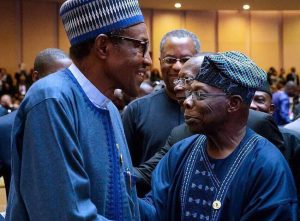
Foreign policy actors of yore
The Cost Argument and the Smart Missions Alternative
The weaker economy was the strongest reason the Buhari regime gave for pruning missions. While agreeing that cost mattered, Balewa House did not favour reducing the number of diplomatic missions. It argued that, going by experience, no sooner were some missions closed down than they were reopened at great cost to the nation (Ashiru, 2011; 2013). It was therefore not swayed by the reduction thesis. Instead, it pressed for the concept of smart missions. In its view, the missions should be left as they were, but the number of staff in the various missions should be reduced. Where there were twenty staff, they could be reduced to about five to save costs (Uhormoibhi, 2012).
As I argued then, this proposal carried its dangers. What criteria would be used to arrive at this smart number? Two major issues come up here. Nigeria is a complex country with many fault lines. How do we ensure religious and ethnic balance in carrying out the purges? Another is: what would happen to the auxiliary staff employed in the missions? Should we do away with them, and what would that mean for Nigeria’s relations with the affected countries? (Saliu, 2016b; 2016c). Perhaps because of the proposal’s complications, the Buhari government never approved it. Instead, it approved closing nine of the missions. The debate continues.
The National Assembly largely agreed with President Buhari, though a minority held a different view. The minority position in the National Assembly argued that, before pruning, the missions needed to be audited, after which restructuring should follow. It argued that the three missions in America were not adequate for Nigeria. The same applies to China, which has about two missions. A careful review would show that Nigeria needs more than the current numbers (Saliu, 2014). Technically, while the minority opinion did not oppose closing some embassies, it invariably called for an increase in their number, thereby keeping the country from being totally out of the economic argument and creating more diplomatic missions.
The Author’s Position
In view of this, the author rejects the idea of closing some embassies as canvassed and identifies the dangers such a proposal poses to the nation. As I have indicated, the strongest argument against retaining the number of current missions comes from the economy. Since the economy is not responding positively to the people’s realities, whatever the state managers can do to cut costs will be in order.
However, one notes that foreign policy is not a marketplace where one naira invested will instantly bring in two naira or more, even though it is unreasonable not to expect returns in any foreign policy pursuit ultimately in the long run. The platform is not a quick fix. Some gains take time to come. It is possible, as revealed during the Ministership of Chief Ojo Madueke, that corruption may be undermining the management of Nigeria’s diplomatic missions (Madueke, 2009). Why can’t the country beam a searchlight on corrupt influence, sanitise the environment, and know the next step for the missions?
On the issue of the non-viability of some missions, one argues that the economic argument obstructs other non-economic arguments. One of these is that Nigeria sees itself as a leading nation in Africa (Gambari, 2012). By whatever yardsticks are used, and some African countries are yanked off diplomatically, what will the implications be for a nation which has been a proud protector of African interests? A more rational approach to this author is to leave the missions substantially as they are and work out a more transparent process for opening new ones, without ruling out the outright closure of those whose existence cannot be justified by any stretch of imagination. Given the amount of emotion involved, Nigeria needs to weigh the options critically before closing down some of its missions.
One argues that the debate remains alive, given the nature of the economy at home, which appears more precarious than it was under President Buhari. In the NSIA outing on 3 November, 2026, featuring Dr. Khadijat Gumbi on the substance of the Technical Aid Corps, the prevailing view was that Nigeria should not say that, because of a bad economy, it will withdraw from global affairs. This tendency is crisis-laden for the country, given its past investments in the international system. The advice is that Nigeria can and should meet the challenges of global visibility if it is ready to review domestic expenditure patterns that indicate wastefulness and, once and for all, retool its foreign policy architecture. Once the loopholes are plugged, the country should be able to rise above the water level.
Conclusion
Some points made in this intervention are worth recalling. First, representation remains the hallmark of diplomacy, but modern diplomacy demands much more — economic attraction, citizen protection, and consular responsiveness. Second, Nigeria’s proliferation of missions resulted from oil wealth, liberation diplomacy, and military-era Afrocentrism, not a careful cost-benefit calculus. Third, while the economic argument for pruning is compelling, neither outright closure nor the unexamined smart missions formula offers a painless solution, given the costs of reopening, the federal character imperative, and the fate of locally recruited staff.
The path forward, therefore, lies not in retreat from global affairs, but in a prior audit of missions, a rationalisation based on reciprocal value and tangible gains, and above all, discipline in domestic expenditure. If Nigeria plugs the loopholes at home, it can sustain a global presence befitting its size, history, and ambition.
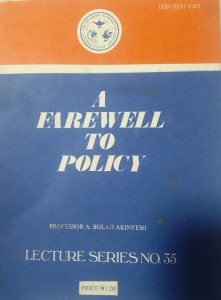
Flashback!
References
Adeniji, O. (1990). “Implementation and Administration of Foreign Diplomatic Missions Abroad’’ in Olusanya, G. O & Akindele, R. A (eds) The Structure and Processes of Foreign Policy Making and Implementation in Nigeria, 1960-1990. Lagos: NIIA 143-158
Akinyemi, B. A. (1994) Interview granted to the author when he was on his doctoral programme
Aluko, O. (1981). Essays on Nigerian Foreign Policy. London: George and Unwin.
Ashiru, O. (2011). Submissions on Ministerial Platform held at Radio House, Abuja in June
Ashiru, O. (2013) His Handover Notes as Minister 13 July
Balewa, T. A. (1960). His speech to the UN on 7 October.
Buhari, M. (2016). Buhari’s statement when he received in audience the late Professor Babatunde Oshotimehin of the UNFPA in April in Abuja.
Gambari, I. A (2012). “Nigeria in the United Nations: Prospects and Challenges’’ in Anyaoku, E. (ed) Review of Nigeria’s Foreign Policy: Issues and Challenges Lagos: NIIA pp49-62
Garba, J. (1987). Diplomatic Soldiering Ibadan: Spectrum
Iweala, N. (2006). Press Statement made after her appointment as Foreign Affairs Minister on poor conditions of the Ministry.
Jega, A. M. (2010). “Conclusion: Defining the Achievements and Challenges of Nigeria’s Foreign Policy’’ in Jega, A.M & Farris, J.W. (eds) Nigeria at Fifty: Contributions to Peace, Democracy and Development Abuja: Yar’Adua Foundation 206-229
Jonathan, G.E. (2011). Address made during the foundation laying ceremony of the residence of Nigeria’s ambassador to Sao Tome and Principe. Daily Trust 5 September. Online
Madueke, O. (2009). His statement at a Foreign Service Seminar in Abuja 9 December
Obasanjo, O. (1990) Not My Will Ibadan: Macmillan
Ogunsanwo, A. (1986). Our Friends and Their Friends: An Account of Nigeria’s Foreign Policy Lagos: Alpha Communications
Olusanya, G.O (1986) “Nigeria and the Commonwealth’’ in Olusanya, G.O & Akindele, R.A (eds) Nigeria’s External Relations: The First Twenty-Five Years Ibadan: Oxford Press
Oshiomhole, A. (2010). His remarks when receiving the victorious female national soccer team in Government House, Benin-City.
Saliu, H.A. (1994). “Economic Diplomacy as a New Phase of Nigeria’s Foreign Policy: An Assessment’’ A PhD Thesis submitted to the Department of Political Science, Bayero University, Kano, August.
Saliu, H.A (2006). Essays on Nigeria’s Foreign Policy Ibadan: Vantage Publishers
Saliu, H.A. (2014). “Contending Views on Nigeria Diplomatic Missions’’ India Quarterly: A Journal of International Affairs 70(4): 313-325 (Published in India by Sage).
Saliu, H.A. (2015). “Diplomatic Missions and Nigeria’s Search for Relevance in the Global System” Studies in Politics and Society 3(1) 33-53. (Official Journal of Nigerian Political Science Association, NPSA).
Saliu, H.A. (2016a). “The Baker and the Bad Loaf: Nigerian Foreign Service in Contemporary Times.” R.A Dunmoye, et al. (eds). Reflections on Nigeria’s Foreign Policy. Volume V1 Abuja: Friedrich Ebert Stiftung pp98-139.
Saliu, H.A (2016b). “Enhancing the Performance of Nigerian Foreign Service.” In: Jimoh, A. (ed) Contemporary Issues in the Nigerian Society Ilorin: Faculty of Social Sciences pp. 261-283.
Saliu, H.A (2016c). “Is President Buhari De-marketing Nigeria Abroad?” Studies in Politics and Society. 4(1) 1-20. (A Publication of Nigerian Political Science Association, NPSA).
Saliu, H.A (2018). Aspects of Nigeria’s Foreign Policy in the Fourth Republic Ibadan: College Press
Saliu, H A. (2026a) “Nigeria on a Global Stage: A Preliminary Assessment of President Bola Tinubu Era’’ A chapter in a book in honour of Prof. A. M. Okolie (forthcoming)
Saliu, H. A. (2026b). “Personal Integrity and Nigeria’s National Image: An Excursion into President Muhammadu Buhari’s Foreign Policy’’ A Chapter in a book in Honour of Prof. Kamilu Fage (forthcoming).
Tuggar, Y. (2024). “Paucity of Funds Delaying Appointment of Ambassadors’’ The Cable 28 May Online
Uhomoibhi, M. (2012). “Operational Cost of Nigeria’s Foreign Policy’’ in Anyaoku, E. (ed) Review of Nigeria’s Foreign Policy: Issues and Challenges Lagos: NIIA pp191-204
The author is of the Department University of Ilorin in Nigeria