By Adagbo Onoja
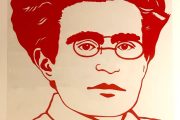
Waking up Thursday (November 12th, 2026) to two messages set the tone for the day. One was Prof Olorode’s piece on the 13th anniversary of Prof Festus Iyayi’s demise. The second came from publicbooks and it is on the centenary of Gramsci’s imprisonment. Intervention has published both the piece on Iyayi as well as the forum on Gramsci, even though one cannot even speculate what punishment publicbooks will mete out to Intervention for publishing the hefty forum on Gramsci without first seeking and obtaining permission. Any such punishment will be worth bearing because of the centrality of Gramsci to the radical democratic project now.
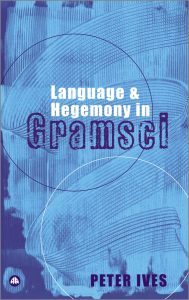
Arguably the most informed or one of the most informed scholars on how Saussure and Gramsci came to rule the world of ideas today
But while Gramsci is the global flagbearer of the Marxist tradition today, Iyayi can be argued to be the Nigerian equivalent. Of course, it is safe to assert that Gramsci is the pillar of Marxism today, giving coherence to all the internal criticisms within Marxism by harmonising them, turning Marxism (historical materialism) upside down and yet remain faithful to orthodoxy (because he still operated on binary oppositions which is how he retained the class leadership of the ‘working class’ even while reconstituting Marxism in to the theory of hegemony). It is removing that primacy of the working class that gives Laclau and Mouffe’s Hegemony and Socialist Strategy text its rebellious status against both classical and Gramscian Marxism but without it being a break from Marxism. In truth, it is both a break and a continuation.
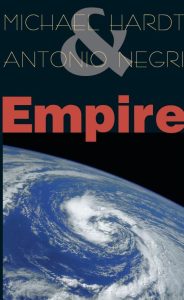
Other critiques or departures, particularly the authors of the book called Empire (by Michael Hardt and Antonio Negri (also a hard headed Italian communist with similar fate to Gramsci) follow Marxism. Why they call the book Empire is what remains unclear. It is not that they didn’t explain their own sense of Empire but the empire people are more familiar with is the territorial type. It is the same thing with Laclau and Mouffe calling theirs theory of hegemony or discourse theory when the hegemony people are more familiar with is imperial type. Similarly, discourse evokes talk and text, not the social ontology of change that Laclau and Mouffe’s theory of discourse is about.
Anyway, authors have their idiosyncrasies which readers must contend with. Empire as a book is certainly a contextual re-reading of Marxism in the age of intense global fluidity. All of these are good for Marxism. Only a dead theory remains the same or timeless. The timeless ambition of Realism, for example, is why it is dying. That this is the problem of Realism is not the position of any radical critics but that of one of their own high priests, prof emerita Barry Buzan in his celebrated 1996 book chapter titled ‘the timeless wisdom of realism?’
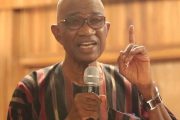
And this takes us to the piece on Prof Festus Iyayi by Prof Toye Olorode. Iyayi is most deserving of celebration. In a work that will no longer see the light of the day, Intervention had said the following about Iyayi and which will be quoted unedited:
Iyayi’s keynote address wasn’t a typical ideological critique. Instead, the former president of the Academic Staff Union of Universities (ASUU) gave a list of what Nigeria should have been doing to have been able to serve notice on the world that it seeks to be one of the indispensable nations as far as progressive humanity is concerned.
In the speech titled “Assassins of Nation Building, 2011 Elections and Electoral Reforms in Nigeria: Chronicle of a Death Foretold”, Iyayi asserted how, in many parts of the world, individuals feel specially honored should their day of birth fall within the halo of some significant national or historical event such as a nation’s day of the revolution, the day of the declaration of independence, the day of man’s landing on the moon, the day of freedom for Nelson Mandela. All those who were about to mark or are actually marking their 50th birthday in Nigeria ought to have their noses in the air as Nigeria’s achievements would have been part and parcel of those about to or have just attained 50 years of age. His address at the birthday would then have been devoted to themes like:
- Responding to Nuclear Threats: The Role of Nigeria’s New Missile AF50
- Retaining Nigeria’s Leadership in Car Manufacturing: Keeping the Japanese Behind
- Sharing Nigeria’s Cure for Malaria with the World
- Teaching the World How to Dance: Lessons from Nigeria’s Democratic Success
Unfortunately, Iyayi noted, the story of Nigeria at 50 is such that not only can Nigerians not devote themselves to such themes, their individual lives have been diminished by the dismal failure of the country to realise its great potentials. He therefore concluded that, in Nigeria, the ruling class is an assassin of nationhood and nation building because it neither understands nor accepts the responsibility for building a nation out of the diverse peoples and ethnic groups that inhabit the Nigerian territory. It meant that the Nigerian ruling class was headed to being an exception to the rule that, as Iyayi put it, whether the British or American, Japanese or Chinese, Singaporean or Brazilian, Cuban or Indian, every ruling class that succeeds at nation building offers some spectacular achievements that feeds upon and promotes a sense of national pride and hence identity (Iyayi, 2010).
The genius of the lecture is that, thereafter, no one could claim ignorance about what or where Nigeria should have been in the world today but from which it was still too far in 2010 and much farther in 2026. Nor could anyone claim ignorance why Nigerians are angry that their country is still too far from where it should be in developmental terms, notwithstanding the constraints of imperialism and neocolonialism. Iyayi provided the justification for such collective disappointment and anger.
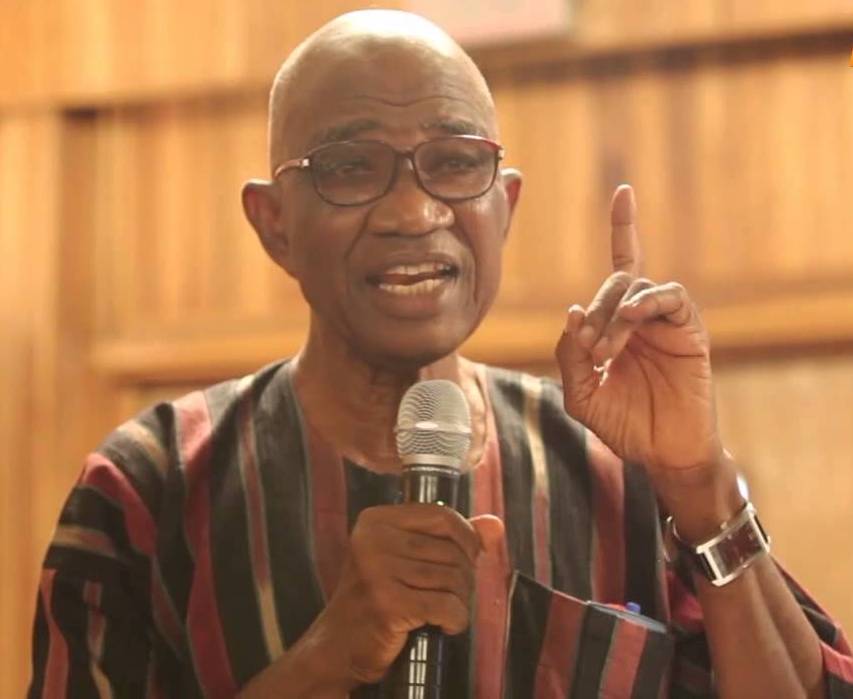
 It is of interest that Prof Olorode started the tribute to Iyayi with his novels. The message in the recognition of his literary outputs is a recognition of Iyayi’s novels as performance of Gramsci’s ‘war of position’, the first of the fighting options of a ‘historic bloc’. So, when we look closely and critically at Iyayi and Ake, for examples, we begin to see a convergence of a bit of Lenin, more of the Frankfurt School, so much of Gramsci and nearly everything of Laclau and Mouffe.
It seems clear that, to connect to all these, we must all go back to read Prof Jibrin Ibrahim’s 1984 (not sure)’s paper to the NPSA in Port Harcourt. Although titled “A political economy of Mass Communication” with a sub-title, there is no more complete rendition of the debates in Marxism up to that point than what is offered in the first part of the paper. In view of what appears to be inadequate awareness of the politics of Marxism, a mass circulation of that paper is called for. It is the simplest, most indigenous and most update treatment of it up to the collapse of the USSR. It provides the jump-off point to the turbulence in Marxism thereafter, starting with HSS, the initial reactions, particularly from Norman Geras, the University of Edinburgh professor of English, Laclau’s response to him in New Left Review and later in New Reflections on the Revolution of Our Time (1990) and so on. It could be argued that Alex Callinicos anticipated HSS and started the attacks even before it was published with his 1982 book Is there a future for Marxism. Tony Eagleton joined him much later with his Why Marx was right. HSS prevailed, gaining ground with Goran Therborn, the notable Swedish Cambridge Sociologist, publishing more and becoming more audacious critic of orthodox Marxism.
We must not forget what was going on at home here in Nigeria around this time. In 1996 when the then Kano based Centre for Research and Documentation (CRD) gathered its first ever set of laurates, one of the areas of consensus that emerged among the resource persons (the best of Ibadan, UNILAG, UNN, UNIJOS and BUK) is that Marxism in Nigeria suffers from a lack of nuanced analysis because a lot of the works produced in the name of Marxism were deformed by their class-centrism. Dr. Ogban Inyang particularly took a lot of time clarifying a lot of the conflations at the week-long methodology session. The session on identity was not an easy one.
So, let’s re-open closed schools of Marxism but let these schools start with an idea of what has been the history of Marxism. No serious engagement with Marxism can be so without bringing in the history and turns in Philosophy, the moments of rupture within Marxism and where we are today. No one who ignores the Cartesian epistemological circumstance in which Marxism was born and which is part of its burden can consider himself serious in so far as Marxism is about change rather than a religion where there is monitoring of adherence to credos and mantras. That would be idolatry.
These points are worth recalling. Apart from the slow death of Nigeria which Marxists constitute one of the best placed collectives to thwart but about which they can do nothing or very little with orthodox Marxism, there is the even more crucial point about theoretical clarity and the ideological and organisational patterns that follows at this point in human history. As abstract, boring or difficult to engage with for many of us, we cannot escape mastery of theories and the politics of theories in the world today. In there lies our independence in the critical sense of the word. God helps the parts of humanity that do not have the universities, the research centres and think tanks worth their names as far as producing theories and deploying theoretical power resources. They may have oil, super abundance of natural resources but they will still be the global second class citizens. What we have seen from 1979 to date in the theoretical battleground holds all the proof if ever proofs are needed.
Theory is thus not that kind of realm which we handle with our usual Nigerian gara-gara attitude of showing off or defending “our” own against “their” own. It requires a thoroughly critical attitude, the type that made Robert Cox, if we must exemplify, to write his 1981 article after around a decade or so as DG of the International Labour Organisation (ILO) in which he said, inter alia, that ‘every theory is for someone and for some purpose’.
The question confronting patriots in Nigeria is finding its own Robert Coxes, someone such as Prof Toye Olorode. Although Prof Olorode is too nice to be an enforcer, it is difficult to think of anyone who can be formalized into that position. As long as there is no such a figure, there will be no end to people thinking that Marxism is just another theory that remains what they read many decades ago. That is how they keep talking about the working class, class struggle and so on without bringing on board the changed dynamics which emergent drivers of informationalised capitalism such as Meta, Amazon, Apple, Netflix, Google and the likes have introduced into these processes. Neither capitalism nor the state Marx and Lenin conceptualised are the versions of them we have today. How do you fight correctly if your understanding of the dynamics are of capitalism in the era of Lenin when what is on the ground today is completely different?