By Muyiwa Jimoh
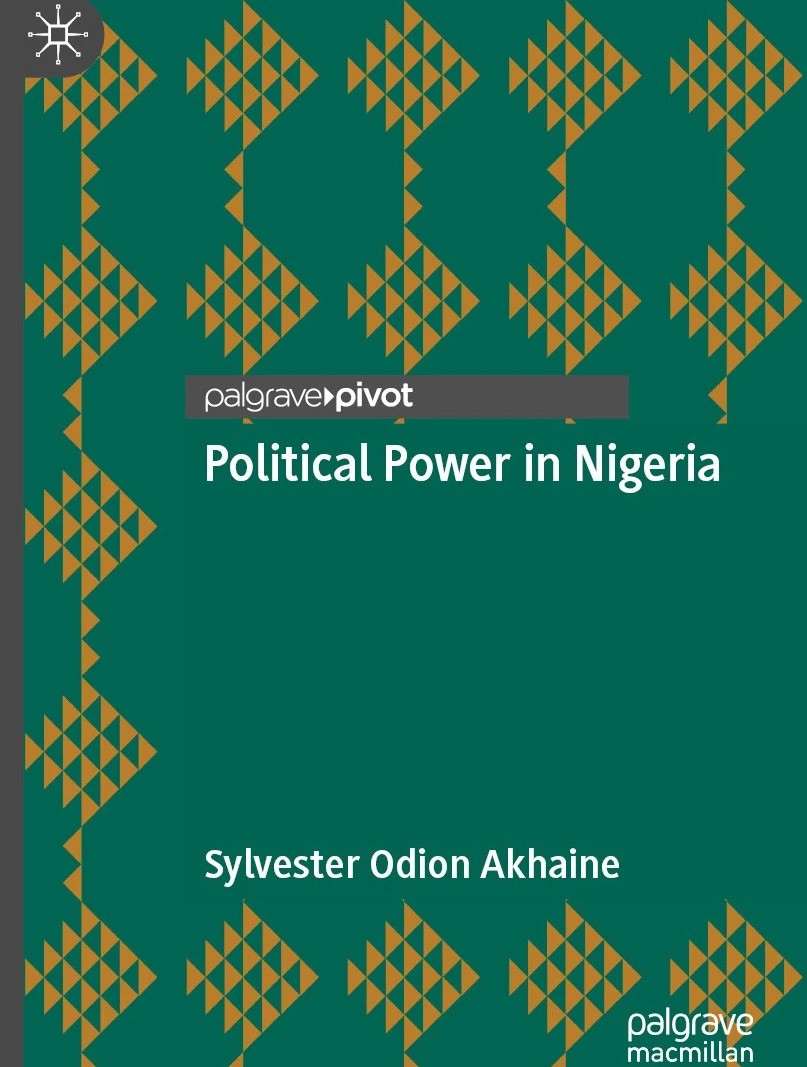
Sylvester Odion Akhaine’s Political Power in Nigeria is a significant contribution to the understanding of Nigerian political development, particularly the relationship between political power, elite formation, colonial legacies, electoral politics, and the struggle for political succession. Published by Palgrave Macmillan in 2026, the monograph examines Nigerian politics largely through the analytical category of power, with particular attention to the political circumstances surrounding the 2023 general elections (Akhaine, 2026). The author explains that the central purpose of the work is to use the power perspective to understand the conflicting dynamics of the Nigerian political space and the political succession that culminated in the emergence of a new president in May 2023 (Akhaine, 2026). The book is organised into twelve chapters, including “Lugardian Architecture I,” “Lugardian Architecture II,” “Inheritance Elite,” “The Rule of the Thumb,” “No-Show Scenario,” “Interim or Government of National Unity,” “The Politics of Health,” “Power in the North,” “The Presidential Contest,” “Teenage Voters, Supreme Court, and Igbo Strategy,” and “Postmortem and Future Dynamics.” This organisation demonstrates the author’s attempt to connect historical structures of power with contemporary political developments. The book is particularly important because it does not treat political power simply as the possession of governmental office but as a complex relationship involving institutions, political elites, economic resources, coercive instruments, legitimacy, ideology, ethnicity, religion, and electoral mobilisation. Akhaine’s central analytical concern is therefore the question of who controls the Nigerian state, how such control is acquired and maintained, and how competing political groups attempt to reproduce or challenge existing patterns of domination (Akhaine, 2026).
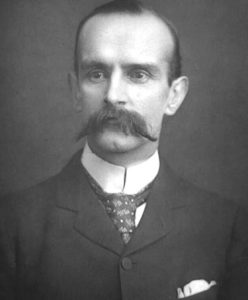
Lord Lugard, a perfect case study in adventures in empire building in Africa
The concept of the “Lugardian Architecture,” which Akhaine employs to explain the historical structure through which political power has been organised in Nigeria. The concept refers broadly to the colonial institutional arrangement inherited from British rule and subsequently reproduced by postcolonial political elites. According to Akhaine (2026), this architecture created a political structure in which control of state institutions became central to the struggle for political and economic advantage. The author links this historical structure to the emergence of what he calls the “inheritance elite,” particularly those political forces that have historically benefited from the existing configuration of state power. The argument is supported through discussions of colonial administration, census controversies, electoral manipulation, the development of regional politics, military intervention, and the political significance of northern dominance. Akhaine also draws on the concept of the “state-nation,” which he describes as a situation in which a particular nationality or political group exercises strategic control over state institutions and consequently influences the direction of public policy (Akhaine, 2026). This perspective is valuable because it moves the discussion of Nigerian politics beyond individual politicians and elections to the deeper institutional and historical structures within which political competition takes place. The author further strengthens this argument by engaging classical and modern theories of power. Weber’s conception of power, Dahl’s analysis of power resources, Bachrach and Baratz’s theory of the two faces of power, Foucault’s understanding of power as embedded in social relations, and Galbraith’s analysis of the sources of power provide the conceptual foundation for the author’s discussion (Akhaine, 2026). The book therefore succeeds in demonstrating that Nigerian politics cannot be adequately understood without examining the historical and institutional foundations of power.
Akhaine argues that political power has frequently been reproduced through elite bargaining, political alliances, control of state institutions, electoral strategies, religion, ethnicity, and access to economic resources. The idea of the “inheritance elite” is particularly important because it suggests that political domination can survive beyond individual governments through institutional and elite networks. In this respect, the author’s discussion of neo-patrimonialism is useful. Drawing on van de Walle (2007), the book explains how state resources can be distributed through patron-client networks, thereby weakening rational-legal institutions and undermining democratic governance. Akhaine’s analysis also identifies coercion, persuasion, authority, manipulation, and economic resources as important instruments through which political actors exercise power (Akhaine, 2026). This multidimensional understanding of power makes the work relevant to the study of corruption, electoral politics, political legitimacy, democratic consolidation, and governance in Nigeria. The discussion of power rotation between the North and South is equally significant. The author shows how the informal principle of political rotation became an important mechanism for maintaining elite accommodation within the Fourth Republic. The 2023 presidential election is consequently presented as an important test of this political arrangement. The contest involving Atiku Abubakar, Bola Ahmed Tinubu, and Peter Obi is interpreted not merely as a competition among individuals but as a broader struggle involving regional interests, elite alliances, political parties, religion, ethnicity, and competing strategies for controlling the Nigerian state (Akhaine, 2026). This makes the book useful for understanding the relationship between formal democratic institutions and informal political practices.
His approaches to the election as a critical moment in the changing structure of political power in Nigeria. The chapters dealing with the “No-Show Scenario,” the possibility of an interim government, the politics of health, power in the North, the presidential contest, and the post-election period reveal the uncertainty that characterised the political environment leading to the election (Akhaine, 2026). Particularly noteworthy is the author’s concern with the possibility that insecurity, attacks on electoral institutions, elite resistance to political transition, and demands for restructuring could undermine the electoral process. The discussion of the 2023 election also recognises the increasing importance of younger voters and the political mobilisation associated with Peter Obi and the Labour Party. The analysis of the Igbo political strategy, including Charles Soludo’s argument for stronger regional organisation and strategic political engagement, further demonstrates the author’s effort to examine the relationship between regional political organisation and access to national power (Akhaine, 2026). The book therefore captures several competing dimensions of Nigerian political competition. It shows that elections are not simply technical exercises in voting and vote counting but are also arenas in which political elites negotiate, compete, form alliances, mobilise identities, and attempt to preserve or transform existing power structures.

Sylvester Odion Akhaine, LASU Professor of Political Science and author of the book being reviewed
Despite its contributions, the book has some limitations. One major limitation is the strong emphasis placed on the Lugardian Architecture and the inheritance elite as explanations for contemporary Nigerian political problems. While colonial structures undoubtedly remain important, an excessive concentration on this explanation may understate the agency of contemporary Nigerian political actors and the changing social, economic, demographic, and technological conditions affecting political power. The foreword itself acknowledges a degree of structural weakness, describing the book as a collection of reflections that sometimes suffers from “organic incoherence” because its chapters originated largely from newspaper columns written as political events unfolded (Williams, as cited in Akhaine, 2026). This is an important observation because the newspaper-column origin of many of the essays gives the book immediacy and political relevance, but it can also produce unevenness in theoretical depth and methodological consistency. Some arguments are strongly interpretive and would benefit from more systematic empirical evidence. For example, claims concerning the continuity of northern political dominance, colonial manipulation, elite coordination, and the motivations of particular political actors require careful comparison with alternative interpretations and independently verifiable evidence. The author’s language is also sometimes strongly evaluative, particularly when discussing political elites and competing regional interests. Such language contributes to the critical character of the work but may occasionally reduce analytical distance. A more systematic methodology, clearer operationalisation of concepts, and greater engagement with competing explanations would strengthen the scholarly value of the argument.
Political Power in Nigeria is a valuable and intellectually provocative study of Nigerian political power. Its greatest strength lies in its attempt to connect the historical origins of the Nigerian state with contemporary struggles over political authority, elite succession, elections, regional interests, and democratic governance. Akhaine’s use of the concepts of Lugardian Architecture, inheritance elite, state-nation, neo-patrimonialism, and power rotation provides a framework for interpreting the persistent difficulties surrounding political inclusion and democratic consolidation in Nigeria (Akhaine, 2026). The book is particularly relevant to students and researchers of political science, African studies, history, governance, democracy, and Nigerian politics because it encourages readers to look beyond individual elections and political personalities to the deeper structures that shape political outcomes. Nevertheless, its arguments should be read critically, especially where broad historical claims are presented as explanations for complex contemporary developments. The work is strongest when it combines theoretical discussions of power with concrete Nigerian political experiences. In spite of its limitations, Political Power in Nigeria provides a useful foundation for further research into the nature, distribution, reproduction, and transformation of political power in Nigeria. Its central lesson is that meaningful democratic development requires more than periodic elections; it requires confronting the institutional, historical, and elite structures through which political power is organised and exercised.
REFERENCES
Akhaine, S. O. (2026). Political power in Nigeria. Palgrave Macmillan. https://doi.org/10.1007/978-3-032-20178-2
Bachrach, P., & Baratz, M. S. (1962). Two faces of power. The American Political Science Review, 56(4), 947–952. https://doi.org/10.2307/1952796
Dahl, R. A. (1957). The concept of power. Behavioral Science, 2(3), 201–215. https://doi.org/10.1002/bs.3830020303
Foucault, M. (1980). Power/knowledge: Selected interviews and other writings, 1972–1977 (C. Gordon, Ed.; C. Gordon, L. Marshall, J. Mepham, & K. Soper, Trans.). Pantheon Books.
Galbraith, J. K. (1983). The anatomy of power. Houghton Mifflin.
Nkrumah, K. (1965). Neo-colonialism: The last stage of imperialism. Thomas Nelson & Sons.
van de Walle, N. (2007). The path from neopatrimonialism: Democracy and clientelism in Africa today (Working Paper No. 3-07). Mario Einaudi Center for International Studies, Cornell University. https://ecommons.cornell.edu/handle/1813/11624
Weber, M. (1947). The theory of social and economic organization (T. Parsons, Ed.; A. M. Henderson & T. Parsons, Trans.). Free Press.
The author is a former Deputy Majority Leader, Lagos State House of Assembly in Nigeria