By Adagbo Onoja
It is not clear if resurgence is the right word but that seems to be what is happening. The Old Boys (Old Girls) Network hasn’t been far away. That, along with the Parents Teachers Association (PTA), have been a feature of the process of managing the school system. It makes it more complete in terms of the diversity of ideas and practices that makes secondary school education more responsive to students, the teachers involved and the governments that own most of them. This seems to have worked well, particularly in relation to injection of ideas and additional resources into maintenance.
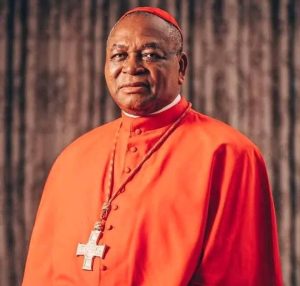
His Eminence, Archbishop Emeritus John Onaiyekan, the iconic Michaelite
However, there appears to be a turn, hopefully for the better, in that practice. The sensitivity of Old Boys Associations to the many plights of their schools these days appears to have risen.
King’s College Old Boys has been in the news recently. But so also has Aliade Old Boys. Katsina Ala Old Boys is not a new actor but it has heightened its Old Boys activism recently. They are taking advantage of one of their big names, General T Y Danjuma, to generate resources and infuse into their alma mata. It promises to be add an even grander dimension to it all.
Katsina Ala is one of those schools which provided Finishing School touch to secondary school education in those days in the Benue province of yore. By Finishing school is meant those schools which gave those who attended it grooming as potential leaders. In other words, all secondary schools of that status in those days did not just give a certificate, they also gave grooming in certain core realms such as etiquette, cadence in speaking, ethical responses, comportment and carriage, management of difference, tolerance and so on. This is so that they will come out without the rough edges of pre-enlistment and thus polished. The Finishing school idea has its class and ideological origin.
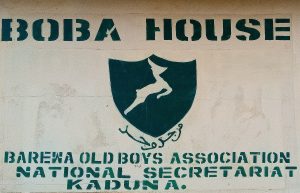
Barewa College has been a highly published actor in this regard. It has not been heard recently but it is assumed to be at work. It is an Old Boys Network of attention in Nigeria though for the wrong reason.
It earned and deserved that attention because it was a British experiment in grooming a cohort to provide civilised leadership for Nigeria. The training was equally designed to accomplish that. And it was not a northern Nigeria specific thing but a cohort.
They did not disappoint Nigeria, a statement that would be uncontroversial through a comparison of yesterday and today. It was believed that if one spoke to a Barewa Old Boy of those days in Maiduguri and went to Ibadan to talk to another of them, the interviewer would hear the same thing even without the interviewees knowing of each other being interviewed. But that was then.
It is debatable if the Barewa College of today is grooming any such cohort and along what ideals? Will the elite fragmentation along ethnic, religious, tribal and such fault lines even allow that, unlike their British counterpart, the departing colonialists who had read their agenda in relation to grooming a set of successors in certain ideals of which General Gowon, a Barewite can be a sample, leaving government poor and just as the premier. So, any exceptionalist reading of Barewa and all the other schools in its category throughout Nigeria then might be something like mystification for now.
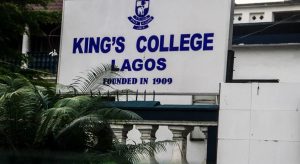 That is not to say that the Old Boys Network politics is not an interesting phenomenon to observe. The few of them named on this pages are just a few out of the numerous others that have been in the news recently. A good number of them may not be in the news but are at work, thinking of how to remake their former schools. The number involved makes it a realm to be keen about in terms of emerging issues in the politics of education.
It cannot be a matter of whether what they are doing is good or bad. This resurgence cannot be understood by way of a homogeneous narrative yet. It cannot even be understood as a resurgence yet unless the numerical issue is settled.
Equalitarian minded onlookers might raise the question of widening the gap between Katsina Ala Secondary School, for example, or Barewa or King’s College and the emergent rural or community secondary schools. On the face of it, that may sound a qualitative observation. However, the counter-argument could be that schools do not have to be the same to enhance equality.
If the government at the centre is nationalistic enough and has the presence of mind to ensure standard in staffing and curriculum, then equality of opportunity for qualitative education has been guaranteed irrespective of additional advantages that a particular school may enjoy either on account of its location, historical roles and old boys or girls.
But it will always be a valid point if any reform, be it by government, a particular school or its Old Boys is about exclusion of certain category of potential beneficiaries.
 In a recent interview, Ambassador Chive Kaave, an activist of the Aliade Old Boys Association told Intervention that he would not have been able to attend Mt St Michael’s, Aliade if it were not open to children of peasants. He then took a swipe at what he understood to be going on with King’s College, Lagos.
Certain The “Kingsmen” (King’s College Old Boys’s nickname) added one plus one to arrive at a complete misreading of Amb Kaave’s reference to them in terms of AOBA seeking to replicate The “Kingsmen”. In deconstruction, there is nothing like misinterpretation. This is probably the only exception and for which Intervention takes the blame.
It takes the blame in the sense that if it had published all the schools named during the two interviews (with Kaave and Mr Ikwuntole and two others) the “Kingsmen” would never have arrived or even thought of that line. If the “Kingsmen” read the interview more intensely, the hidden message was not about any model any Old Boys Association is up to. What the story communicates both in the agency of the headline and the interviewees (people with inside knowledge of the process of the making of John Odah, background and such contextual phrases as ‘John Trouble’) was John Odah and his agency. That explains the notion in the story about AOBA sending a message to Nigeria by arriving at leadership through consensus at a time Nigeria itself is lost in a terrible struggle for power at all levels.
As already mentioned, there is nothing like wrong interpretation because there are no universal meanings but there is something called ‘understanding’ which is the same as ‘critical distance’ The story on John Odah and AOBA Presidency has almost nothing to do with any models by any other Old Boys networks. Intervention which published the story has absolutely nothing to do with Aliade. It was a journalistic messaging, drawing attention to a qualitative if not exceptional practice somewhere (the logic of consensus) and the John Odah persona (a radical activist taking up such a position). If those two features do not constitute a frontpage story, then what else might?
So, our “Kingsmen” need not look for any hidden agenda in that story. And there is no animus against “Kingsmen” in Intervention.
Intervention took note of the Ambassador’s argument and the reply his position generated as a measure of the sensitivity of the situation. Again, none of the two is right or wrong as the positions each advance has its own resonance in a near anarchic social order as Nigeria. protagonists of the equalitarian agenda are sure to raise an eyebrow about it wherever they sense it and they cannot be accused of recklessness or lack of restraint.
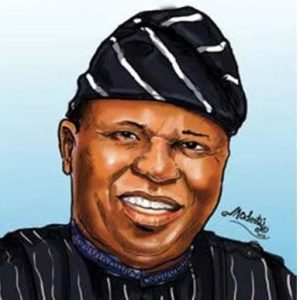
Amb Kaave
There’s a sense this is not a problem at the level of the university, especially at the global level. In fact, it is almost a consensus now that the university one attended doesn’t matter (it still does in Nigeria where many departments do not have a single professor or have only professors with publications in rural journals, contrasting too sharply with departments that have scholars with credible exposure). What matters, as this argument goes, is what one does with his or her degree. This emerging consensus will seem to be heading beyond interrogation even if one uses just one example. The late Prof Jason Arday attended a university many even in the UK cannot name in a hurry but only to end up in the upper echelon of a university rated as one of the world’s best: Cambridge.
How far one can generalise this beyond UK is the question. In the UK system, the idea of one’s university being a non-issue would look sensible. The control system is such that no rookie is likely to have sneaked into the system. The mechanism monitoring standards works fairly well. Students contribute to it. More importantly, if Oxbridge is what is used as measure of credibility, the guy teaching that core course at the university next door is likely to have attended Oxford, Cambridge, Manchester, St Andrews, Edinburgh Bristol, UCL, Imperial and the usual first 10 of that country. Nothing lost.
Prestige, classmate network and such factors form part of the advantages of being an Oxbridger but in a fluid, networked world, this could become empty chauvinism if overstretched.
Well, Nigeria is not UK and the dynamics at the university level can be so different from that at the secondary school level, hence the case for caution in drawing conclusions. Ambassador Kaave’s dialogue with his King’s College counterparts should not disappear from the public sphere just like that. They are not quarrelling. They are not in disagreement yet. They are in the process of entering an important conversation which should not be disrupted.
In an atmosphere of ideologically and rhetorically impoverished electioneering campaign, turning attention to the Old Boys phenomenon briefly is perhaps a healthy pathway.
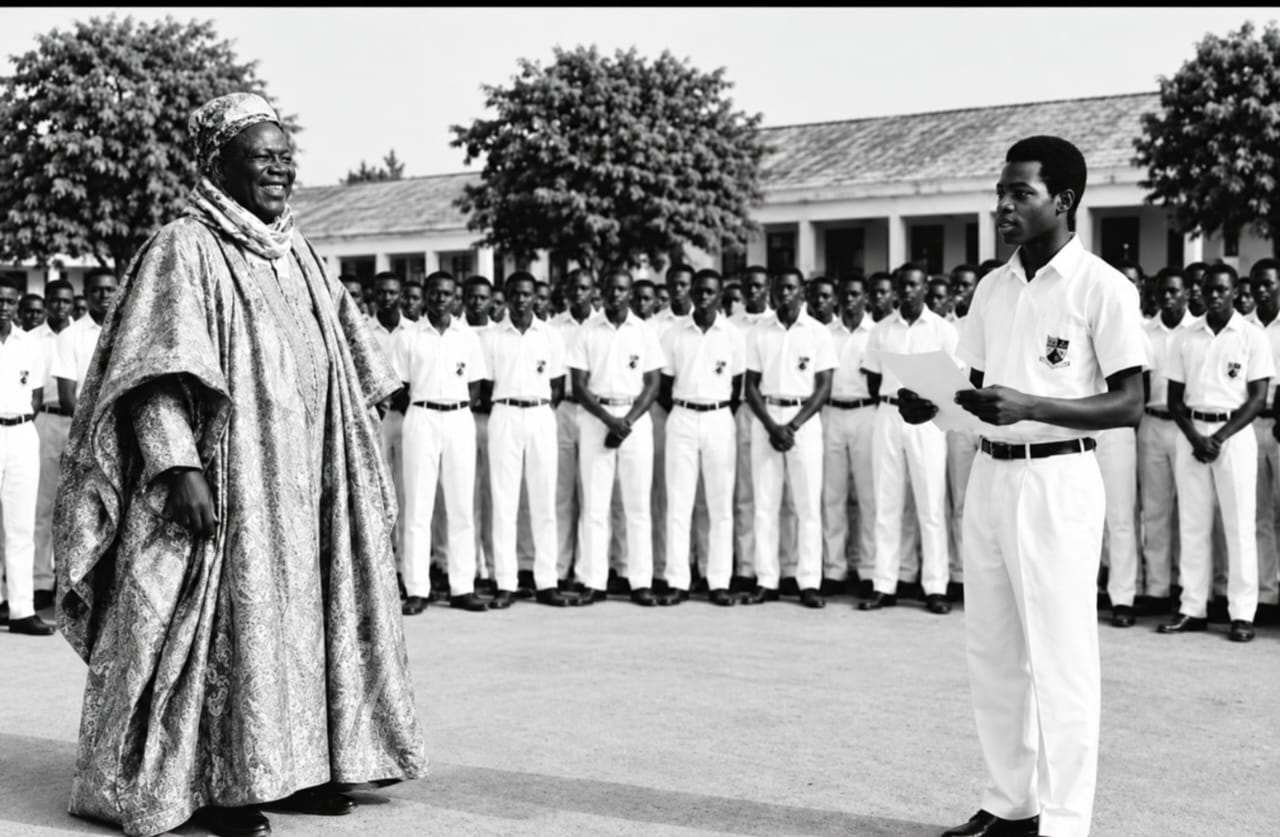
Meanwhile, Intervention got hold of a prized picture exclusive to it. It is a rare picture featuring the late Premier of Northern region, Sir Ahmadu Bello with a former head boy of Mt St Michael’s, Aliade and perhaps a future premier, Boniface Tyotsuwe Wada.
Intervention could have put a watermark on it because of the attitude of using materials without credit in Nigeria. But Intervention has a corporate attitude against such epistemic vandalism. This is just to add this footnote that wherever this picture is seen without credit to Intervention, it has been plagiarized. Intervention thanks the source which graciously sent the picture.
Happy Sunday to Intervention readers!