By Adagbo ONOJA
In late November 2025, the CDD-West Africa marked the Centenary of Frantz Fanon in Jos, Nigeria. The Centenary was thematised ‘Fanon and the African Condition; 100 Years After’ or words to that effect. The logic of the thematisation lies in the frightening 21st century manifestations of the ‘African condition’ or what Ali Mazrui had perceptibly called the African conundrum in his Reith Lectures in 1979. On the one hand is the surplus of verbal investment on Africa in international development in a way that has never been: the rising continent, the investment dimension of choice, the one without which global growth cannot go anywhere (even earlier this week, one read the piece titled ‘Africa is the key to sustained global growth’ by Hippolyte Fofack, elaborately introduced as a former chief economist and director of research at the African Export-Import Bank, a former World Bank economist, a research associate at the Harvard University Center for African Studies and a Fellow at the African Academy of Sciences whose piece in question was initially published in Project Syndicate before being republished here and there).
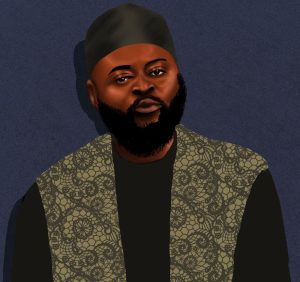
Dr Tajudeen AbdulRaheem as cropped from Rhodes Scholars Facebook page! He was a Rhodes scholar!
On the other hand are the stark metrics of modernity which, collectively, speaks to the fears expressed by early anti-capitalist activists, especially Rosa Luxembourg and her successors such as Colin Leys, Ake and Morris Szeftel, to name a few, about Africa degenerating into barbarism. In fact, Colin Leys once invoked the phrase ‘supernumeraries of the human race’ that French Philosopher, Andre Gorz, once used to capture where Africa might be heading. With the disappearance of any iota of debate on industrialisation in much of the continent, that fate may not be far fetched in spite of the rhetorical splash on Africa in the global discursive spaces of academia, the policy mill and the media. Beyond the magnitude of violence across the continent (anti-government, intra-ethnic and inter-religious, insurgency and banditry, elite electoral violence such as monetization of politics and rigging, corruption and sundry abuse of power), there are unchanging cases of structural violence such as denial of development (health, education and public transport, electricity and a huge unemployment overhang, not to talk of the debt bomb).
The above context is why, 17 years after his demise, the first African president is even more needed. Of course, there is no Office or position carrying the tag of the African president. It was the nomenclature created to depict the activist work the late Dr Tajudeen AbdulRaheem was carrying out on an Africa wide scale. For him, Africa was homeland, not any one ethnic cubicle.
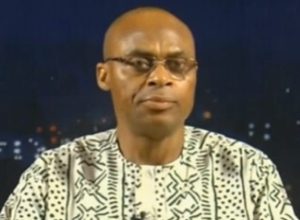
Prof Abubakar Momoh who died May 29th, 2017, almost 9 years back!
His audience was about and around but beyond Africa. The world was his theatre for rejecting the narrative of Africa as a space of retardation or a cultural problem for modernity. That constituted the agentian force of a Taju. Each time the late Prof Okello Oculi spoke at every memorial ceremony of Taju, he never forgot to compare Taju’s laughter to the cracking of the Machine gun: verbal shots which pumps into submission any fellow standing on Taju’s way to domination of the field of meaning when it came to Africa. That was the genius of his struggle for Africa which must have arisen from the strategic realisation that resource endowment is not a guarantee against peripheralisation and marginality if a continent allows itself to be framed as the antithesis of history without adequate discursive retaliation.
Achebe understood this very early and concentrated so much energy in counter-hegemonic narrativisation of Africa in global space. Achebe embarrassed all promoters of Africa as a space of stagnation and backwardness. It could be argued that Taju built on that from the pan-African activist plane. And he went far but the field was a large one and there were few fieldworkers. And he left early. Thabo Mbeki tried to add value to that effort from the quarter of African leaders, with his Africa Renaissance narrative. It was shot down too quickly with NEPAD before Mbeki himself lost the throne, giving way to ‘Africa rising’
To the extent that a spatial image such as ‘Africa rising’ has no fixed or innate meaning outside of how it is articulated, radically or conservatively, a Taju would have been the African agentian force to give it the ultimate counter-hegemonic reading towards the possibility of ‘domination by consent’ in Africa’s favour. That is the discursive power any continent with the above profile needs, first and foremost, through hegemonic instrumentalisation of ‘Africa rising’ or any spatial image of choice by which to produce the power relations that could serve as condition of possibility for rapid industrialisation.
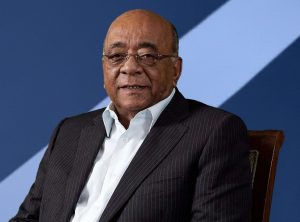
Mo Ibrahim of Mo Ibrahim Foundation!
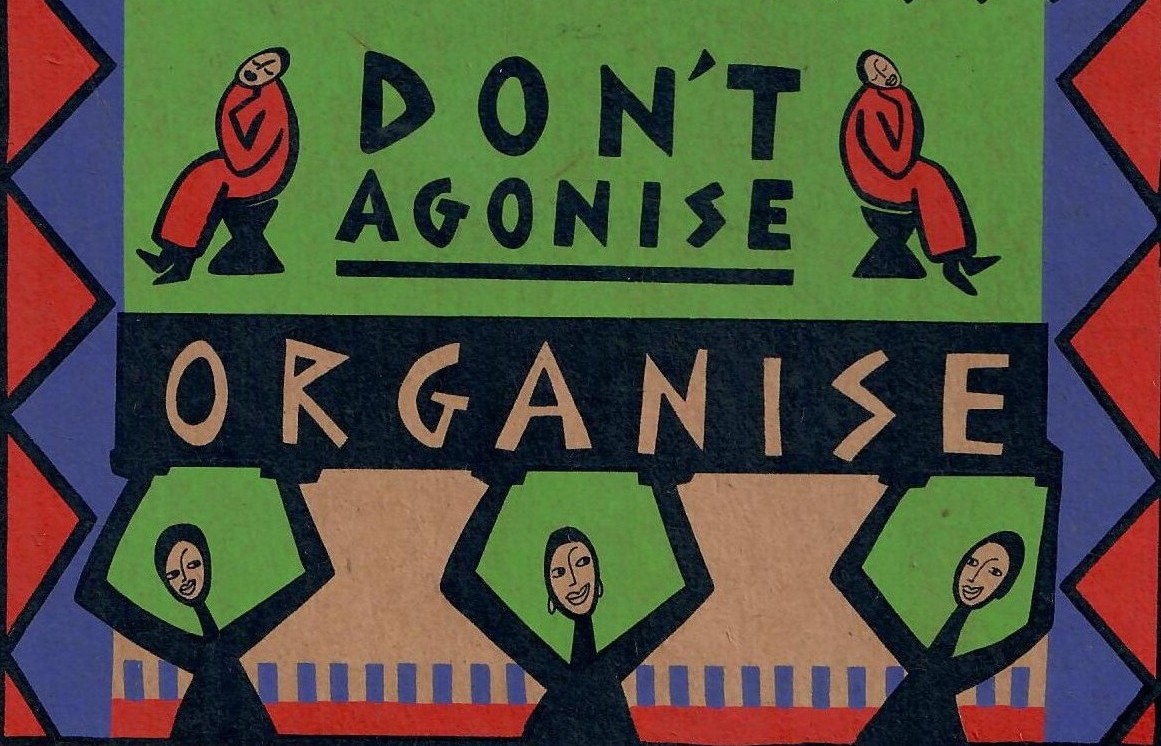
That is actually the sense in which a Taju successor is what is missing in the struggle to reclaim Africa before its natural resources stock is exhausted in the current wave of ‘the scramble’. That is, someone with the name, voice, stature and discursive verve to imbue ‘Africa rising’ or so with a particular meaning as well as summon into a ‘historic block’ the diverse detachments involved in the struggle for Africa’s self-assertion in the world. Taju understood this very well as illustrated by his clarion call – organise rather than lamenting and agonising – provided a superb evidence of the discursive foot works required in building such a coalition. With that clarion call, he signalled his transcendence of ontic practices into the realm of mobilisation of collective imaginaries ahead of the frontier battles that determines the real. Without that, all the attention on Africa in international development circuit has been about arithmetic for accessing Africa’s share of natural resources on terms favourable to the defining actors in a buyers’ market, with the possible exception of China in terms of leaving behind anything at all.
President John Mahama of Ghana is fast emerging as a fascinating scorer in counter-hegemonic narrativisation, successfully convincing the world to frame slavery as the gravest crime against humanity. The historic resolution at the United Nations General Assembly which is rated as the strongest UN action yet regarding slavery and its aftermath globally is what Mahama accomplished on behalf of his African colleagues on March 25th, 2026, making 2026’s International Day of Remembrance of the Victims of Slavery a special one for Africa and African victims of the extreme of man’s capacity for the worst excesses. This is, however, not a job for a sitting president in Africa.
At the individual level, Mo Ibrahim is doing great with his open interrogation of certain category of actors. He could do more by establishing the African equivalent of Aljazeera. That will be the best way to take the battle to the metropolitan discursive space at last on Afrocentric terms, an even more qualitative dimension to his ‘Ibrahim Prize for Achievement in African’.
Others are doing stuff in their domain BUT Africa needs a Taju, an extra-governmental spokesperson in the image and likeness of him, what with his programmatic hands on! Like Taju, the successor would have overgrown essentialism and acquired Taju’s critical capacity to understand the diverse mechanisms by which degradation, domination and exclusion in contemporary capitalism takes place; dismantling boundaries between class and non-class forces in building ‘a collective will’ and such other problems inherited from essentialism.
Perhaps, something has to be done about the month of May in Africa as it relates to the death of the best and brightest – Prof Segun Osoba on May 14th, 2026; Tajudeen AbdulRaheem on May 25th, 2009 and Prof Abubakar Momoh on May 29th, 2016. I cannot be sure if there are not other souls who departed in May.