By Chris Kwaja
Introduction
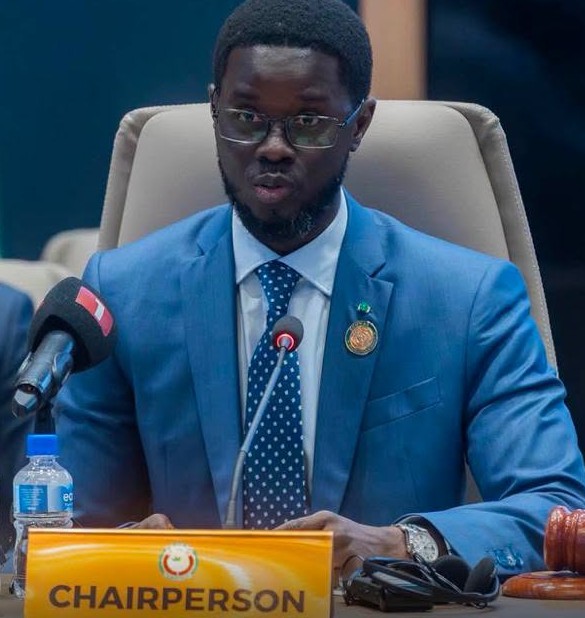
The 69th Ordinary Session of the Authority of Heads of State and Government of the Economic Community of West African States (ECOWAS) was held on July 19th, 2026 in Freetown, Sierra Leone. Following the conclusion of the Session, President, Bassirou Diomaye Faye of Senegal, was elected Chairman of the ECOWAS Authority, succeeding President Julius Maada Bio of Sierra Leone.
In his acceptance speech, President Bassirou Diomaye Faye pledged to promote dialogue, solidarity, and inclusive cooperation among member states. He called for collective efforts to address insecurity, deepen regional integration, and restore confidence in ECOWAS as the leading institution for peace, stability, and development in West Africa.
 In his new role, President Faye is expected to promote dialogue, strengthen regional cooperation, and advance efforts toward peace, democratic governance, and economic integration. His leadership is also anticipated to focus on rebuilding trust among member states and fostering closer collaboration on trade, infrastructure, and security.
At 46, Faye represents a new generation of African leadership. Since assuming office as Senegal’s president in 2024, he has emphasized transparency, institutional reforms, and African-led solutions to regional challenges. His election as ECOWAS Chairman reflects growing confidence in his ability to help steer the organization through one of the most challenging periods in its history.
As Chairman, Faye is expected to work closely with the ECOWAS Commission and the leaders of member states to implement decisions aimed at enhancing regional stability and improving the welfare of citizens across West Africa. His tenure will be closely watched as the bloc seeks to reinforce its relevance, address security concerns, and deepen economic cooperation among its members.
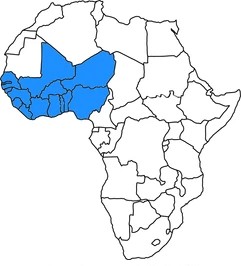
There is a sense in which Faye’s emergence comes at a critical moment for West Africa, as ECOWAS faces complex political, security, and economic challenges. The regional organization continues to grapple with terrorism and violent extremism in the Sahel, political instability in several member states, and the withdrawal of Burkina Faso, Mali, and Niger from the bloc.
The Economic Community of West African States (ECOWAS) stands at one of the most defining moments in its history. Established in 1975 to promote economic integration, peace, and regional cooperation, ECOWAS has become the cornerstone of West Africa’s political and economic development. However, the organization now faces unprecedented challenges ranging from terrorism, violent extremism, unconstitutional changes of government, political instability, economic hardship, youth unemployment, climate change, and declining confidence in regional institutions.
Indeed, Faye’s emergence as new ECOWAS Chairman presents an opportunity to redefine the organization’s mission, and restore confidence among member states and citizens. Leadership at this critical moment requires vision, courage, diplomacy, and the ability to unite diverse political interests around a common regional agenda. His success as the Chairman of ECOWAS will not be measured merely by diplomatic engagements but by tangible improvements in regional peace, economic prosperity, democratic governance, and institutional credibility. The realization of this agenda will be dependent on the priorities Faye set for himself.
Five (5) Strategic Priorities for Faye as ECOWAS Chairman
President Faye can help reposition ECOWAS as a more resilient, responsive, and people-centred regional organisation that is capable of addressing today’s challenges, while laying the foundation for long-term peace, stability, and prosperity across West Africa. By pursuing these priorities with pragmatism, consensus, and sustained political commitment, Faye will be remembered for investing his time, resources and goodwill in reclaiming the institutional credibility of ECOWAS.
- Make Regional and Collective Security the Number One Priority: Without peace, there can be no development. West Africa continues to battle terrorism, banditry, piracy, transnational crime, arms trafficking, kidnapping, cybercrime, and violent extremism. These threats have weakened national economies, displaced millions of people, discouraged investment, and undermined public confidence. The prioritization of these security threats with a clearly defined roadmap that is driven through the principle of shared commitment and action of all members is key
- Take a Definite Stand on the Plights of West African Citizens in South Africa: Faye should go beyond mere condemnation to taking a definite stand against xenophobia in South Africa. The silence of the African Union (AU) in the face of this organized crime against Africans, presents the AU as a weak institution. Faye must take a frontal position on this, on behalf of ECOWAS.
- Restore Democratic Governance and Constitutional Order: ECOWAS has traditionally positioned itself as the guardian of democracy in West Africa. Recent military coups and political instability have tested this commitment. Rather than relying solely on sanctions, ECOWAS should prioritize preventive diplomacy, mediation, and conflict resolution before political crises escalate. Across states where coups have taken place, the justification for such actions has been one of bad governance and corruption. Democratic governance failing the people. Beyond elections, commitment to good governance should be accorded the desired attention.
- Rebuild Unity within ECOWAS: Regional unity has been weakened by political disagreements and the withdrawal of some member states. A divided West Africa cannot effectively confront terrorism, poverty, or global economic competition. The Alliance of Sahel States (AES) as a confederation formed by Mali, Niger, and Burkina Faso, to provide collective defense and mutual assistance remain a major issue to be addressed that must be tackled in the spirit of mutual respect and solidarity. The future strength of ECOWAS lies in rebuilding trust among governments and reconnecting with the AES in the spirit.
- Enhance ECOWAS’ Global Influence: West Africa must speak with one voice at all levels, and on all matters. The Chairman should strengthen partnerships with key institutions such as the African Union, United Nations, African Development Bank, International financial institutions such as the World Bank and IMF among others. The logic here is that a united regional voice attracts greater investment and international respect.
Conclusion
The future of ECOWAS depends not on declarations but on decisive action. The new Chairman inherits an organization facing multiple crises, yet also unprecedented opportunities. By prioritizing security, democratic governance, economic integration, youth empowerment, institutional reform, infrastructure development, and regional unity, ECOWAS can reposition itself as Africa’s most successful regional organization.
The next chapter of ECOWAS should not merely be about managing crises but about building a prosperous, peaceful, resilient, and globally competitive West Africa. The greatest legacy of the new Chairman will not be the number of meetings convened or communiqués issued. It will be the transformation of ECOWAS into a stronger institution that delivers peace, prosperity, opportunity, and hope to more than 450 million West Africans.
The author Is a Professor of International Relations and Strategic Studies, Centre for Peace and Security Studies, Modibbo Adama University, Yola, Nigeria. He is also a Senior Advisor – Africa, at the Geneva-based International Organisation for the Least Development Countries, Switzerland.