Expanding critical explanation of the terrorism enveloping Nigeria remains high on the peacebuilding agenda of think tanks, research institutions, foundations, domestic and global NGOs around the country. Rosa Luxembourg Foundation-West Africa (RLF), one out of this cluster, is taking this challenge a notch higher in terms of bringing high scholarly reflection into it.
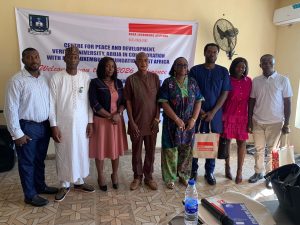
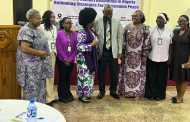
Veritas University researchers and RLF Country Manager, Cde Angela Odah (5th L-R) at the event
Working with researchers from the Centre for Peace and Development (CEPAD) at Veritas University in Abuja, Nigeria, the German Foundation took another good look at the Nigeria–United States Counterterrorism Cooperation, especially as it relates to the protection or safety of civilians which has become controversial.
The ideological, developmental and tactical difficulties of defeating terrorism has meant that most (African) states end up seeking external support. A good case study would be the Nigeria–United States Counterterrorism Cooperation. But debate persists on the productiveness of the cooperation, especially the question of protection or safety of civilians. Why is this the case, how might the problems be understood and make the strategy of seeking external intervention more helpful?
These were some of the puzzles put up for scrutiny at the RLF and CEPAD synthesis. A communique at the end of a Roundtable and mini-conference on the theme of Counter-terrorism cooperation between Nigeria and the United States asserted terrorism remains a serious challenge to Nigeria’s national security, human security, social cohesion and sustainable development requiring comprehensive and coordinated responses. But it wants the counterterrorism responses to transcend military operations and thereby address the underlying political, socioeconomic, ideological, and institutional conditions that sustain violent extremism.
The mini-conference insists on the centrality of the protection of civilians and their fundamental human rights in the planning and implementation of counterterrorism operations in the same way that it calls for avoidance of religious profiling, discrimination, and the stigmatisation of any particular religious communities in relation to religious freedom as an essential component of human security and peaceful coexistence. Going specific, the attendees argue for the counter-terrorism security cooperation between Nigeria and the United States to be guided by mutual respect, transparency, accountability, and clearly defined legal and operational frameworks.
It would want Nigeria’s sovereignty and territorial integrity respected in all forms of international security engagement. Lastly, the researchers held that sustainable peace and security require stronger collaboration among government institutions, religious organisations, civil society, local communities, academic institutions and international partners.
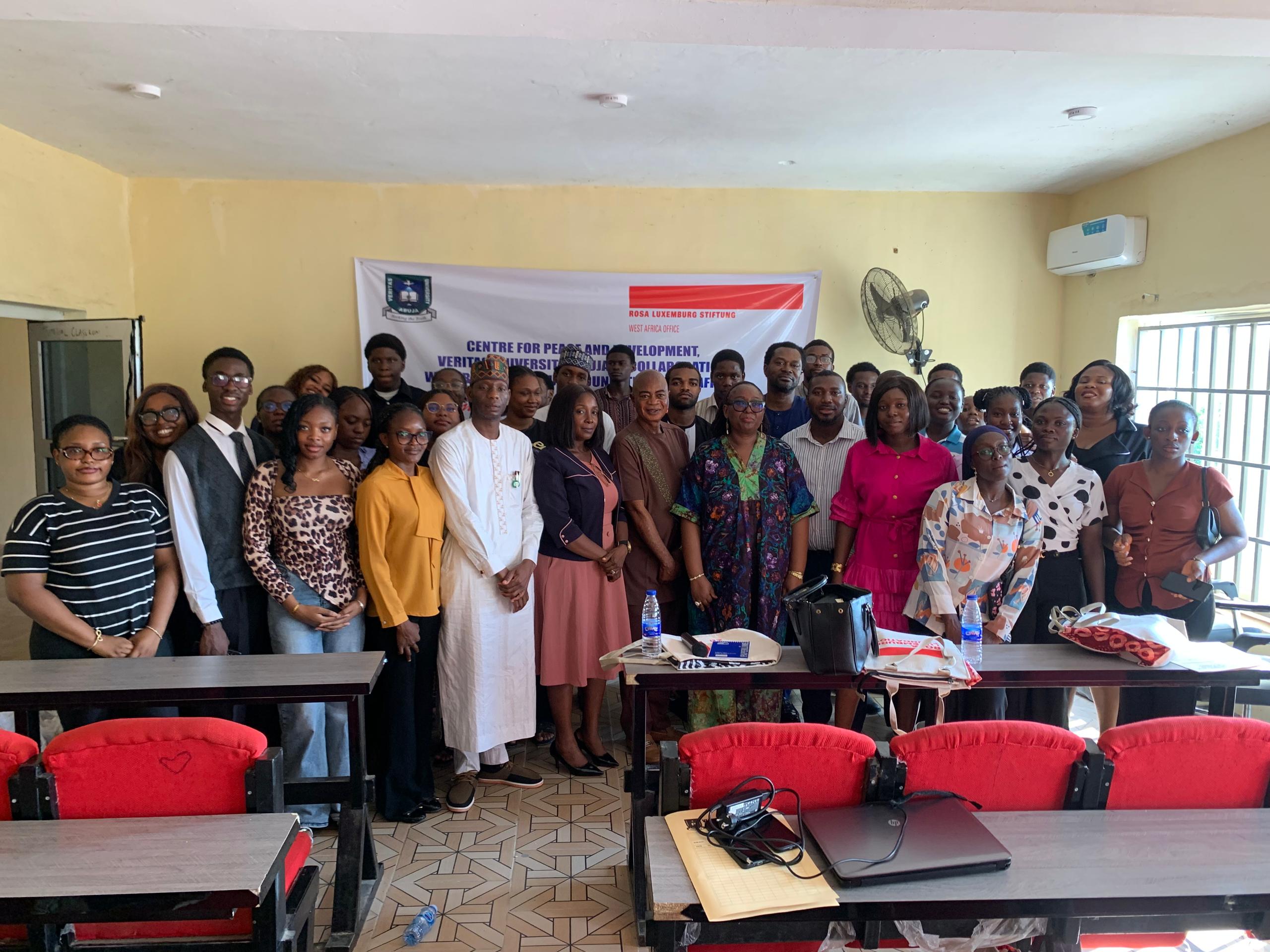
Signed by Dr. Innocent T. Jooji, Director, Centre for Peace and Development (CEPAD), Veritas University, Abuja; Comrade Angela Odah, Programme Manager, Rosa Luxemburg Foundation, Nigeria and, lastly, Dr. Ikechukwu Maxwell Ukandu, Conference Secretariat, Centre for Peace and Development Veritas University, Abuja, these were the main points of the event held at the University’s Law Faculty and which brought together scholars, researchers, practitioners, and students of Peace and Conflict Studies, Political Science and Diplomacy, History and International Relations, Religions and Intercultural Studies and International Law. There were all there to examine the complexities of counterterrorism in Nigeria with particular reference to United States military engagement.
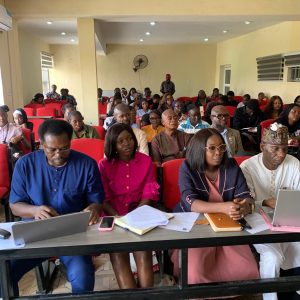
Paper presenters all
Earlier on, Dr Innocent T. Jooji, Director of the Centre for Peace and Development, had said in his presentation on “Counter-terrorism in Nigeria and the Question of United States Military Intervention” that human rights violations, weak intelligence, corruption and governance deficits were the factors undermining the operational effectiveness of counter-terrorism efforts against groups like Boko Haram and Islamic State West Africa Province in Nigeria.
Assessing United States military and security assistance to Nigeria through AFRICOM, Dr. Jooji identified the contributions as intelligence, training, surveillance and logistics before noting the paradox in the cooperation not resulting in decisive defeat of the insurgents.
Rather, other issues have arisen around the cooperation, among them national sovereignty, weak oversight, external dependency, human rights and insurgent propaganda. These are his reasons for arguing for recalibrating the partnership by strengthening Nigerian security capacity, respect index for human rights, improving parliamentary oversight, expanding deradicalisation and development programmes and enhancing existing regional cooperation through ECOWAS and the African Union.
Different presenters in four different presentations which followed explicated specific dimensions of the theme. Nigeria’s consent to joint military operations provides a potential legal justification for US military counter-terrorism engagement in Nigeria in the sense that there exists a ground for broader interpretation of self-defence to accommodate contemporary transnational terrorist threats, said Dr. Chukwudi Victor Odoeme of the Department of Public and International Law of the university’s Faculty of Law who spoke on “Counter-terrorism, Sovereignty and the Use of Force: Examining the International Legal Basis of U.S. Military Engagement in Nigeria”, for instance.
But the International Law scholar noted the absence of publicly available details concerning Nigeria’s consent and how such leaves aspects of the intervention’s legality unresolved.
Dr. Chukwudi concludes that US military engagement in Nigeria is potentially justified under an expanded interpretation of international law, particularly as it concerns where a state cannot adequately protect its populations against terrorist threats. It nevertheless emphasises that foreign military intervention must respect valid state consent, necessity, proportionality and the fundamental principles of international law.
His paper considers it a shift in US–Nigeria security relations following Nigeria’s designation as a ‘Country of Particular Concern’ in 2026, what with Trump’s threat of military intervention and subsequent joint military operations against terrorist targets.
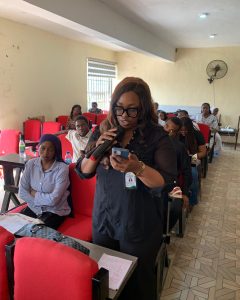
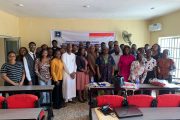
A female student seeking clarification
Each of Emmanuella Onota and Dr. Roberts Anya Nkata of the Departments of Political Science and Diplomacy & Peace and Conflict Studies in the university’s Faculty of Social Sciences as well as Dr. Isaac Vasumu Augustine of the Departments of Theology and Peace and Conflict Studies advanced the discussion in different directions at each of the two Roundtable Sessions moderated differently by Dr. Ikechukwu Maxwell Ukandu of the Departments of Religion and Intercultural Studies and Dr. Isaac Otegu of the Department of Political Science and Diplomacy.
From a feminist foothold in critical terrorism studies, Emmanuella Onota, for instance, stressed the importance of community knowledge and participation in intelligence gathering, early warning and preventing violent extremism. But she cautions against arming communities without effective oversight and treating civil society organisations merely as intelligence sources.
Similarly, she would want Nigeria–U.S. cooperation to move beyond military capacity-building towards measurable improvements in civilian safety, public trust, and sustainable peace, recommending stronger civilian-protection measures, independent investigations, accountable security assistance, greater community participation and socioeconomic interventions.
Her fellow political science colleague, Dr. Roberts Anya Nkata, identified institutional weaknesses, poor intelligence coordination, corruption, operational failures and declining civilian trust as factors limiting counterterrorism effectiveness. He stressed that civilian protection is both a human rights obligation and an essential condition for effective intelligence-sharing and sustainable security.
The Roundtable and Mini-Conference reaffirmed the importance of sustained intellectual engagement and policy dialogue in addressing Nigeria’s complex security challenges. It emphasised that the fight against terrorism must not be reduced to military confrontation alone but should incorporate human rights protection, religious freedom, institutional accountability, inclusive governance, and sustainable peacebuilding.
The conference further underscored the need to rethink the relationship between national sovereignty and international responsibility, particularly ensuring that international security cooperation strengthens Nigeria’s capacity to protect its citizens without compromising its constitutional order, territorial integrity, and obligations under international law.
The conference calls on the Nigerian government, international partners, religious institutions, civil society organisations, and academic communities to translate the insights generated from the engagement into practical policies and collaborative initiatives for sustainable peace and security in Nigeria.
The organisers express their appreciation to Rosa Luxemburg Foundation-West Africa, for its collaboration and support; the management of Veritas University, Abuja; the resource persons, presenters, moderators, participants, students, and all stakeholders whose contributions enriched the discussions.