By Prof Hassan A. Saliu
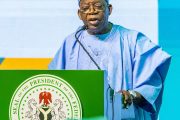
In recent weeks, the Nigerian Society of International Affairs (NSIA) as a platform has been active on an issue of collective concern. The trigger was the disappointing news that President Bola Tinubu was no longer attending the 81st United Nations General Assembly (UNGA), contrary to earlier information from Nigeria’s Permanent Representative to the UN. Nigerians had expected their president to be among Heads of State addressing the September session, articulating the country’s voice and position on critical global issues.
The presidency said the president was still on vacation during the 2026 UNGA. Eventually, the Vice-president represented him and delivered the Nigerian national statement. While some members quickly absorbed the shock, others remained unconvinced about the rationale for the president’s absence. As with other platforms, ours was inundated with commentaries either defending or questioning his non-attendance, with posts from other platforms shared to reflect diverse perspectives. Many did not fully appreciate that times have changed and that the government’s new orientation, anchored on a “Nigeria First” foreign policy initiative, made latching onto past rhetorical traditions imprudent. Such a reversion could have signalled insincerity in deepening Nigeria’s new political economy orientation and inadvertently created further space for the unhindered expansion of global capitalism.
For us in the NSIA, we engaged the issue robustly, without any winner or loser emerging; we are all winners in deepening citizens’ engagement.
The debate, while it lasted, distilled into policy-relevant points which I present hereunder as follows:
- Nigerians still desire that their country’s voice and presence be felt globally. None of the participants argued forcefully for Nigeria’s non-participation in New York;
- The subsequent decision of the President not to attend came as a rude shock to many Nigerians. While some accepted it and shifted focus to the quality of representation and participation, others found it unacceptable that the president was absent;
- The relevance of UNGA to Nigeria’s current transactional orientation was interrogated. The preponderance of opinion favoured continued importance being attached to UNGA, while advocating a slimmer, more cost-effective participation;
- Some members expressed reservations about a loud Nigerian presence at such a high-profile occasion when citizens at home are grappling with hardship occasioned by government policy choices;
- Even with the eloquence with which the Vice President delivered the statement, some members interrogated its content and lamented the absence of traditional themes such as dwelling on the Middle East question, without appreciating that times have changed;
- Nostalgically, some members recalled a past era when political statements suited to such global occasions were made, and well made, by Nigerian delegations; consequently, radical submissions by other world leaders were circulated, reflecting disappointment with Nigeria’s outing;
- The imperative of adequate preparation for global and continental meetings was identified, with suggestions proffered on how to achieve this;
- The question of post-UNGA follow-up was also raised. The lack of adequate follow-through has stalled previous diplomatic efforts;
- As things stand, other actors in the international system encounter considerable difficulty in discerning where Nigeria stands on most global issues. The antidote is greater precision in articulating the objectives of the country’s foreign policy;
- This unstructured but rich debate has revealed the need for a comprehensive review of the country’s foreign policy;
- The imperative for Nigeria to embrace good governance, in which citizens’ welfare is paramount, was emphasised;
- Judging by the exchanges on the platform, Nigerians have spoken and desire to be better respected and served; and
- On the whole, Nigerians love their country and desire the best for it. This was amply exhibited on the platform. It is hoped that government will tap into this patriotism and realise that taking hard positions on national issues is normal when citizens love their country.
On behalf of the interim executive committee, I thank all members who found time to air their views on this matter. This is our modest contribution to citizens’ engagement with government.
The author is the Interim President of the NSIA