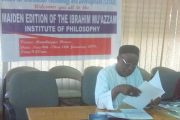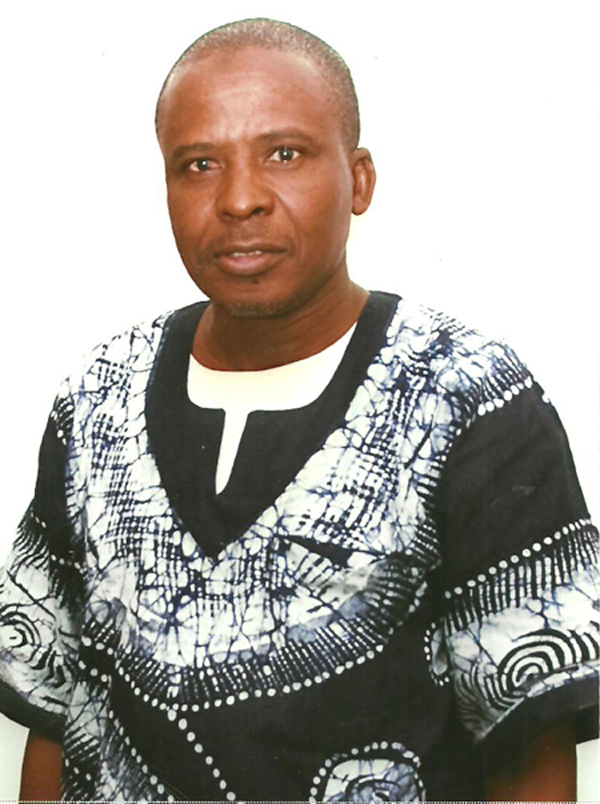
No birthday drums have been heard from any of his operational headquarters yet. It might be that this is a quiet birthday. Whether this text comes before or after any drumbeats marking his birthday this year, Intervention is problematising Mallam Y. Z Yáu beyond monologic signification. It is in keeping with a commitment to deepening our reportage of birthdays through the approach of radical iconography.
Before Lee Kuan Yew finally made it into the club of truly phenomenal figures of the 20th century, American leaders used him to illustrate what Fareed Zakaria quoted Henry Kissinger as calling “One of the asymmetries of history”: the lack of correspondence between the abilities of some leaders and the power of their countries”.
Extraordinary personality!
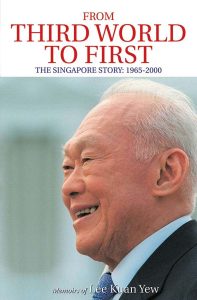
In his March 1994 Culture is Destiny – A Conversation With Lee Kuan Yew, Zakaria quotes Nixon as speculating how Yew’s stature would have been in the category of Churchill or Benjamin Disraeli if Yew ran a big country. Kissinger who ended up writing the Foreword to Yew ‘s From Third World to First: The Singapore Story, 1965 – 2000 contended that, in Yew, the old argument whether circumstances or extraordinary personality shape reality was settled in favour of the later. For him, Yew’s superior intelligence, discipline and ingenuity substituted for resources which Singapore lacked and initially made the city-state to appear destined to be a client state of more powerful neighbours by all the metrics until Yew made it to surpass ‘destiny’.
There is a way in which Y Z Yáu comes to mind when one domesticates Zakaria’s interview and the sort of thing Yew was saying in that interview. Y Z comes to mind to the extent that the world has been dragged into agreement with view common to the defining philosophers of science, from Heidegger to Feyerabend to Chalmer, Howarth and even Patrick Thaddeus Jackson, (Popper has been successfully thrown out of this club by Kuhn) that science and poetry are not the opposite of each other. As long as it is difficult (not impossible though) to find any other Nigerian with YZ’s ease of crossing effortlessly from engineering to popular culture, then to critical political economy and then to poetry, then YZ shares the intelligence, discipline and ingenuity that Kissinger associates with Yew.
 Since meaning and action go together, it is safe to speculate that the resulting uncommon interpretive verve peculiar to YZ from attributes of intelligence and ingenuity could have enabled him shoot at even higher level than Yew if he had been in the engine room of power in Nigeria. And if that happened, then he could have reversed Yew in the sense that he wouldn’t have been a big doer on a small city state but on a mega stage called Nigeria, with 250 million citizens in contrast to Singapore’s roughly seven million, a Nigeria without Singapore’s dire situation at birth.
That is one end of the claim. The second end is why then is the Nigerian Yew missing from the engine room of power, power being what counts. Further speculation would lead to two claims.
The first claim is the crisis of mission of the ruling class. Without any clear idea of a much better organised and a higher achieving Nigeria, there is also none of the practice of identifying and recruiting the potential Yews into the system to develop the sort of scenario that would have foregrounded rapid social transformation. In the end, Nigeria descended into its current quagmire. The second is this. Most radical activists in Nigeria see the state the same way as Christians see Sodom and Gomorrah – the theatre of sins and sinning. So, they keep a distance from the state. Otherwise, why is YZ not a Senator today or about to contest the governorship of Bauchi State, for instance?
What should this then lead to at YZ’s addition of another year? Should it not lead Mallam YZ to re-reference some of our taken-for-granted sense of selfs, our ourselves, of change, of strategy and so on? What if there is a re-engagement with Kissinger’s contention about agency prevailing over circumstances in the case of Yew in the explanation of the astonishing success story of Singapore? Notwithstanding Kissinger’s inclination to excesses, sometimes bordering on the atrocious in the ‘Third World’, he was never far away from the scholarly. Of course, with the disappearance of the structure/agency debate in the social sciences, Kissinger’s argument is now obsolete but something succeeded structure/agency debate.
Isn’t there a leadership challenge in systematising Nigeria’s attention to the domestication of what it is that succeeded structure/agency debate, particularly within the civil society? Wouldn’t making the civil society analytically more adequate in that realm be the equivalent of what Yew did? And what are we talking about if Yew needed no more than “superior intelligence, discipline and ingenuity”?
Happy birthday, Mallam whenever and wherever it falls!