By Adagbo Onoja
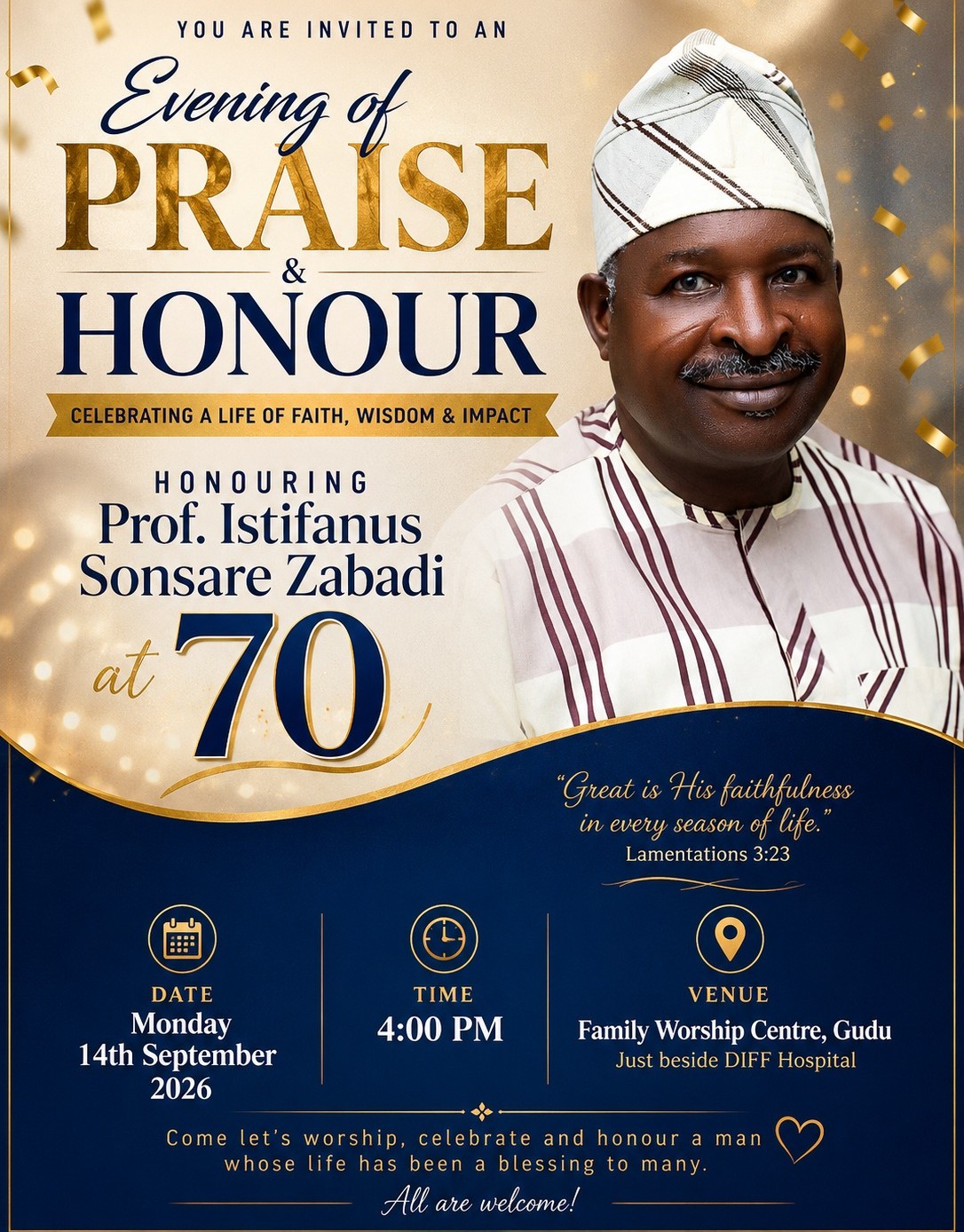
The trumpet has been heard in all the appropriate quarters. The message: Prof Istifanus Zabadi will clock 70 years, come September 14th, 2026. Prof Gani Yoroms, his junior ‘brother’ and colleague, who has been blowing the trumpet has added the second dimension of that event: Prof Zabadi’s retirement in tandem with official line thereto.
Considering the totality of the exertions of most members of his generation, Prof Zabadi’s birthday anniversary becomes a moment for looking back without turning that into a celebration of singularity. In this case, it is to draw attention to a number of significant developments that combine to define the Prof.
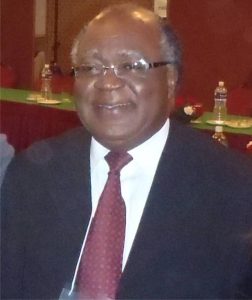
The late Prof Isawa Elaigwu
The first might be that even as a retiree in the very near future, he will still be at it at his operational centre at Bingham University, near Abuja. In that, there is a statement: being closer to younger souls in need of guidance in a world which has jumbled its cards, to quote the original poet. It is difficult to guess which of his previous entanglements, especially as a resource person at the National Defence College, Abuja for many years and the current entanglement with breeding undergraduates (and graduates too) is a greater national service. As everyone else has said, the university system across the world is in chaos. Neoliberalism is imposing conditions that were hitherto strange to academia. It is still too early to conclude if the new conditions are destructive or deconstructive but, in places such as Nigeria, nobody can miss the basis for contingently concluding that we are in a deep mess as far as the university system is concerned. Patriotism may compel silence but that may also be the dangerous silence that could bury the country.
The second point would be to document it that Prof Zabadi has had a brilliant, multi-pronged career. In other climes, he would be one of those brains held in secluded thinking centres, paid to do nothing more than brewing strategies of rapid national transformation. In other words, there’s a point there because it is not all of us who can be part of such centres in the countries which have them.
By how does it make sense to allege brilliance? The fact that he worked with Prof Isawa Elaigwu as Special Assistant when Elaigwu was DG of the National Council on Intergovernmental Relations (NCIR) provides the most stubborn evidence. Prof Elaigwu was not a wicked soul. No. But he could not tolerate anyone who was not intelligent and/or quick to learn. Groomed in the best of what the world could, Elaigwu was impatient with those who could not think on their feet or who were lost to mental laziness. To have successfully worked with him as his Special Assistant is to have a testimonial of brilliance to show to all who care.
 This point can be beefed up by figuring in Prof Zabadi’s seeming anticipation of such a role in life. There’s something anticipatory in him going to the London School of Economics to take a PhD in International Relations. A PhD from LSE does not automatically invest anyone with extra claims to knowledge. But even then, the LSE is a global meeting point and a leadership training centre. It is an investment to take a PhD there. The structural shallowness of International Relations as a discipline has meant that, more than any other social science discipline, it has had to be bodyguarded all along by the philosophy of (social) science, the development which has transformed the discipline (of International Relations) into one of the richest in terms of content, today. As far as one knows, the philosophy of science component of International Relations at LSE is, arguably, the most expansive and one of the best structured in the world today. A well-structured course outline does not necessarily indicate a well-taught course but LSE has the image of where IR is done properly. One doesn’t know what it was during the time Zabadi was there but it is doubtful if it was any less, given that International Relations’ obsession with its identity has a long history as indicated by its many ‘great debates’ (the great debates in IR should be in the fifth if not 6th now even as it is no longer the fad).
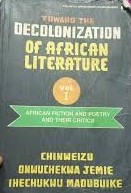
Why might attending LSE be a point worth mentioning at his 70th birthday when ABU, Zaria where he took his first degree was a world class university in those years? One plausible answer to that must be the point that as world class as most Nigerian universities were up to the overlordship of SAP in the mid-1980s, we have not taken ontology and the associated swimming in epistemology as seriously as it ought to have been. This may sound controversial or contentious but that’s the point. Is it any wonder that the few exceptions to this claim and which are disciplines such as Literature, History, Linguistics have done much, much better than the social sciences. If we feel antagonised by the claim, we should ask how it was possible for History in UI to accomplish the historiographical revolt (Ibadan School of History) it accomplished, almost 40 years before decoloniality became entrenched. Yet, that historiographical revolt is today a crucial building block of decoloniality. While it is true that decoloniality, if properly traced, can claim a Nigerian ‘origin’, (Chinweizu, Onwuchekwa Jemie and Ihechukwu Madubuike’s Towards the Decolonisation of African Literature which came earlier than all others, including Ngugi’s), it was an outing from the humanities rather than the social sciences. This is said without suggesting a strict binary between the two domains.
There is no knowing now what would have been the outcome of the direction Sociology (Anthropology) was taking in the hands of the generation signified by Omafume Onoge if the military did not, at some point, destabilise him. Using Levi-Strauss’s Saussurean structuralism, Anthropology was the discipline that could have even surpassed Literature or even UI School of History in articulating Africa against the colonial and colonising narratives of the continent if there had been no punitive gaze on Onoge and the likes of Onigu Otite who, had posed the more important question today, long before the much-feared postmodernism as to whether the elite have a constitutive interest as to talk of elite instrumentalisation of ethnicity. Controlled largely by positivism and realism, Political Science, for instance, has remained more or less what Prof Oyovbaire has aptly called intellectual import-substitution realm. This explains why there is an imperative of updating the social sciences in Nigeria as a matter of urgency rather than the kind of defensive anger we see when this is mentioned.
 It may not only be bookish but also reductionist to attribute every capability noticeable about an individual to his or her being a product of a particular school or reading a particular course. However, it is difficult if not impossible to demonstrate that there is no link between gulping from the standards and academic traditions of LSE and Prof Zabadi’s ability to grapple with complexity at a level of abstraction which appreciates hegemony or the knowledge-power nexus. It explains why he does not create worse strategic alienation for potential beneficiaries of his cause. The intertextual awareness in managing complexity are not picked casually from any and everywhere. The expectation is that Prof Zabadi will tell his story at his own time and leave behind the lessons from that story for younger readers who will pick one or two of such lessons in relation to decomplexifying and/or resolving the topics and themes which appear intractable and undecidable at the moment.
If we move from brilliance as a reason for consuming extra share of rice at Prof Zabadi’s 70th birthday, we get to his record in national service. Soldiers or the men on horseback are guarantors of the national self. Without soldiers, we will not be able to sleep with our eyes closed. It doesn’t matter that, at certain points, some of the soldiers announced themselves as landlords instead of guarantors of national security. But that is now a matter of details. As great warriors as soldiers, the greater warriors are those who taught them the logic of war fighting. That is the brains who problematised, conceptualised, methodologised and recontextualised Tsun Zu, Clausewitz, Foucault, Derrida, Freedman and other leading lights in military strategy. Prof Zabadi was one of them as long as he was at the National Defence College, Abuja. One suspects that must be a source of pride to him because, given his background, he could not have been a woolly teacher of strategy in the wooly way people love to bandy the word strategy about.
There are a few more points that can be dragged into this monologue. But Intervention has to leave some of them to be said by elements better located to say them. For someone who has served as a commissioner in his home state some years back, the audience at his 70th birthday is bound to be an ensemble. In a continent where the life expectancy figure hovers between 60 and 65, attaining 70 is worth a budget!
Congratulations, Prof Zabadi.