By Fred Akpowo Jacob
On the morning of July 12, 2026, suspected armed herders descended upon Akpachi community in Ugboju District and Otukpo-Nobi community in Otukpo Local Government Area. By the time the gunfire ceased twenty people laid dead. Of course, this does not include those who cannot be accounted for either because they died in inaccessible points or the assessment is still incomplete. The attack was not an isolated incident but part of a “cycle of violence that has plagued Benue South for more than a decade”. Yet what made this massacre different was not its brutality, Benue South has known brutality, but what it revealed about the fragile architecture of governance in a state where one ethnic group has held the governorship for fifty uninterrupted years.
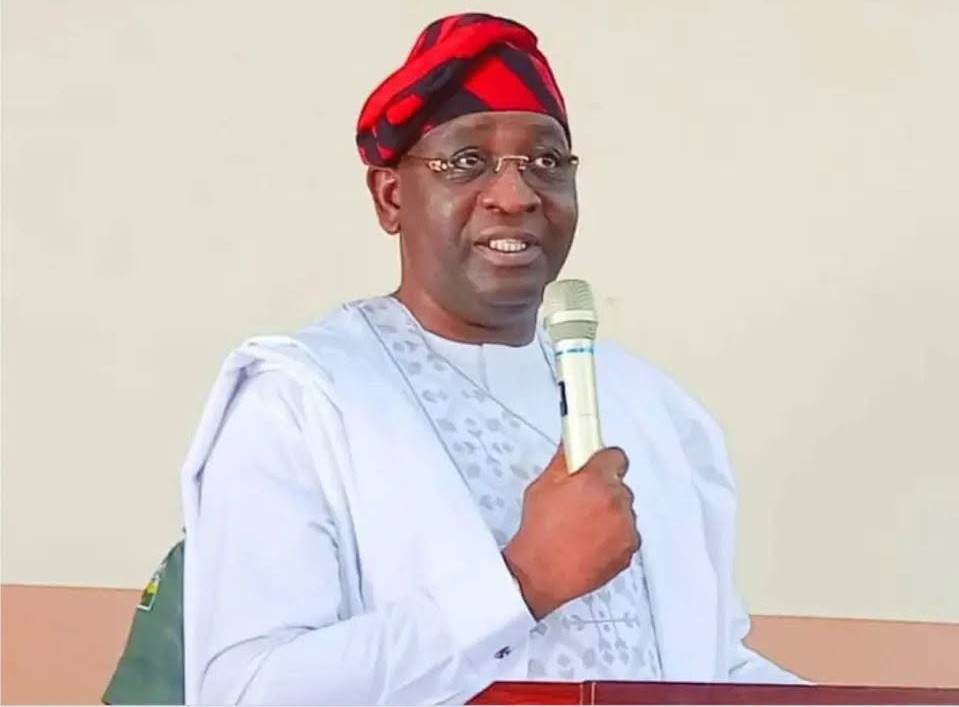
At the heart of this architecture stands Barr. Dr. Sam Ode, Deputy Governor of Benue State, a man of Idoma heritage serving under a Tiv governor, Rev. Fr. Hyacinth Alia. Ode is caught in what political scientists might call a classic role conflict: he is simultaneously the highest-ranking Idoma official in a government his people increasingly view as indifferent to their suffering, and a loyal deputy to a governor whose administration stands accused of marginalizing Benue South. This article examines Ode’s leadership through the lens of Robert K. Merton’s role theory, specifically the concept of the marginal man who occupies an intermediary position between two groups, to understand how he navigates the treacherous waters between his Idoma constituency and an administration he is sworn to serve.

Benue State governor, Fr Hyacinth Alia
Robert K. Merton’s role theory provides a useful analytical framework for understanding Ode’s position. Merton argued that individuals occupy multiple social statuses, each carrying a set of expected behaviors, roles. When these roles conflict, the individual experiences role strain. More acutely, when an individual belongs to a minority group but occupies a position within the majority’s power structure, they become a marginal man, neither fully accepted by the minority (because they serve the majority) nor fully trusted by the majority (because of their minority identity).
Ode embodies this marginality. To his Idoma people, he is the deputy to a governor who, they argue, has neglected Benue South. Senator Abba Moro, representing Benue South, has repeatedly accused the Alia administration of “treating Benue South people as second-class citizens”. Yet to the Alia administration, Ode is the public face of government responsiveness in the zone, the emissary sent to “convey the government’s sympathy” when the governor himself does not visit.
As Merton would predict, this marginal position generates intense role conflict. Ode cannot fully embrace Idoma grievance without appearing disloyal to his principal. He cannot fully defend the administration without appearing indifferent to his people’s suffering. His leadership, if it can be called that—lies in the precarious space between these two irreconcilable demands.
The July 2026 Otukpo massacre brought this role conflict into sharp relief. The attacks were devastating: suspected armed herders attacked Akpachi and Otukpo-Nobi communities, killing at least twenty and displacing many more. The Ochetoha K’Idoma alleged that security agencies had received advance intelligence from the Och’Idoma himself but “failed to act on it”. The organization declared: “The blood of every victim is therefore not merely on the hands of the assailants, but also on those who received warning and did nothing”.
Governor Alia, reportedly out of state on official assignment, did not immediately visit the affected communities. Instead, videos circulated showing him attending a public event in Abuja “where they were dancing the traditional Swange”. The government announced a ₦5 million relief donation through the deputy governor, which the community rejected. An editorial in the Idoma Voice captured the prevailing sentiment: “Benue people have seen Governor Alia attend funerals, weddings, thanksgiving services and other public engagements in different parts of the state. That naturally raises questions… about why communities repeatedly attacked… have yet to receive a personal visit”.
It fell to Ode to respond. His press statement condemned the attacks as “barbaric, inhuman, and unacceptable”. He expressed “profound sorrow” and extended condolences to the victims’ families. He assured the people that “the state government remains committed to the protection of lives and property”. He urged calm and vigilance.
Yet the statement revealed the limits of his authority. He was delivering a message, not making a decision. He was communicating the governor’s directives, that “all heads of security agencies… immediately move to Otukpo”, not issuing his own. He was the voice of government, not its face. As the Idoma Voice editorial noted: “While the deputy deserves commendation for responding on behalf of the administration, there are moments in governance when only the presence of the chief executive can send the message that government truly stands with its people”.
From a role theory perspective, Ode was performing what Merton called role-taking, acting out the expectations of his institutional position as deputy governor. But he could not perform role-making, shaping the role to address the deeper needs of his Idoma constituency. The community did not reject the ₦5 million because they were ungrateful; they rejected it because what they sought was “not financial relief but protection”. They wanted to know “when the killings will stop”. Ode could not answer that question because the answer lay beyond his authority.

No entry, no exit from Otukpo for all of July 12th, 2026
Beyond security, Ode faces an equally fraught challenge on the question of Idoma marginalization. Senator Abba Moro has been the most vocal critic of the Alia administration on this front, repeatedly accusing it of neglecting Benue South in project execution. The senator went further, urging Idoma voters: “If you are Idoma and you have Idoma blood in you, don’t vote Governor Fr. Hyacinth Iormem Alia”.
Ode’s response to Moro reveals the contradictions of his position. He called Moro’s comments “irresponsible, unpatriotic and dishonest”. He defended the administration’s record, citing the ₦25.7 billion Awaji–Oju Road, the ₦19.3 billion Igumale-Apa-Agila Road, the ₦29.8 billion Obagaji-Okokolo-Agagbe Road, the revitalized Otobi Water Works, and the rehabilitation of 33 primary healthcare centers in Benue South. He argued that the administration had delivered “over N75 billion” in road projects alone.
Yet in making this defense, Ode implicitly accepted the premise that needed defending, that the administration’s commitment to Benue South was genuinely in question. He was not asserting the administration’s record; he was justifying it. This is the classic posture of the marginal man: constantly having to prove one’s worth to both sides, never quite belonging to either.
Moreover, Ode’s defense strategy, listing infrastructure projects misses the deeper grievance. As the Benue South Strategic Group argued, the issue is not roads but representation. The Idoma demand is not for more tarred roads but for a governor of their own. Infrastructure, however generous, cannot substitute for political power. When Ode lists road projects as evidence that the administration cares, he is speaking the language of transactional politics to a people making a claim for transformative justice.
The 2027 gubernatorial election looms over everything. Governor Alia has publicly declared that Ode will remain his running mate, “There is no vacancy for any Deputy Governor in 2027,” he insisted. But rumors have swirled about a “plot to replace” Ode with Hon. Ojotu Ojema, the member for Apa/Agatu Federal Constituency. Ode has dismissed these rumors, warning against “attempts to create discord in the Idoma community” and insisting that “the unity of the people remained their greatest strength”.
Yet the 2027 calculus is deeply complex for Ode. If Governor Alia wins re-election and Ode remains deputy, he will have secured another four years in office—but at what cost to his standing among Idoma people?
From a rational choice perspective, Ode’s optimal strategy is to maintain his position while quietly positioning himself as the Idoma bridge to the governorship. His mixed Idoma-Tiv parentage has long been seen as an asset, “the first man to break the ceiling against an Idoma man becoming governor,” as one early profile described him. But the ceiling remains intact. Ode is deputy, not governor. And in the zero-sum game of Benue politics, being a bridge often means being walked upon.

Caught in the fray
The question posed is whether the Otukpo killings will serve as the “death knell” for Alia’s support in Benue South. The evidence is mixed. On one hand, the killings have inflamed Idoma grievance and exposed the administration’s perceived indifference. The Ochetoha K’Idoma’s accusation that security agencies ignored advance warnings is devastating, if true, it suggests not merely incompetence but a failure of basic protection. The sight of grieving residents carrying corpses to the Och’Idoma’s palace, “cast(ing) aside their most sacred custom to lay their dead before the throne of their king” is a powerful indictment.
What the killings have done is not destroy Alia’s support but condition it. Benue South voters will now evaluate Alia not just on roads and water projects but on security and empathy. If the administration fails to protect Idoma communities, infrastructure becomes irrelevant. As the Idoma Voice editorial put it: “Benue South does not need press statements alone. Condemnations issued from Makurdi after every attack have become predictable. What the people now seek are visible leadership, stronger security coordination, concrete action against the perpetrators and genuine reassurance.
How, then, has Barr. Sam Ode displayed leadership in navigating these complexities?
On the positive side, Ode has consistently shown up. When the diaspora Idoma community convened in Houston, Ode represented the governor and reaffirmed the government’s commitment to “combating insecurity through specialized squads and vigilante structures”. When the Otukpo killings occurred, he issued a strong condemnation and assured the people that the government would pursue justice. He has highlighted infrastructure projects in Zone C and defended the administration’s record. He has maintained his position despite rumors of replacement. In Mertonian terms, he has performed his institutional role with professionalism and dignity.
On the negative side, Ode has been largely reactive rather than proactive. He responds to crises rather than preventing them. He conveys the governor’s messages rather than shaping them. He defends the administration’s record rather than advocating for a reorientation of its priorities. He has not, for example, used his position to demand that Governor Alia personally visit Otukpo in the immediate aftermath of the massacre, a demand that would have carried enormous symbolic weight coming from the deputy governor. He has not publicly challenged the security establishment’s failure to act on advance intelligence. He has not articulated a vision for Idoma political empowerment that goes beyond infrastructure projects.
In short, Ode has been a competent deputy governor but not a transformative leader. He has managed the tensions of his marginal position without transcending them. He has survived, but survival is not the same as leadership.
There is a certain tragedy in Ode’s position. He is, by all accounts, a capable and steady-handed public official. He has served with loyalty and dedication. He has been a bridge between his Idoma people and a Tiv-dominated administration. But bridges are meant to be crossed, not inhabited. Ode inhabits the bridge, and in doing so, he absorbs the weight of both sides without fully belonging to either.
Merton’s marginal man is caught between two worlds, never quite at home in either. Ode cannot fully embrace Idoma grievance because he serves the administration that is its object. He cannot fully embrace the administration because he is Idoma. He speaks the language of governance, roads, water, healthcare, to a people who speak the language of justice, power, representation, protection. The two languages do not translate.
The Otukpo killings may or may not be the death knell for Alia’s support in Benue South. But they have exposed the fundamental instability of a political order in which one ethnic group holds power while another provides only deputies, not governors. Sam Ode is a symptom of that order, not its solution. His tragedy is that he is asked to be a leader without the authority to lead, a representative without the power to represent, a bridge that can be crossed but never inhabited.
The Idoma people of Benue South do not need another deputy governor. They need a governor of their own. Until that day comes, figures like Sam Ode will continue to navigate the impossible space between loyalty and justice, and the question of whether that navigation constitutes leadership or merely survival will remain, like the bodies carried to the Och’Idoma’s palace, a measure of how far sorrow has crossed every boundary.
The author is a political economist and publisher.