

At a time when interpreting the world and changing it have merged into one rather than two different spheres, fishing for critical thinkers cum creative writers has become the most potentially rewarding investment for any INGO. This turn comes with the demystification of Science, History, Theology and even Philosophy as just another textual entities readable anyhow, leaving only creative writing with the monopoly of the elusive quality of persuasiveness with which hegemonic consent is more easily achievable.
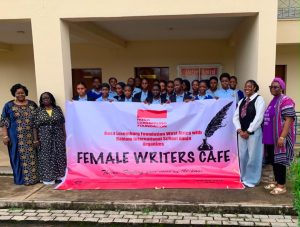 This makes Rosa Luxembourg Foundation to be moving ahead in the right direction in its festival of critical thinking and creative writing around some schools in Abuja. So far, two schools have been covered in the programme tagged Female Writers Café (FWC). One of them is Baldom International School, Maitama Abuja while Anglican Girls Grammar School at Apo, Abuja is the second. While the Café exploded at Baldom on July 16th, 2026, it did so at Anglican Girls Grammar School on July 22nd, 2026.
The grand idea around the Female Writers Cafe is as a platform to promote critical thinking skills and creativity among young girls in selected secondary schools in Nigeria. That way, female secondary school students have an opening to interact with female writers and explore writing as a means of sharing their views and perspectives on issues that affect them, their communities, the nation and the global order. In interacting, they gain practical insights into the art of writing, storytelling, and self-expression, thereby making the FWC a clinic inspiring participants to develop confidence in using their voices to tell their stories and contribute meaningfully to society.
This year’s edition featured two female writers found in award winning category: Dr Ejiro Otive-Igbuzor (author of The Travails of Omotejomo and Trophy Husband) and Ms Francess Areh (author of Saharabi). Ms Doofan Anakaa, a poet and writer moderated the workshops. Attendees rate the sessions productive and impactful sharing and learning experiences.
At Baldom, the session began with a welcome address delivered by Mr. Panle Vwar who warmly received the participants, guest writers, and representatives of the Rosa Luxemburg Foundation for Peace and Development. He expressed the school’s delight in hosting an initiative dedicated to nurturing the creativity, confidence, and literary potential of female students, calling the event one of the school’s proudest moments. Recalling a similar literary event hosted by the school in the previous year, during which Kenyan author Miss Lydia launched her book, Adventures of Mala, the principal noted how the students actively participated in the programme and contributed to its success. Encouraging the students to take full advantage of the opportunity by learning from the experiences shared by the guest writers, Mr. Vwar points out how every successful writer began somewhere, hence his optimism that this year’s event would build on that achievement and further strengthen the students’ interest in literature and creative writing.
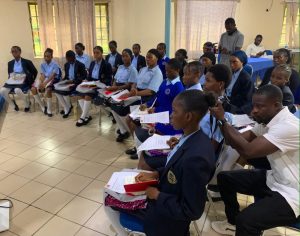
Silence! writers at work at Baldom International School, Abuja
Still setting the ground for the FWC, Comrade Angela Odah who delivered the goodwill message on behalf of the Rosa Luxemburg Foundation for Peace and Development, stressed the importance of empowering young women to use writing as a tool for self-expression, advocacy, and social change and thus a strategic intervention aimed at encouraging young girls to discover and develop their voices through creative writing. The Female Writers cafe is, according to her, the first phase of a three-year initiative designed to mentor and nurture aspiring young female writers and is being pursued as one of the Foundation’s four thematic focus areas alongside peace and security, economic justice, and migration and justice.
She expressed appreciation to the management of Baldom International School, particularly the Proprietor, Mrs Esther Bali, the Director, Dr. Nana Emmanuel and the Principal, Mr. Panle Vwar, for their warm reception, cooperation, and support in hosting the Female Writers’ Cafe. Rosa Luxemburg Foundation. She further disclosed, is a German political foundation that has been operating in West Africa since 2010 and working with researchers, civil society organisations, schools, and other stakeholders to create platforms for dialogue on issues relating to political development, economic justice, social development, and culture, with the aim of empowering citizens to actively contribute to the development of their societies. It operates through regional offices across Africa, including West, Southern, and North Africa, while its headquarters is in Germany from where it collaborates with a range of development partners, including the European Union, in implementing programmes that promote inclusive and sustainable development. The expectation is for the participants to have produced written works for publication, with the Foundation supporting dedicated participants to achieve their first published works by the end of the three-year cycle.
The warming up proceeded to where facilitator, Ms. Doofan Anakaa, introduced the programme with an interactive icebreaker designed to encourage participation and create a relaxed learning environment. Inviting each participant to imagine herself as a book and to state the title they would give their own story, she plunged the students into self-introduction through first names and the title they believed best represented their personalities or life journey. The advisory here was for the students at the center of the success of the programme to speak confidently, engage freely in discussions, and interact with the guest writers and one another, stressing that the session would be participatory rather than a one-sided or monologic presentation. The programme was designed to be a safe space for self-expression and learning, she stressed.
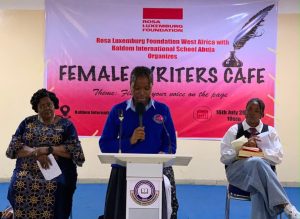 Dr Ejiro Joyce Otive-Igbuzor stepped forward in response to the moderator’s invitation to share memorable books that had influenced her writing journey, particularly her early reading experiences. Her story is that she is a product of the impact of Nigerian literature which she encountered through a culture of reading novels in the boarding school. Those texts provided portraits of the country’s history, culture, and lived realities she could not forget, particularly Chinua Achebe’s Things Fall Apart and its remarkably rich depiction of Igbo culture and traditions. She adds how the power of literature to preserve cultural heritage and project African stories to a global audience is demonstrated in the international success of the novel, including its translation into numerous languages, concluding with crediting the novel with enabling readers from diverse backgrounds to gain a deeper understanding of the customs, values, and social structures of the Igbo people in its clash with European civilisation.
Ms Frances Areh, reflected on novels she read during her secondary school years, explaining that the stories in them had profound and lasting impact on her. So impactful she found herself reading some of them repeatedly because of how engaging, relatable and memorable the contents were to her. The compelling portrait of realities, challenges and experiences of life in secondary school in the text resonated deeply and remained with her long after she had finished reading it and, to that extent, she is recommending students read it if they had the opportunity so as to savour that meaningfulness. In any case, for Ms Areh, it is worth cultivating a reading culture because, as she argues, books broaden perspectives, stimulate critical thinking and enrich the imagination. For those reasons, she would want the participants to read widely and consistently as exposure to diverse stories and ideas is essential for developing strong writing skills and becoming effective storytellers.
Illustrating writing journeys, Ms Areh shared how a common myth about twins inspired her writing a book, tasking the students to cast away self-doubts because, in the creative writing space, every individual’s perspective is unique and there is thus no such thing as a wrong form of expression. Just as every flower is unique, so also has every individual a distinct story to tell and hence the imperative of every participants to not only clutch at what makes each of them different but also draw from their personal experiences so as to give their stories originality, authenticity, and emotional depth. Tapping from and converting one’s uniqueness into creative expression, she said, is the rooting for her own writing journey. What that means is every voice deserves respect, making authentic self-expression the foundation of effective writing. Students should speak confidently and allow their voices to be heard because writing begins with the courage to express one’s thoughts and valued own ideas and perspectives. Storytelling technique in producing engaging and meaningful literary works received great attention, working through relatable and well- developed characters, clear narratives, and authentic experiences that are bound to resonate with readers.
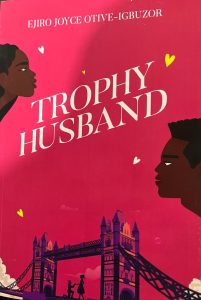
A literary footprint of one of the resource persons
For Dr. Ejiro Joyce Otive-Igbuzor, writing inspiration came from the beliefs, traditions, and experiences within the communities, reworked into narratives aimed at promoting social transformation. Hence her concept of the “mirror and window” in storytelling, meaning stories serving as mirrors reflecting people’s realities, identities, and lived experiences while also functioning as windows that expose readers to different perspectives, cultures, and ways of thinking. This is what growing up in a rural community and the unique challenges she encountered produced by shaping her worldview and influencing many of the stories she writes. Students would do well to similarly draw inspiration from their own lives, communities, and cultural backgrounds, emphasizing that authentic and relatable stories often emerge from such personal experiences.
Developing compelling characters in a story, overcoming initial fears about putting out a story, the question of whose story is missing from the texts we read and the texts illustrating that as well as poetry and interactive story telling sessions were some of the thematics engaged with. In the theme of what triggers writing in most people, Areh, for instance
On her own part, Dr Igbuzor told the personal story that triggered the chapter, Unsung Heroines: Grandmother the Great in one of her published works, We Rise. It was her return to her being born under circumstances that made her survival uncertain. That was in the sense that her mother became pregnant while still in nursing school and outside marriage at a time of thick societal stigma surrounding such pregnancy. All these conditioned her survival on the unwavering support of her grandmother for her own mother who promised to care for the child and enable her daughter to return to school after childbirth, that being the context in which she conceptualises herself as a ‘special child’. In one sentence, Dr. Igbuzor was illustrating how specific meaning could be to those who experienced particular realities and how powerful writings reflect this.
In presenting imaginative titles that reflected their personalities, aspirations, and perspectives, participating students shared titles such as Spring Flowers, The Creativity of Life, The Creativity of Women, Creativity in Existence, The Overthinker, Strong Nation, The Freedom of Women, and Looks Are Deceiving, with each participant briefly explaining the inspiration behind her choice of title. It brought them commendation for their originality and thoughtful reflection from Ms Anakaa for whom it is a pointer to the emerging writers status of the students.
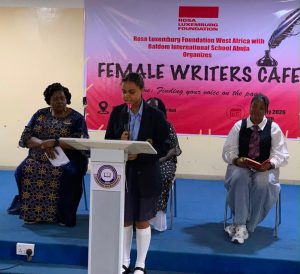
Another student participant on the dais
A revealing session came at the session at which participants presented original poems and short reflections based on the themes “The Day I Found My Voice” and “If I Could Speak Without Fear.” Through their presentations, the students reflected on issues of self- expression, identity, courage, and the importance of speaking up against injustice.
Natanya Okereke, presenting on “If I Could Speak Without Fear,” expressed her desire to overcome self- doubt and change people’s perceptions of her. She reflected on feeling different from others and shared her aspiration to become a better and more confident person if she could freely express herself.
Fatima Mbango’s presentation explored the challenges of setting personal boundaries. She explained that if she could speak without fear, she would openly express her opinions, even if doing so made her unpopular. She lamented that people often misunderstand or resist correction, making it difficult to communicate honestly while maintaining healthy relationships.
Presenting on “The Day I Found My Voice,” Chimdindu Nwosu described finding the courage to replace doubt with confidence. She explained that discovering her voice transformed her outlook on life and enabled her to move beyond silence and self-restraint.
Amara Edeh, speaking on “If I Could Speak Without Fear,” reflected on feelings of oppression, invisibility, and the fear of criticism. She noted that these fears often prevented her from expressing her thoughts freely and confidently.
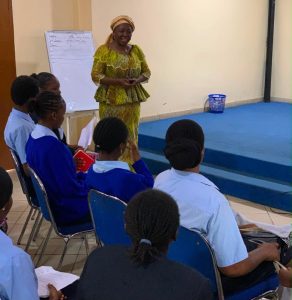 Magdalena also spoke on “If I Could Speak Without Fear,” sharing that although she had many ideas, thoughts, and emotions she wished to express, fear often held her back. She stated that she desired the confidence to prioritize her own well-being rather than remaining silent merely to make others comfortable.
Jordin Bature used her presentation to advocate for respect and dignity for women and girls. She declared that speaking without fear meant challenging discrimination and insisting that being a woman should never be used as a justification for disrespect or abuse. She called for greater respect for women’s rights and affirmed the importance of raising one’s voice against injustice.
The session provided participants with a safe platform to express their thoughts and emotions while reinforcing the programme’s objective of empowering young women to find and confidently use their voices through creative writing.
Question and Answers session acted itself out. Should lack of formal literary training prevent or discourage anyone from pursuing a writing ambition? That was one of the questions. The answer came as ‘No’, meaning further encouragement for participants who had sufficiently warmed up to their invitation and initiation into the domain of creative exertions. Interestingly, Rosa Luxemburg Foundation wetted that appetite by announcing that the next edition of the Female Writers Cafe would be in 2027 when the second of the three-year initiative comes up.
According to Comrade Angela Odah, Rosa Luxemburg Foundation is committed to supporting participants who successfully develop their manuscripts into books. She explained that the Foundation would provide the necessary support and resources to facilitate the publication of books written by participants, thereby giving aspiring young writers the opportunity to become published authors. Predictably, the final words from the school principal was gratitude to Rosa Luxemburg Foundation for choosing Baldom International School as a host institution for the programme and a reaffirmation of the school’s commitment to supporting initiatives that promote literacy, creativity, and the empowerment of young women through creativity. Mr. Vwar instructed all the students to write a report on what they had learnt from the Female Writers Cafe and submit same the following day.
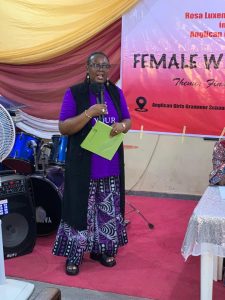
Cde Angela Odah of Rosa Luxemburg Foundation speaking at Anglican Girls Grammar School session
From Baldom on July 16th, 2026 to Anglican Girls Grammar School a week later. Codenamed ‘Finding Your Voice on the Page’, facilitator, Ms. Doofan Anakaa let it be known that the first set of beneficiaries of the Female Writers’ Initiative should think of themselves in potentially exceptional terms and whose enhanced ability to read, write, and communicate effectively would not only contribute to academic excellence but also prepare participants for leadership and personal development. Full of appreciation to Rosa Luxemburg Foundation for selecting the school to participate in the initiative, the Principal of Anglican Girls’ Grammar School, Mrs Nkiruka Nwafor, welcomed the organizers, facilitators, guest writers, teachers, and students to the workshop, confident that the programme aligned perfectly with the school’s vision of promoting reading, writing, and effective communication among female students.
Delighted by the school’s prompt response to the invitation, Comrade Angela Odah who spoke for Rosa Luxemburg Foundation, expressed optimism that the programme would mark the beginning of a productive and long-lasting partnership between the Foundation and the school. Rosa Luxemburg Foundation, a German political foundation, has maintained a presence in West Africa since 2010 and currently operates in over eighty countries worldwide, she told her audience, listing feminism, climate justice, peace and security, migration rights, democracy, and human rights as the Foundation’s thematic areas. According to her, the Female Writers’ Workshop forms part of the Foundation’s broader feminist programme aimed at empowering girls and women to express themselves confidently and contribute meaningfully to society. She would want the students to take something Rosa Luxemburg, describing her as one of the earliest women in Europe to obtain a doctoral degree despite living with a disability and facing significant societal barriers. “Rosa Luxemburg’s determination, resilience, and commitment to justice continue to inspire the Foundation’s work across the world”, said Odah.
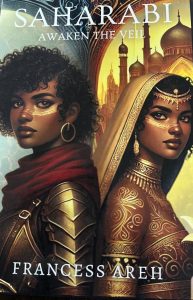
A literary footprint of one of the resource persons
Unpacking the guest writers to unfold the programme to the students, Ms. Anakaa presented Dr. Ejiro Joyce Otive-Igbuzor as a gender equality and social inclusion specialist, a Monitoring, Evaluation and Learning (MEL) practitioner, novelist and Founder of Girl Global Hangout – a platform credited with empowering over 2,400 women across the world. In addition, she is a co-founder of the Center-LSD leadership school where she serves as a faculty member. A former Nigeria Country Director of the Centre for Development and Population Activities and the Gender and HIV/AIDS Programme Coordinator at UNIFEM, now UN Women, Dr. Otive-Igbuzor is currently the Managing Director and Chief Executive Officer of Emerald and International Development Services, where she provides consultancy services on gender equality and social inclusion, gender audits, monitoring, evaluation and learning, strategic planning, and organisational development. She added that Dr. Ejiro Otive-Igbuzor is an author for whom fiction is a tool to promote gender equality and positive social change.
The second resource person was Ms. Frances Areh, who studied English and Economics at the University of Manitoba in Canada and is now a writer, editor, book club organiser, business consultant, and advocate for storytelling and creative expression. The co-owner of a corporate event management company where she combines creativity with strategic planning is though primarily a fiction writer, her writing portfolio includes essays, poetry, reviews, newsletters, and editorial content. Her passion for literature is traced back to her years at Regina Pacis Girls’ Secondary School, Abuja where she developed a deep appreciation for reading and storytelling. Her debut novel, Saharabi: Awakening the Day surfaced after many years of working behind the scenes as a ghostwriter. Areh whose second novel is currently in the making is said to be passionate about encouraging young girls to embrace creativity, recognising that creative thinking is valuable across all professions and industries, particularly storytelling which she takes as one of the most powerful tools for self-discovery and understanding the world.
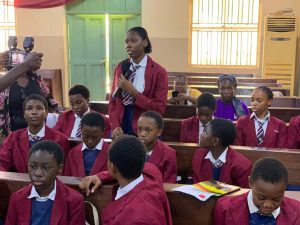
A student on the dais
To insert the students into the creative stream, Ms Doofan Anakaa asked participants to imagine each of themselves as a book and choose a title that best reflects their identity, experiences, or aspirations. To this, the participants responded with a variety of imaginative and thought-provoking book titles that they consider reflective of their personalities, beliefs, aspirations, and life experiences. Some of the titles included Life Without God Is Nothing by Precious Akogwu, Don’t Judge a Book by Its Cover by Adewale Promise, The Greatest Book by Anebi Christine, The Twist of Fate by Praise Adebiyi, A Living Miracle by Eze Chinasa, Life’s Challenges by Uchekwu Victory and Little Confusion in Life by Anita Chisaram. Other creative titles suggested by participants were War Against Partiality, If I Could Imagine, The Chosen World, The Search for Ms Mercy, The World Through Her Eyes, Weakness Comes in Different Ways, The Unexpected Event, Taking Peaceful Adventures, The View of Their Target, The Power of Imagination, My Impressions Are Better Than My First Impressions. The exercise was assessed to encourage the students to think creatively, reflect on their personal journeys and express themselves through storytelling.
For insights into the writing trajectory of the resource persons, Ms Areh hung hers on reading extensively and the exposure therefrom to different cultures, perspectives, and storytelling techniques, helping her to understand that literature has the power to transport readers into unfamiliar worlds. Her clincher is that everyone possesses unique experiences capable of inspiring meaningful stories.
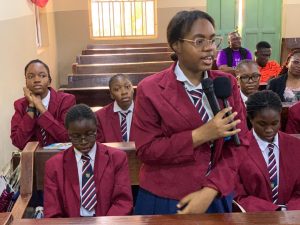
And another student on the dais
With an academic background in the sciences rather than literature, Dr Ejiro Joyce Otive-Igbuzor describes herself as a “lay writer”. But even with Medical Microbiology background, her passion for storytelling developed through personal experiences, family history, and her desire to address social issues affecting women and girls was unyielding. Her core point is that potential writers should never underestimate the value of their personal experiences because authentic stories often resonate more deeply with readers than fictional events alone. She tells the story of the powerful impact of her grandmother on her own survival and how that has constituted her starting point in writing. It was later that spousal influence entered into it, positively. On the theme, her point of departure is for each of the students to discover her unique voices and express them confidently through compelling storytelling built on authentic experiences, creativity, and relatable characters.
Technical issues of character development in literary texts, overcoming self-doubt and adversity in the writing career down to discrimination and challenges in publishing were all explored, with particular reference to overcoming them. That put the students in a position to utilise the Q and A to clarify, particularly on dealing with writer’s block, developing story ideas, understanding story structure, writing with clarity, creating complex characters, finding inspiration, writing poetry, avoiding plagiarism, completing unfinished stories and balancing personal satisfaction with readers’ expectations. The range of the issue-areas touched by their questions indicated how well they had listened as well as how much of the instinct for writing was burning in them before they found the trigger in the FWC.
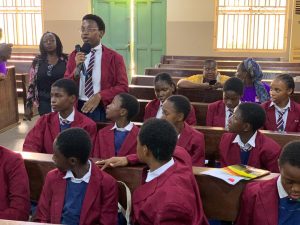
And yet another student taking control
Two questions were particularly instructive. Eze Chinasa, for instance, sought clarification on the structure of writing and asked the panel to explain the key elements involved in organising a story. She also observed that some books lack clarity and enquired whether it is possible to write an engaging book using simple language without relying on excessive drama. Christine Anebi also asked how writers can effectively develop controversial and morally complex characters, particularly those who are neither entirely good nor entirely bad, but face personal struggles such as debt, difficult life circumstances and other flaws that shape their actions and decisions.
A sampler of the answers will suffice. Responding to the question on writer’s block, for instance, Ms Areh’s advice to aspiring writers who experience it is to simply begin writing. She recommended taking a break, getting adequate rest, reading other works and returning to the manuscript with a refreshed mind whenever inspiration seems to fade. She encouraged participants not to misread temporary creative blocks as a sign of impossibility. For Dr. Ejiro Joyce Otive-Igbuzor, the cure does exist in constantly recording whatever came to her mental radius, including dreams and observed phenomenon. The brief notes she makes on such intrusive stuff before continuing with whatever she was doing greatly reduces the occurrence of writer’s block as they enable her to continue writing even when she temporarily loses inspirational direction.
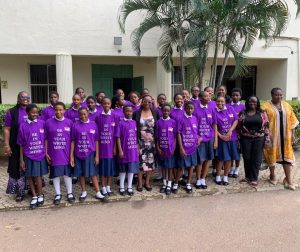
Another lens on the Anglican girls
For 20 minutes, participants were asked to write on either ‘The Day I Found My Voice’ or ‘If I Could Speak Without Fear’. The ground rules for this included the importance of showing respect for one another’s work and creating a safe environment where there was no ‘bad writing’ judgment. It turned out an opportunity for the participants to express their emotions and personal experiences creatively while building confidence in their writing and public presentation skills. Again, samples from the presentations would include Anita Chisaram’s “If I Could Speak Without Fear”, a vivid description of the struggle to express herself despite feelings of anxiety and uncertainty, Precious Akogwu’s “If I Could Speak Without Fear” and Praise Ochanya’s reflection on personal transformation through overcoming fear. Then Queen Roberts’ narration of how she overcame discouragement from those around her and eventually found her voice despite the challenges she faced. And, of course, Uchechukwu Victory speaking about being naturally quiet, which made others bully her, and her reflection on the importance of learning to speak up for oneself. Lastly, Adewale Promise’s story about finding her voice after experiencing rejection from a friend.
The session that followed involved resource persons moving around the room to engage directly with the participants, read their stories and poems, offer feedback and encourage them to continue developing their writing skills. Predictably, the parting shots ranged from ‘don’t seek perfection’, write freely first’, try to be as simple as possible without being simplistic, take fear and self-doubt as common experiences rather than impenetrable roadblocks preventing anyone from telling his or her stories and so on.
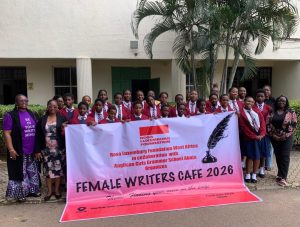
Resource persons student and other participants together
Predictably too, Mrs Kelechi Umeh, the English teacher at Anglican Girls Grammar School was full of appreciation to the organisers, facilitators, guest writers, teachers, and students for a successful and enriching programme, tasking the students to discover and build on their unique, individual strengths. Comrade Angela Odah too expressed appreciation to the guest writers, facilitators, teachers, and students for their active participation and contribution to the success of the programme. The students, she said, had, by their enthusiasm and creativity, exceeded the organisers’ expectations, hoping that by the next edition of the programme, many of them would have published or about to publish their own books and poems. Achieving publication would depend a lot on their own individual commitment, perseverance, and willingness to continue developing their writing skills, concluded Comrade Odah.













1 Comments
Berita Kampus
When will the next edition of the Female Writers Cafe be held according to the article?