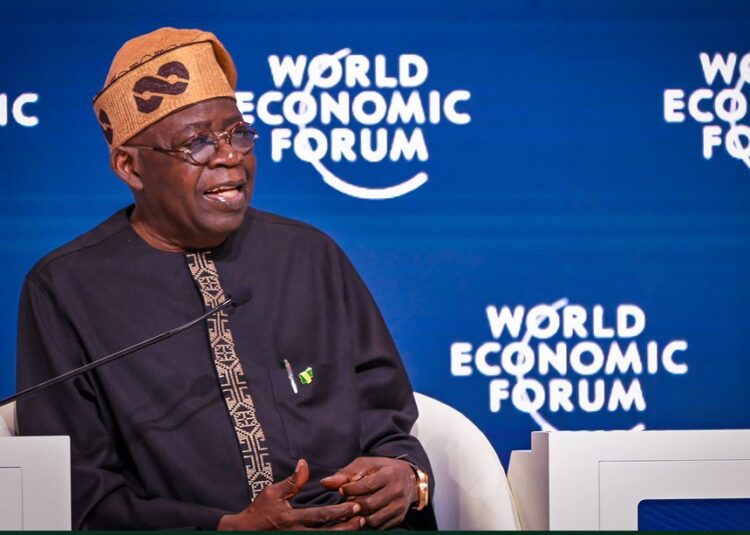
A week or so ago, Babatunde Fashola, former governor of Lagos State, contended that the opposition offers nothing more than the quest for Tinubu to be defeated. Now, Salihu Lukman is raising a similar point: what is it that the opposition has that makes them different from Tinubu? By which ideological or discursive framework are they going to make Nigeria better and should, therefore, be preferable to the Tinubu assemblage? Or, should Nigerians vote for them just because they are them? How come is it impossible for even Rotimi Amaechi, for example, to claim his much advertised Marxist tendency of yore? What sort of country is this that none of the presidential candidates as exists now advertises himself in terms of any respectable discursive category? Perhaps, the NANS DNA is surging in Salihu Lukman at last and he is now able to see more clearly and raise the most important question!
By Salihu Mohammed Lukman
The 2027 election is presenting almost a zero-sum option for Nigerians. On the one hand, there is the APC, which arguably has succeeded in changing Nigeria for the worse and reduced politics and governance to the level of sycophancy and propaganda, showering praises on President Bola Ahmed Tinubu and celebrating so-called achievements that can at best be described as offensive and insensitive, given the harsh realities facing Nigerians. In less than 12 years, APC has succeeded in weakening the economy beyond any rational expectation – corruption, poverty, criminality, insecurity, mass unemployment, rooftop inflation, millions of out of school children, etc. are the new normal. Political competition has been eliminated and is no longer a factor regulating electoral contest. Instead, vote buying and other sophisticated acts of electoral manipulations using public resources and governmental machinery determine the votes and produce winners of elections.
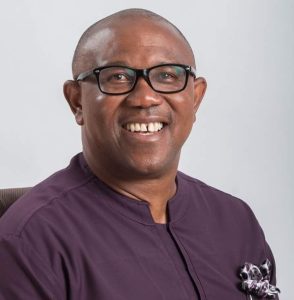
Advantage of newness but does that compensate for a clear articulation of the magic formula by which you want to remake Nigeria?
On the other hand, as opposition, whether as ADC, NDC, the legitimate PDP or any other party, we are unable to maintain unity on account of personal ambitions of key opposition political leaders. Ideally, Nigerians expected opposition leaders to project some patriotic readiness to make personal sacrifices in the overall interests of the country. Rather than being disposed to making personal sacrifices, opposition political leaders, unfortunately, reduced the challenge of producing alternative to APC and whatever they symbolise, to engineering politics that is allergic to competition and moving in the direction of consolidating bad governance in its worst forms. The end goal remains, to achieve personal ambitions of emerging as or producing candidates for elections. The claims about commitment to democracy is therefore empty, used to win political hegemony without accountability.
Across board, the character of an average Nigerian politician is about the same, it is all about achieving personal ambition. While acknowledging that there are certainly variations in the ways these attributes manifest in individual political leaders, overall, the desperation to win political hegemony and emerge victorious in elections with hardly any corresponding strong commitment to address challenges facing the country seems to be the preoccupation. Outside appearances and the personalities emerging as candidates for the 2027 elections, there is substantially hardly anything distinguishing the actors contesting the elections.
Painfully, Nigerians hang on the thread of hope that the 2027 elections will produce better leaders for the country with the opposition leaders believing that the poor performance of the APC and President Tinubu is enough to produce electoral victory. Nothing can be further from the truth. Certainly, Nigerians are not happy with the performance of President Tinubu and APC governments at all levels. The palpability of the anger of Nigerians with the APC governments at all levels equates to living in a teargassed environment. Sadly, rather than the opposition political leaders taking steps to win the confidence of citizens as the bearers of solutions to Nigeria’s problems, and to that extent becoming popular and winning mass followership, kneejerk actions and old approaches characteristically are the defining attributes.
As things are, the opposition is repeating the same old mistakes that produced the electoral victory of the APC in 2027. Lack of unity among the opposition was largely responsible for the electoral victory of APC. The same reality is manifesting itself again with the same two leading opposition personalities emerging as candidates against President Tinubu and APC. Consequently, and alarmingly, the possibility of APC winning the 2027 elections, notwithstanding the pains they inflicted on the lives of citizens on account of their impulsively poorly implemented plan less policies, are quite high.
With such glaring reality, the prospect of high voter apathy during the 2027 elections are better imagined. Unless something drastic happens, if votes are to count, the 2027 elections may not register total of more than 10 million votes in the Presidential election. Incidence of high voter apathy could further heighten electoral malpractices resulting in declaration of landslide, moon slide, space slide electoral victory for whoever can rig better. In other words, the prospect of winning the 2027 elections will be based on who has the higher or more efficient rigging capacity.
The most frightening thing is that even if the opposition as it is today, whether as represented by ADC, NDC or any other party, is able to muster the strength and win the 2027 elections by whatever means, there is nothing to give confidence that we can produce a better government. The possibility of continuing on the current downward slide of dashing the expectations of Nigerians may virtually be on the same scale and level with President Tinubu and APC. With reference to, for instance, developing structures to hold elected leaders accountable, the opposition is upholding the same political framework that subordinates the party organisation to elected political leaders. In the same way meetings of organs of APC are not holding, meetings of organs of ADC, NDC and perhaps all the other opposition parties are holding erratically, not as prescribed by their constitutions. Therefore, almost similar to the ways President Tinubu is exercising prerogative and holding APC and its leaders accountable to him, both Alhaji. Atiku Abubakar and Mr. Peter Obi are orienting themselves in the same way to emerge as presidents that will subordinate the organs of their party to their control.
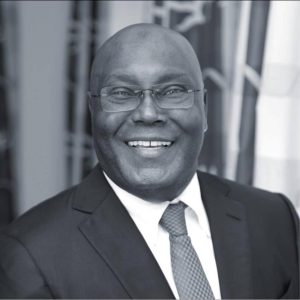
By now, the alternative framework by which the miracle is going to happen should be part of popular grammar across Nigeria
Internal debates and consultations within the opposition towards producing democratic decisions is absent. Graveyard silence in the midst of high public expectations define activities of the opposition. The question as to whether the country and whatever represents democracy is doomed resonate in the mind of every rational thinking Nigerian. What is it that can be done in the circumstance is a dilemma that confront most citizens. The campaign leading to the formation of the coalition based on the unity of opposition political leaders gave a glimmer of hope about the prospect of political change in 2027. Whether the change will equate to resolving the challenges facing the country and better conditions in the country is a different matter.
As things are, as an advocate of the coalition and a principal actor both in its conception and negotiating what is emerging out of it, one is highly troubled. With every passing day, combinations of inaction and replication of old approaches is sending worrying signals that the 2027 election is presenting Nigerians with a choice between the devil and deep blue sea. Inaction regarding consideration or identification of proposed initiatives on how to resolve challenges are to say the least worrying. Consequently, just like the APC is relying on sycophancy and propaganda to campaign for President Tinubu, the opposition is also resorting to propaganda to promote the candidature of Alh. Atiku Abubakar and Mr. Peter Obi.
It needs to be said, with high measure of respect to both Alhaji. Atiku Abubakar and Mr. Peter Obi that the difference between them is highly artificial. By extension, the difference between all the current political leaders in the country, unless substantiated or grounded in a well-defined political structure that outline a clear direction that is intended for the country, will be wishful thinking. Without a strong party whose leadership and organs are empowered to regulate the conducts of Alhaji Atiku Abubakar and Mr. Peter Obi, the propensity that they will also disappoint Nigerians on the same scale as APC and President Tinubu, if not worse, are also high. What can make any of these opposition leaders stand out and earn the confidence of Nigerians that they can competently resolve Nigeria’s challenges is if they are able to subordinate themselves and be accountable to their party.
Being accountable to the party and ensuring that the party is able regulate the conduct of elected leaders is also a function of the quality of leaders and ability to mobilise funding and run affairs of the party. These are challenges that both ADC, NDC and all the opposition parties are taking for granted. Inability to resolve these challenges are responsible for what has debased APC to being a parastatal of government. As a result, the party is unable to control or regulate activities of elected leaders at national level such that party leaders are reduced to being appointees of the President. Instead of the President being accountable to the party, APC and its functionaries at national level are subordinated to being appointees of President Tinubu.
Is this the model ADC, NDC and other opposition parties want to produce? Partly because there is hardly any evidential reality to confirm the opposite, Nigerians are sceptical about the opposition. Beyond scepticism, the commitments and patriotisms of both Alhaji Atiku Abubakar and Mr. Peter Obi are being called to question. If their commitment and patriotism is about resolving Nigeria’s challenges, why are they unable to work together? If truly their objective is about defeating APC and President Tinubu, why are they unable to recognise that once they are divided, it is as good as conceding electoral victory to APC and President Tinubu? Do these leaders – Alhaji Atiku Abubakar and Mr. Peter Obi, actually recognise the danger of conceding electoral victory to APC and President Tinubu and what it means to their constituents?
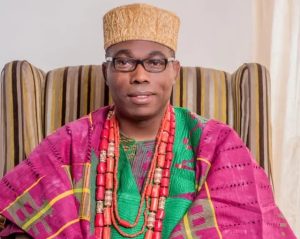
Here is someone who appears to differ but has yet to communicate himself, differently
Somehow, the issue of what the present political reality means for Nigerians appear lost in the sentimental debate about power rotation or shift. Across every part of the country, the urgency to bring an end to the calamity of bad governance is real. As much as factors of inclusivity must be respected, campaign of power shift or rotation must not be used to perpetrate bad governance. So also, the desperation to mobilise regional votes must not lose sight of the objective to get rid of bad governance. Interpreting this in terms of what it means to the constituents of Alhaji Atiku Abubakar and Mr. Peter Obi will lead to the question as to whether both leaders are committed to ensuring that the Northern part of the country is put on the path of recovery and the South-East can win back its status as equal partner in the Nigerian federation, exercising equal power to produce elected Presidents.
Elementary assessment hardly suggests any better prospect that the Northern part of the country can be put on the path of any recovery if APC wins the 2027 elections. Similarly, if APC and President Tinubu win the 2027 elections the prospect of South-East winning back its status to emerge as equal partner in Nigerian federation will be reduced to the level of at best only producing a Vice President in 2031 based on the current power rotation or shift arrangement. Is that what Alhaji Atiku Abubakar and Mr. Peter Obi want for their people? Does this mean that the two leaders will be willing to sacrifice the larger interests of their constituents in pursuit of their personal political ambitions?
The same questions can be addressed to Mr. Rotimi Amaechi and Sen. Rabiu Musa Kwankwaso who are running mates to Alhaji Atiku Abubakar and Mr. Peter Obi respectively. In the same way, other political leaders from across the length and breadth of the country, should be asked the same questions. The long and short of it is that Nigeria is confronted with the challenge of having political leaders who are dominantly oriented to pursue personal political ambitions. Nigerians need to consider new strategies that can enable the country to break away from the current generation of self-serving political leaders.
Accordingly, we, as Nigerians, need to demand that if the opposition as is currently constituted want citizens to take them seriously, they must go back to the negotiation table and work out an agreement that would enable them to contest the 2027 elections as a united front. As part of the agreement, the challenge of building a strong party, which can hold its elected representatives accountable must be well outlined. Failure to work out such clear terms of agreement by the Nigerian opposition political leaders, Nigerians should not invest considerable expectations in the 2027 elections.
Once that become the reality of the 2027 elections, patriotic Nigerians should take up the challenge of organising a new political platform post 2027 with the objective of mobilising Nigerians to break away from the current generation of self-serving politicians. Nigeria and Nigerians deserve better political leaders. Why should a country as endowed as Nigeria be condemned with such incorrigible generation of political leaders? The opposition, led by Alhaji Atiku Abubakar, Mr. Peter Obi, Mr. Rotimi Amaechi, Sen. Rabiu Musa Kwankwaso and all the other opposition leaders must be challenged to prove their patriotic disposition and commitment to the well-being, national development and the growth of Nigerian democracy beyond their personal ambitions. Once the contest of the 2027 elections is narrowed to prosecuting the personal ambitions of opposition political leaders, Nigerians should not waste their time.
Nigerians are expectantly watching – Alhaji Atiku Abubakar, Mr. Peter Obi, Mr. Rotimi Amaechi, Sen. Rabiu Musa Kwankwaso and all the other opposition leaders must demonstrate a stronger commitment to defeat APC and President Tinubu beyond achieving personal ambitions of becoming President and Vice President. The country has investment everything in the current generation of political leaders. Making individual sacrifices by opposition political leaders to ensure that the end to bad unaccountable governance in the country is not asking for too much. For 2027 elections to produce better leaders and responsive government, the opposition must unite based on clear agreements that can make elected leaders accountable to citizens through their parties.