By Chris Kwaja
Introduction:
For years, Nigeria’s humanitarian and poverty-reduction landscape has been defined by a familiar cycle: a crisis occurs, assistance is announced, beneficiaries are reached, and the intervention eventually ends. The immediate pain may be reduced, but a difficult question often remains unanswered. What happens to the household afterwards?
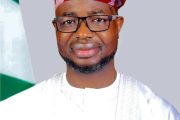
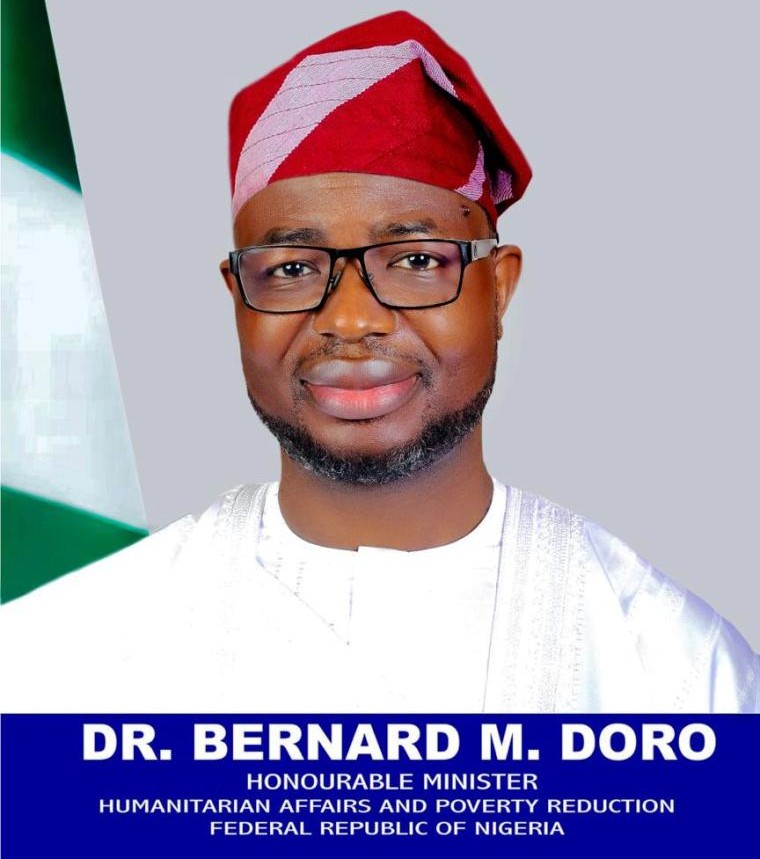
It is precisely this question that Minister of Humanitarian Affairs and Poverty Reduction, Dr. Bernard M. Doro, is seeking to confront with a new $1 billion social protection architecture launched by the Federal Government.
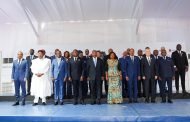
Unveiled on August 26, 2026, at the State House Banquet Hall in Abuja by First Lady Oluremi Tinubu, the Renewed Hope Social Protection Programme represents an attempt to redefine how Nigeria responds to poverty, vulnerability and humanitarian crises. At its heart is the Household Prosperity and Empowerment Social Protection Project (HOPE-SP), designed to take vulnerable households beyond temporary relief and towards economic empowerment and self-reliance.
The scale is substantial. The HOPE-SP initiative is expected to reach about 7.6 million vulnerable households, with eligible households receiving a one-off digital shock-response transfer of ₦40,000. Beneficiaries are to be drawn from the National Social Register and validated through their National Identification Numbers, an approach intended to improve targeting and reduce leakages.
A Different Philosophy of Humanitarian Intervention
Doro’s most important contribution to the initiative may be philosophical rather than financial. The minister has repeatedly argued that Nigeria must move “from palliatives to pathways”—from simply responding to hardship towards creating structured routes by which vulnerable households can recover, become resilient and ultimately become economically self-sufficient.
A cash transfer can help a family survive a difficult month. Food assistance can help a community through an emergency. But neither, by itself, necessarily changes the circumstances that produced vulnerability in the first place.
Doro’s proposed model therefore puts the household at the centre. Rather than measuring success principally by how many people received an intervention, the government wants to know whether the intervention actually improved the household’s condition.
In practical terms, this means identifying vulnerable families, assessing their circumstances, providing the assistance most appropriate to their needs, and then tracking their progress along what the ministry calls a “poverty graduation pathway.”
The Problem of Fragmentation
One of the central problems Doro has identified is fragmentation. Nigeria has numerous government institutions, development partners and intervention programmes working in the humanitarian and social-protection space. Yet, when those programmes operate with separate databases and limited coordination, the same household can potentially receive assistance from several institutions while another equally vulnerable household remains invisible.
The new One Humanitarian One Poverty Response System (OHOPRS) is intended to address that problem by creating a more integrated framework linking humanitarian response, social protection, poverty reduction and economic inclusion. Under the proposed architecture, government would have greater visibility into who has received assistance, what type of assistance was provided and whether that support produced meaningful results. The National Social Register, digital delivery systems and improved data integration are expected to play important roles.
From Counting Beneficiaries to Measuring Impact
The most compelling element of Doro’s approach is the insistence that numbers alone are not enough. For years, government programmes have often highlighted the number of beneficiaries reached. That is an important measure of scale, but it does not necessarily demonstrate impact. A household can receive assistance and remain poor. A young person can receive a temporary intervention and remain unemployed. A family displaced by crisis can receive relief and still have no pathway back to sustainable livelihood. Doro’s framework seeks to introduce a different question: Did the intervention work?
The answer would depend increasingly on whether households become more resilient, gain access to economic opportunities and eventually reduce their dependence on government assistance. The minister has also announced plans for a National Poverty Intelligence Lab, intended to strengthen the use of evidence and real-time information in determining what works. That is where the $1 billion programme could become more than another government intervention. If successfully implemented, it could become an infrastructure for measuring and managing poverty itself.
A Minister Under Pressure to Deliver a Humanitarian Dividend
Doro’s ministry is operating in a country where millions of people remain exposed to economic shocks, conflict, displacement, unemployment, food insecurity and other vulnerabilities. The minister said recently that more than ₦600 billion in cash transfers had been disbursed to slightly more than 10 million households over the previous three years.
The challenge now is to demonstrate that the next phase of intervention can deliver something beyond temporary relief. That will require credible beneficiary identification, strong verification systems, transparent digital payments, effective coordination between federal and subnational governments, reliable monitoring and—perhaps most importantly—the political discipline to ensure that vulnerable Nigerians are not lost in bureaucracy.
At the launch, Borno State Governor Babagana Zulum argued that poverty, illiteracy and social inequality are among the conditions that can contribute to insecurity, stressing that military action alone cannot resolve such challenges. That observation is particularly important for a country dealing with multiple layers of humanitarian vulnerability.
When families have access to income, education, livelihoods and social protection, their capacity to withstand shocks increases. When communities see credible economic opportunities, desperation can diminish. And when government intervention is properly coordinated, resources can be directed towards those who need them most.
The launch of the Renewed Hope Social Protection Programme gives Bernard Doro an opportunity to leave a distinctive mark on Nigeria’s humanitarian sector. His stated ambition is clear: move Nigeria from reactive relief to anticipatory protection; from fragmented programmes to coordinated intervention; and from palliatives to pathways towards prosperity.
The success of the programme will ultimately be judged not by the size of the announcement, the number of beneficiaries registered or the billions of naira disbursed, but by what happens inside millions of Nigerian homes. Did a vulnerable family recover from an economic shock? Did a displaced household regain a sustainable livelihood? Most importantly, did the government build a system capable of knowing the answer? Those are the questions that will define the legacy of Bernard Doro’s humanitarian reform.
Conclusion
For now, the $1 billion programme represents something Nigeria urgently needs: an attempt to turn social protection from a collection of emergency interventions into a deliberate journey from vulnerability to resilience.
The slogan “from palliatives to pathways” will only become meaningful if millions of Nigerians can eventually walk that pathway—and arrive at a place where they no longer need the palliative. That is the promise of Doro’s new humanitarian architecture. This is the standard by which it should be measured.
Chris Kwaja is a Professor of International Relations and Strategic Studies at the Centre for Peace and Security Studies, Modibbo Adama University, Yola, Nigeria.