By Prof Hassan A. Saliu
Introduction
The campaign for the 2027 general elections has attained a feverish tempo, with political parties constituting and, in some cases, inaugurating their campaign councils. Emerging political discourses, particularly among more politically conscious segments of the Nigerian population, have raised several critical issues that warrant interrogation. This intervention maps eleven of such issues. They are as follows:
1.Funding for the Elections
Some funds have been released to INEC, but the amount is still insufficient to conduct the elections. Certain critical aspects of the electoral process require early fund releases to avoid gaps in preparations. Logistics requirements are hugely capital-intensive. Training the large number of electoral officials cannot be delayed if INEC is to avoid past mistakes. The same applies to the printing of electoral materials. Early release of the budgeted amount is therefore imperative for the 2027 general elections. The electoral body must note that, given the huge amount budgeted for the elections, it should be able to deliver clean elections this time around.
2.Deployment of Technology
INEC has announced the deployment of another technology variant for the elections to ensure their credibility and transparency. The electoral body must ensure the AI device’s efficacy before deployment to guarantee error-free operation. Given the already existing tension in the polity, its deployment should not compound the problem. Meanwhile, some observers are already misreading INEC’s intention in deploying it, construing it as a strategy to rig the elections. Perhaps, the fears are not misplaced. They represent a challenge to the electoral body.
3.The Supreme Court Judgement on INEC Guidelines
The tension generated by the Supreme Court’s recent decision validating INEC guidelines remains palpable, with divergent interpretations being accorded to it. In the present circumstances, the most appropriate approach is for INEC to seek definitive interpretations of the court’s declarations, rather than resorting to self-help. This was what it did on the issue of ADC leadership, which backfired. Failure to do so would compound the existing challenges surrounding the elections. Although Nigerians’ faith in the judiciary is waning, some still argue that approaching it to decouple the declarations is the most constitutional path.
4.Contestation over Declaration of Election Results
Statutorily, INEC is responsible for declaring election results. However, some hold a contrary view. Some parties and civil society groups believe stakeholders can announce verified results, in addition to the powers granted to INEC officials to declare results at their respective levels, leaving only the official announcement/declaration to the electoral body’s headquarters. The question is: what guarantees it will not be abused? As plausible as this observation may seem, it may lay the groundwork for post-election disputes. To mitigate this, the electoral umpire needs to scale up its trust-building measures. This is currently lacking, as public perception, shaped by past experiences, suggests that INEC enjoys a low level of trust among Nigerians.
5.Co-optation of Opposition Elements into the APC Campaign Council
Some analysts have contended that co-opting opposition elements into the ruling party’s campaign council weakens party structures by sidelining loyal party faithful and, consequently, erodes the multi-party character of Nigeria’s democracy. While this observation has some validity, it fails to adequately account for the prevailing political environment as the country approaches the 2027 general elections. A careful interrogation of the political landscape reveals that the political parties, as presently constituted, are exceptionally weak and generate impunity, even in managing their internal affairs, to the extent that none appears capable of securing victory on its own because of the disorganisation they project. This leaves some of their members disgruntled.
Furthermore, fundamental national challenges remain that the parties have not addressed with candour and effectiveness. These include the grinding poverty exacerbated by the high cost of living, declining agricultural production that portends food insecurity, and the removal of the fuel subsidy, which remains an unpopular policy. None of the parties, in my view, has addressed these critical issues satisfactorily, beyond defensive and counter-narratives that appear superficial, thereby deepening the trust-deficit conundrum. In my assessment, no clear winner has emerged yet, despite the triumphalist claims by the parties of victory in elections that are yet to be conducted. Admittedly, each party has its own strongholds where it hopes to sweep the polls. In reality, the winner of the presidential poll may ultimately be decided by cross-party alliances. This may not be ideal, but it reflects the situation on the ground, given the country’s political culture and the rent-seeking behaviour of its politicians.
6.The Rainbow Coalition Phenomenon
Historical antecedents show that we have witnessed such arrangements before, albeit not as formalised structures. In 2003, the Alliance for Democracy (AD) presented its own presidential candidate, yet the party supported Chief Olusegun Obasanjo, who was on another platform. More recently, the formation of the G5 governors in 2023 can be considered a coalition with the ruling party. There is little Nigerians can do about this phenomenon in the present circumstances. It represents a marriage of convenience that may fall apart after the elections, as no ideology or principle holds it together. While admitting that such a tendency poses a potent threat to the growth and development of the party system, which some have even argued we do not have in Nigeria, the character of politics in the country is that politics is seen as an empowerment platform for the privileged class, not for the masses. Some observers view the rainbow arrangement as a concerning development that may lead the nation down the path of totalitarianism and a one-party state.
7.Appointment of Public Officials into Campaign Councils
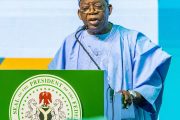
The appointment of serving public officials into the APC campaign council has also generated concerns. The contention is that such appointees are already biased, thereby giving the ruling party an undue advantage in the electoral process. This practice offends morality and the principle of fairness in the political process. What guarantee is there that these individuals will not use the appointment to advance their political cause? Notice may be given by their appointment that governance will take a back seat during the electioneering period in the midst of too many issues worrying Nigerians. This contradicts President Bola Tinubu’s position that governance should take precedence over campaigning, given its impact on the wheel of governance during the election season.
8.Access to Public Spaces for Campaigns
Some parties have complained aloud about limited access to public spaces to canvass their campaign messages. This development is antithetical to democratic norms. All parties and their candidates should be allowed to campaign in all parts of the country, as variety remains the beauty of democracy. Such a tendency will inevitably raise tensions in the country and attract global attention to Nigeria’s elections, with attendant consequences that have begun to manifest through letter writing and lodging of complaints about the elections with some strategic global players.
Voters deserve to decide whom to vote for based on campaign messages. However, one observation is that the country has no history of proper campaigns. What we have are jamborees, where dancers and musicians steal the show at the expense of what campaigns are meant to be: platforms for engaging with people on issues that matter to them. That tendency reflects a distorted understanding of democracy in our climate: being seen more as a platform for empowering the privileged few.
9.Underground Attempts to Close Up the Political Space
While it is true that all politicians have antecedents that may not be as transparent as one may wish, digging up such issues now is ill-advised. If such recourse is necessary, it should have been undertaken much earlier. To forestall misunderstanding, this is not a justification for any wrongdoing on the part of politicians. The argument here is about timing. With only a few months to the elections, such undertakings can heat the polity and ignite ethnic rivalry, which is already defining the electoral map. It will necessarily raise the stakes about the elections and may inadvertently attract the attention of foreign interests.
10.Personality Attacks as Campaign Strategy
The campaign so far has also been marked by personality attacks among the candidates themselves, rather than issue-based engagement. The ADC presidential candidate has revived this, apparently responding to the APC, which once called him an economic illiterate, by calling the President a poor student of economics and referring to President Bola Ahmed Tinubu simply as Bola. Vice-President Kashim Shettima has reacted by calling Atiku Abubakar a sanitary hygiene inspector who does not understand economics and Peter Obi a purveyor of bogus statistics. Though campaigns everywhere accommodate innuendos and comic entertainment, in Nigeria’s current circumstances, such thrusts can distract from the real issues confronting the nation. Candidates need to sit up and offer concrete solutions to Nigeria’s myriads of problems instead of turning the whole issue into a personality contest. Nigerians are at the tipping point and desperately need solutions to their existential problems, not tantrums among the candidates.
11.Presidential Attendance at Campaign Rallies
There is also discussion about the President not being able to attend all his party’s campaign rallies. Two perspectives have emerged on this. The first is that, by that statement, the President is taking Nigerians for granted and banking on some structures to deliver the votes. However, a candidate needs to speak directly to the people. Second, appearing at campaign rallies does not necessarily mean sacrificing governance. The two are not mutually exclusive. This author argues that this decision should be reviewed in light of the symbolism of candidates’ physical presence at campaign rallies, notwithstanding the ugly side of campaigns in the country. Those who want to vote for them will be more encouraged when they see them at rallies and hear them speak to issues that concern them.
The seeming contention among APC groups and members may get to a new feverish level when their presidential candidate does not attend their campaign rallies. The party has issues to address for the sake of its image and the elections, and only the President’s presence can control the temper. More importantly, the objective of focusing on governance is already defeated when his aides, who are already prominent members of the party’s campaign council, are expected to participate and follow the campaign train even though campaigns are not serving the purpose they should serve in Nigeria. For instance, in 1993, candidate Moshood Abiola spent only less than thirty minutes in Kwara State speaking to the people at night. Such practice has characterised Nigeria’s campaigns. Although more time has been allocated to campaigning in the current Electoral Act, politicians seem not to appreciate the need to face the people with concrete proposals for resetting the country instead of the fanfare that has characterised campaigns in our society.
Concluding Reflection
The issues interrogated above underscore the intricate interplay of trust, institutional credibility and political strategy that will shape the electoral terrain. The trajectory of the campaigns suggests that the outcome will depend less on polemics and more on actors’ capacity to reconnect with the electorate’s substantive concerns and strengthen public confidence in the electoral process. In this regard, the parties and their candidates need to step up by adjusting their conduct to restore people’s confidence in the electoral process.
The author is of the Department of Political Science, University of Ilorin in Nigeria