By Hassan A. Saliu
The recently held Osun off-season gubernatorial election has dominated media space before and after 15 August. Commentators and analysts have since offered reflections on what happened during the election. While some of the views expressed are accurate, most others are mere conjectures. In this context, those who were principal actors in the event owe us a word for posterity.
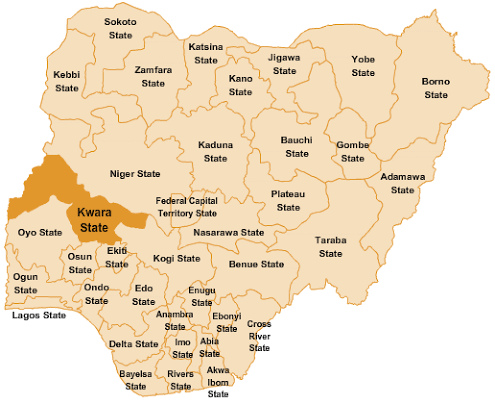
The expectation is that what happened in the last Osun election can be replicated across the country, particularly regarding the general elections. It is possible, but I cannot guarantee it. As one moves from one electoral geography to another, one will notice variations, though a common national denominator revolves around the poverty level. The issue is: Can it be the sole determinant of the 2027 general elections? I doubt it. This understanding has led me to conduct a quick comparison between Kwara State’s electoral geography and that of Osun State.
The Osun electoral geography differs from that of Kwara State in at least eleven fundamental ways:
- Locked-down Constituency
There is almost a consensus that Governor Ademola Adeleke has a definite electoral constituency in Osun State that is permanently locked down. The current Governor of Kwara State does not have that same advantage. His political base is fluid and spread out, but he is banking on votes from Kwara North, where he has picked his governorship candidate.
- Ancestry Politics and Voter Sophistication
The ancestry politics that defined the Osun election is absent in Kwara State. Kwara is just one of the states. Moreover, if the presidency could let go of Osun, the President’s ancestral home state, no one should expect it to break bones over the Kwara election.
It is instructive to note that Osun State has a relatively more sophisticated voting population than Kwara State. Until the 2019 general elections, Kwara voters had been made docile on account of historical political antecedents. Regrettably, the 2019 electoral revolution has since been replaced by another era of docility incubated in people’s strong belief in transfer earnings. This means that Kwara voters can vote either way if properly motivated.
- Performance as a Factor
Performance was a significant factor in the Osun election. Beyond politics, there is some evidence of good performance by the governor in infrastructure, though he can do better. In Kwara State, the governor has tried, but some are likely to argue that the Kwara experience is more isolated than a coordinated approach to infrastructure development. Moreover, people have also raised, as they have done in Osun State, the issue of projects being concentrated in one senatorial district. This factor will influence some voters in the state’s gubernatorial election.
- Party Loyalty and Grassroots Commitment
Osun’s election showed that committed members of the Accord party were literally ready to give anything to the party. In Kwara State, none of the politicians enjoys that kind of support from the people. This poses a unique challenge to the call for people to defend their votes in Kwara State.
- Kwara’s Three Senatorial Districts vs Osun’s Unity
Kwara’s politics is defined by three senatorial districts with different power blocs: Kwara Central with the highest votes, Kwara North, and Kwara South. However, no single district can deliver victory alone, so alliances must be built. Political alliances in the state are fluid and unpredictable because of the state’s diversity and sharp ethnic divisions. In Osun State, by contrast, people tend to vote more as a bloc, and swings are often statewide.
- Rotational Principle
The rotational principle seems more entrenched in Osun State than in Kwara State. Media reportage suggests that Osogbo is warming up to produce the next governor. The APC’s message to such a constituency was to wait in the wings for another eight years. Hence, the high votes the Accord Party received in some constituencies around Osogbo and a few other places waiting eagerly for their turn.
In Kwara State, the governor has been trying hard to justify his choice of governorship candidate from Kwara North amid a fractured party. The point is that not many have quarreled with the governor’s choice as a person, but with the perceived dictatorial bent of the decision.
- Timing of the Election
We need to appreciate that the Kwara election will be coming up during the general elections. This means it will not be an isolated election, as the recent Osun election was. As a result, not all eyes will be on it, though current political developments in the state are already drawing attention to it.
- Fractured Primaries and Anti-Party Activities
As in Osun State, the APC was fractured because of the nature of its governorship primaries in Kwara State. In Osun, some aspirants were stopped literally at “gunpoint”. In Kwara, there are two perspectives on the APC primaries held in the state. Some believe primaries took place in the APC, while the Otoge Progressives say nothing of the sort happened. There are, no doubt, matters arising from the disputed primaries, as we had in Osun State too. Anti-party activities may occur in some notable constituencies in Kwara State. Such a phenomenon may happen on both sides of APC and PDP, but the former is more likely to suffer from it, at least in Ilorin Emirate.
- Federal Restraint vs Federal Interest
Abuja’s restraint during the Osun election may be absent during the Kwara election. This is because all eyes were on Osun, especially with the threat of reporting the president to President Donald Trump on the election. External vigilance is likely to reduce the scale of electoral misconduct. Kwara State, being part of a general election cycle, may not attract that same level of scrutiny and restraint.
- Money Politics and Vote Buying
In Osun, major political parties offered high sums of money during the election. Relating that scenario to Kwara State, money will be a significant factor, but I doubt the 50k and 100k figures reported in Osun State will be on offer here in Kwara State because of the high stakes of that election. Politicians will definitely give money to voters, but I am not sure the state can beat the Osun record because of the imposed orientation of the voters.
- Neo-liberal Contest and the Limits of Change
As witnessed in the Osun election, the contest in Kwara will also fall within the neo-liberal tendency. Nothing spectacular is on offer to make the election highly interesting and competitive beyond the goal of gaining control and ego. People have argued that there is no fundamental difference between the old order and the current: PDP and APC. A capitalist orientation has driven the state’s actions since 1999, and even before, when the Fourth Republic kicked off. In other words, the Kwara election will be more like an ego war between different sides of the capitalist orientation, engaged in expanding the scope of their political control and the allied benefits that come with it. Most people have not realised this simple truth. Moreover, that is why, whichever way the election goes, no fundamental changes may happen unless God takes control. Wherever huge sums of money dominate every step in the political process, the outcome hardly favours the masses. The Kwara case may prove to be different this time around. This represents a challenge to those jostling for elective and appointive positions in the state.