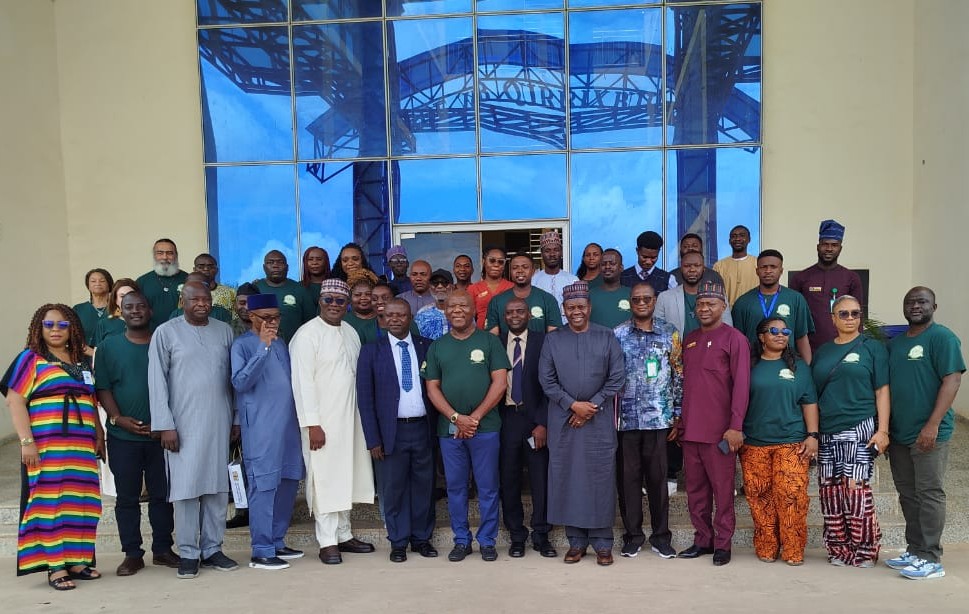
This was the puzzle Bingham University summoned willing listeners and participants to a conversation on August 6th, 2026. It was obviously a priority conversation for the university, going by the venue: its Senate Chamber into which Prof Haruna Kuje Ayuba, the Vice-Chancellor, welcomed all.
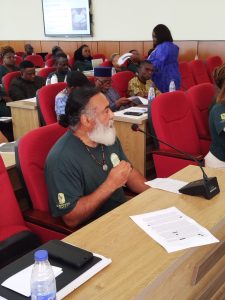
An angle to the apology seminar room
Extremist groups such as Boko Haram, ISWAP, Al-Shabaab and others have caused loss of lives, displacement, trauma and breakdown of social cohesion across Africa, noted the VC. While retributive justice emphasizes punishment and deterrence, restorative justice seeks to repair harm through inclusive processes involving victims, offenders and communities. But, considering context-specificity and cultural sensitivity, the VC wanted to know how far restorative justice can address grave crimes without re-traumatizing victims; the extent of government investment in victim support; the strength of institutional frameworks; the risks of impunity or collusion and the cultural fit of restorative practices across Africa.
He expected his questions to trigger participants to generate actionable strategies for victim management, reconciliation and peacebuilding, commending the institutions which joined hands to organise the seminar for their commitment to advancing justice, human dignity and sustainable peace in Africa. Among them are the Centre for Strategic Research and Studies, Abuja; the National Defence College, Abuja; California State University Sacramento in the United States, and the university’s Ambassador Bulus Lolo Centre for Diplomacy, Conflict, Peace and Plural Studies (ABLC).
Ambassador Bukar Kalembe who stood in for Amb. Sola Enikanolaiye, the Minister of State for Foreign Affairs, considered the topic timely and significant because while security gains are necessary, lasting peace requires healing, reconciliation, and victim-centred approaches. Convinced that sincere apologies, truth-telling, and reparations can restore dignity and trust, the ambassador recommended structured apology mechanisms in DDR, stronger victim support, community participation, and preventive measures, expressing the hope that the seminar would produce actionable recommendations for policy and peacebuilding across Africa.
Mr. Omini Oden, Assistant Director of News who also stood in for Mr. Ayo Adewuyi, the Executive Director, News at the Nigerian Television Authority (NTA), Abuja commended the organisers for bringing together scholars and practitioners to discuss restorative justice. Agreeing with the previous speakers on the importance of prosecution, he nevertheless placed his bet on truth, accountability, reconciliation, and healing as far as lasting peace is concerned. For that reason, he rated sincere apologies that can validate victims’ suffering and support social cohesion.
NTA, as Africa’s largest broadcaster, remains committed to conflict-sensitive, victim-centred reporting and partnering with institutions to promote dialogue, peacebuilding, and national unity, said the director who also hoped the seminar came up with recommendations that could inform policy and practice across Africa.
Not left out in the opening preliminaries was Dr. John Olushola Magbadelo, Director of the Ambassador Bulus Lolo Centre for Diplomacy, Conflict, Peace & Plural Studies (ABLC) at Bingham University who saw the seminar as the beginning of a relationship that would broaden future collaboration in research in their common research interests.
The seminar, he said, is a continuation of a programme, the first phase of which was an International Conference held August 3rd-4th, 2026 at the National Defence College, Abuja and which featured no fewer than 14 scholarly papers.
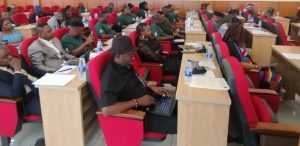
Still another angle!
In Africa, according to him, apologies remain central to many indigenous peacebuilding mechanisms, crediting apology in cases of violent extremism with acknowledging harm, restoration of dignity and provision of the moral basis for reintegration.
The seminar provided experts the platform to re-examine Africa’s transitional justice system and make informed recommendations and he therefore welcomed the African Peace Fellows and their anchors from the California State University to Bingham University.
Prof Ernest Uwazie, the Director of the Centre for African Peace and Conflict Resolution at California State University, Sacramento, who led a team of experts from the university said apology was at the heart of restorative justice for the victims of violent extremism. In a PowerPoint presentation which contained detailed information on what apology is; why apology was needed; who gives and to whom, he elaborated on the Victims- Offenders Dialogue (VOD) which allows for harm repair and healing, emphasising the need for the dialogue to be victim-led and voluntary. In all such cases, the entire process should be culturally grounded, he added.
For Prof Uwazie who drew lessons from countries including Colombia, Sierra Leone, Tunisia and the Philippines, restorative justice frameworks are most effective when victims are actively involved in accountability processes and are given opportunities to participate in decisions affecting their recovery. He declared that justice should not be measured by punishment alone but also through offenders’ willingness to acknowledge wrongdoing, make restitution and contribute meaningfully to repairing the harm inflicted on affected communities.
Other experts from the faculty in California State University who made presentation at the seminar included Prof Krishna Guadalope, Prof Alexa Sardina, and Dr. Tina Jordan. Discussants at the seminar included professors Istifanus Zabadi, Dul Johnson, Warisu Alli, Robert Sabo, Dr. Ibrahim. S. Dasam, Drs. Felicia Itodo, Abel Dare Lamidi, Joseph Efenji, Ropheka Bot, Umar Abdullahi, Godwin Adeboye, Grace Hezekiah Isa, Sarah Ajiya, Tobi Johnson and Prof Desmond Okocha, the Dean of the Faculty of Communications and Media studies at Bingham University who moderated the proceedings, amongst others. 19 African Peace Fellows drawn from 14 African countries including Nigeria, Kenya, Gambia, Uganda, Sudan, Cameroon and Ghana formed part of the event.