By Prof Hassan A. Saliu
Introduction
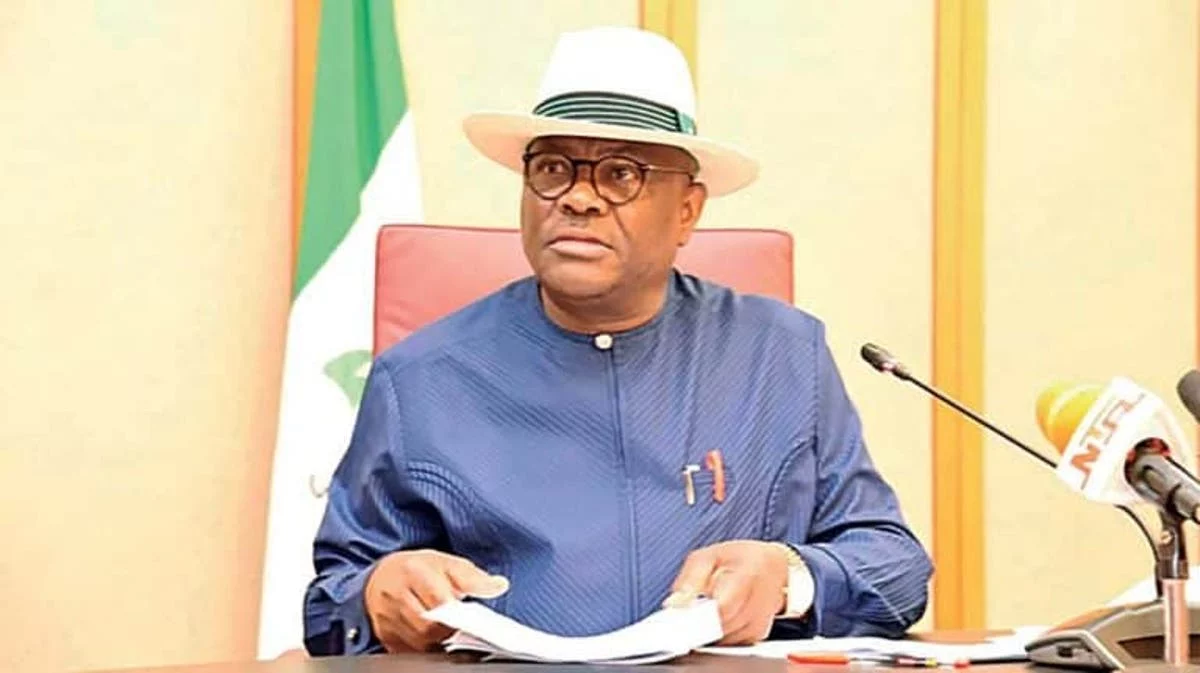
This intervention is necessitated by the ongoing disagreement between the APC governors and the leader of the Rainbow Coalition, Mr Nyesom Wike. Although both groups are rooting for the President in his bid for a second term, they appear to differ on how to achieve it. While the latter believes the party platform is the best way to do so, the former, the national leader of the People’s Democratic Party (PDP) and a Minister in the APC government, says he can still support the President while retaining his PDP identity. These opposing positions have pitted them against each other. This analysis draws on excerpts from the APC governors’ communique, Mr Wike’s rejoinder, and media commentary to outline the controversy’s preliminary implications.
The politics of coalition-building is as old as democracy itself. However, when coalitions align within a ruling party and begin to challenge its internal coherence, they cease to be routine politics and become existential threats. That appears to be the context of the recent “riot act” read by the APC Governors’ Forum, which describes a “rainbow coalition” spearheaded by the Minister of the Federal Capital Territory, Nyesom Wike, as unwarranted.
For the first time since 2023, the governors have gone public to draw a red line. Their message is unambiguous: it is a no to the coalition. Members of the group have been told, in effect, to either join the APC fully and support all its candidates, irrespective of the undemocratic processes that produced them, or seek another political platform. They further argued that the rainbow coalition is divisive and could make the APC lose votes and engineer greater disloyalty.
The communique issued on 14 September, 2026 is both a warning and a threat to the people concerned. One would observe that the statement amounts to more than rhetoric. It warns that the governors will mobilise for all candidates fielded by the party. It also hinted that the governors have a campaign structure. This forecloses the 2023 template where some actors supported the presidential candidate while working for other candidates of their party at state and legislative levels.
About a week ago, Minister Wike fired the first salvo by publicly identifying the Governors of Imo and Kwara States, Hope Uzodimma and AbdulRahman AbdulRazaq, as arrowheads of the campaign against him in government circles. What started as a personal quarrel has since escalated and now involves the entire APC Governors’ Forum. Mr Wike has reacted to the APC governors’ communique.
Wike’s Rejoinder: The Counter-Narrative
In a televised interview with Charles Aniogolu on Arise Television yesterday (15/9/2026), Minister Wike fired back at the APC Governors’ Forum and raised 12 main points that reframe the crisis:
1.No Approach Made: He stated that he did not approach the APC Governors’ Forum on the issue of a coalition. Therefore, accusing him of doing so was wrong.
2.Charge of Greed: He accused one APC Governor of greed in the management of party affairs, alleging that the governor denied all National Assembly members from his state any relevance in the party’s primaries.
3.Origins of the Rift: He traced his problem with the governors to his appointment as Minister of the FCT, which he said upset existing power calculations.
4.Presidential Prerogative: He emphasised that his ministerial appointment was given to him directly by the President, giving him a direct line of authority that bypasses the governors.
5.Pro-President Coalition: He insisted that the “rainbow coalition” was designed to aid the President to win a second term in 2027, not to work against him.
6.Question of 2023 Loyalty: He alleged that some APC Governors were not with the President during the 2023 elections, questioning their moral authority to speak on loyalty. Indeed, some of them failed to deliver votes for him.
7.Local Politics vs Party Management: He blamed the crisis on bad management of party affairs rather than on any conspiracy, noting that “everyone has been given something in his own coalition, reflecting local dynamics.
8.Electoral Weight: He claimed that he has the capacity to influence elections in Rivers, Bayelsa, and the FCT.
9.Question of Control: He wondered why governors are complaining about the coalition if they are truly in control of their states.
10.Strategic Absorption: He argued that governors should be happy that aggrieved APC members have joined his faction of the PDP, which is supporting the APC for the presidency, instead of defecting to other opposition parties.
11.He described the release and those behind it in unprintable terms.
12.He is not alone in giving support to the President; other parties are also supporting the President. He mentioned three other governors doing so while fielding candidates for other elections.
Former Ekiti State Governor, Mr. Ayo Fayose, has also waded in. Fayose downplayed the controversy, stating that there is no real division since all the actors are supporting the President. According to him, the disagreement is only about “methodology or approach to rendering the support.” Since it broke out, the quarrel has become a talking point in Nigeria’s political circles. The next section of this piece sketches the implications of the contestation for the President, whom both sides claim to support.
Tensions are clearly brewing between the two groups involved in President Bola Tinubu’s re-election bid for a second term. This has implications for the 2027 general elections and the President’s support base. Mediation seems almost certain, given its potential to threaten the 2027 elections, especially the President’s. Meanwhile, the next section examines the preliminary implications of the political quarrel.
The Implications for APC and 2027
Wike’s response turns the governors’ “riot act” on its head. Instead of a rebel, he presents himself as a loyalist working to consolidate the President’s base. The escalation now raises 8 critical implications:
1.The Electoral Cost of Unresolved Crisis: If this is not quickly resolved, the APC stands the risk of losing valuable votes. In states where primaries were perceived as undemocratic, aggrieved members now have a ready excuse to stay away or vote against the party.
2.A Crisis That May Outlive 2027: Prolonged internal wrangling creates space for the opposition, particularly the PDP, to reorganise. Parties in power in Nigeria rarely lose because of the opposition. They lose because of internal contradictions.
3.The Problem of Enemies Within: The APC in several states is grappling with factionalism and the alienation of stakeholders. The Governors’ Forum is contending not just with Wike’s coalition, but with “enemies from within”. Discipline without reconciliation is a recipe for rebellion.
4.Past Experiences: Incumbency is not a guarantee of success in an election. This must be reconciled with the electorate’s felt needs. The number of governors on the APC platform is potentially an asset, but it must be balanced with meeting people’s needs. For now, some governors may not yet be electoral capital, even with increased resources flowing to that level of governance.
5.Down-Ballot Implications: Even if the President appears well-positioned to win in 2027, the same cannot be said for legislative and gubernatorial contests. A president without a working legislative majority is a president hamstrung.
6.The Risk of Implosion: Open declarations against a figure like Wike can trigger passive sabotage, funding withdrawal, or voter apathy among key constituencies. The APC cannot afford such a luxury.
7.The Imperative of Maximum Mobilisation: The 2023 presidential election was won on the back of a broad coalition. To begin shedding parts of that coalition now is to diminish the party’s electoral capital. Winning elections in Nigeria is a game of addition, not subtraction.
8.The Wike Factor: Asset and Liability: He delivered Rivers State for the APC in 2023, though under controversial circumstances. He has also become the administration’s poster boy in Abuja. Alienating Wike without a strategy turns an asset into a liability.
9.The Question of Gubernatorial Control: The APC’s fortunes in 2027 will be determined less by communiques from the Governors’ Forum and more by what happens in schools, hospitals, markets, and on the roads. Performance is the best antidote to rebellion.
Conclusion
The challenge before the APC is balancing party cohesion with political inclusion. The “rainbow coalition”, whether real or perceived, is a symptom of deeper issues: the struggle for relevance, anxiety over 2027, and unresolved grievances from past primaries.
If the APC is to retain power, it must do four things: reconcile aggrieved members, reward performance, strive for inclusion even if it means attracting the understanding of the other parties, and punish anti-party activities without destroying valuable assets. Wike, the governors, and the party leadership must find a common language.
2027 is not far. Moreover, in Nigerian politics, parties do not die in opposition. They die in power, through arrogance, division, and neglect. The governors have read the riot act. The wise thing now is to follow it with a peace act.
The author, a Fellow of the NPSA, is of the Department of Political Science, University of Ilorin in Nigeria.