It must be part of the mysteries of powerhouse Nigeria that there has not been an active platform of scholars of the involving discipline of International Relations for years now. Well, that is now in the past as an Interim Leadership Committee to coordinate the process of reviving and repositioning the Nigerian Society of International Affairs (NSIA) is now in place.
The news from an hour-long consultative session Wednesday, July 8th, 2026 shows Prof Hassan A. Saliu as the interim president of the association. Prof Saliu is the immediate past President of the Nigerian Political Science Association (NPSA) and a former Vice-President of the NSIA.
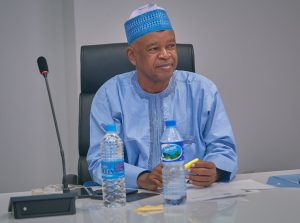
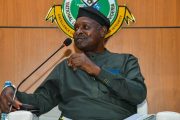
Prof Hassan Saliu, Interim leader, NSIA
Prof. Saliu will be supported by Prof. Victor Adetula and Prof. Murtala Muhammad as members of the Interim Leadership Committee. Intervention learnt the committee has the mandate of the meeting to co-opt two female scholars to ensure broader representation, inclusivity and gender balance in its composition.
The Interim Leadership Committee was, additionally, entrusted with the responsibility of developing an appropriate roadmap for the formal reactivation of the association, broadening consultations with relevant stakeholders, reviewing the association’s constitutional and administrative framework where necessary, expanding membership across Nigerian universities and research institutions, and making adequate preparations for the convening of a general meeting that will formally relaunch the Nigerian Society of International Affairs and facilitate the election of substantive officers.
When that happens, the NSIA will be a hotbed of a long list of issue-areas in its commitments. Amongst them are a revived NSIA that is about promoting cutting-edge research and scholarship; advancing knowledge in international affairs; influencing public policy through evidence-based research; fostering professional development among members; encouraging interdisciplinary networking and scholarly collaboration; supporting the growth and mentorship of early-career academics; publishing high-quality academic books and journals; promoting international understanding and cooperation; strengthening teaching standards in universities and research institutions; upholding the highest ethical standards of academic practice; recognizing excellence in scholarship and professional service and enhancing Nigeria’s national, regional and global intellectual engagement.
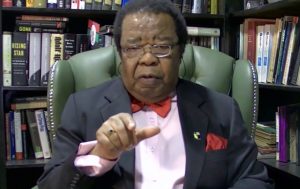
Prof Bolaji Akinyemi, a founder of the NSIA
These were all part of the unanimous outcomes at today’s meeting in which leading names include Prof Warisu O. Alli who played the role of Convener; Professors Tijjani Muhammad-Bande; Istifanus S. Zabadi; Rufai Ahmed Alkali; Hassan A. Saliu; William Alade Fawole; Victor Adetula; Murtala Muhammad; Efem N. Ubi; Sharkdam Wapmuk and James Jacob.
There was no dispute about the necessity of establishing “a strong, inclusive and professionally managed academic association that would serve as the collective voice of scholars in International Affairs and related fields.” Prof Warisu O. Alli had underscored the historical significance of the Nigerian Society of International Affairs, emphasising the imperative of restoring the association to its rightful position as a vibrant intellectual platform capable of advancing research, stimulating scholarly discourse, mentoring emerging academics, and contributing meaningfully to Nigeria’s foreign policy and global engagement. He observed in the outline of the discussions at the meeting made available to Intervention that the revival of the association had become increasingly necessary in view of the evolving dynamics of international politics, diplomacy, peace and security, global governance, and regional integration, all of which demand sustained scholarly engagement and institutional collaboration.
The outcome of deliberations described as extensive and intellectually enriching in relation to the strategic direction of the proposed revitalized association is also collective confidence that the revitalization of the Nigerian Society of International Affairs would significantly strengthen scholarship, enhance professional cooperation, deepen policy engagement, and reaffirm Nigeria’s leadership in the study and practice of International Relations both within Africa and the wider international community.
“Members pledged their unwavering support for the Interim Leadership Committee and resolved to work collaboratively towards restoring the association as a dynamic and globally respected professional body”, says the outline.
Intervention could not establish immediately when and why the NSIA went into coma. But, like the Nigerian Political Science Association (NPSA), it is now encountering its own revival.