The 66th birthday of Cde John Odah would seem to have come and gone. What Intervention would call the last of the rituals associated with that has now taken place, a surprise because the signals didn’t suggest it would be part of it this year. It was and, as usual, turned out to be a source of joy but also sadness.
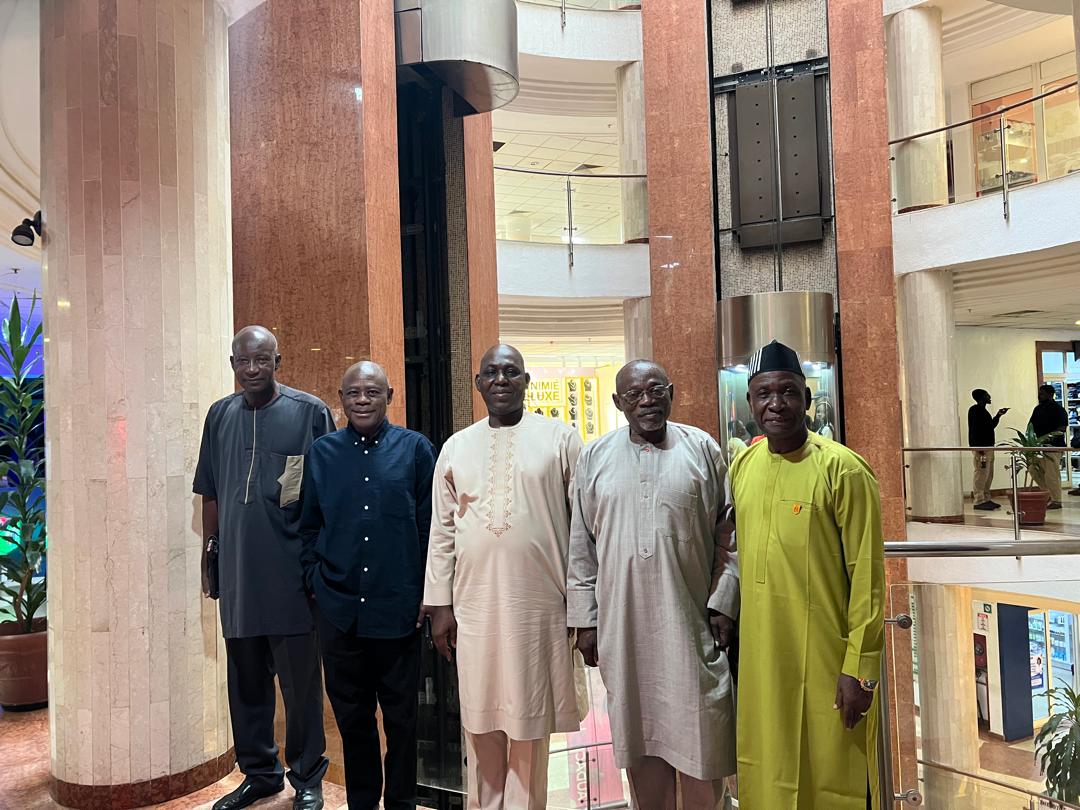
 There was joy in sitting with the only set of people who, as classmates of the comrade in their undergraduate years, provide the sort of self-representation by which a more complete understanding of John can be accomplished. This makes them one of the most important, if not the most important in the testimonies that marked the 66 birthday within and outside Nigeria since John cannot be understood as John but only in context.
One of them who, it is understood, prompted that ritual this year said he lacked words to qualify John. Another one said he appreciates John for bringing them together. “We look forward for his birthday because it is our reunion”, he said, declaring how he is already looking forward to 2027. Yet, another called John the rallying point on the ground that it is at the ritual he has met other classmates. His argument is that it is John who pulls everyone out from their shell.
For people who, as activists in their own right, are not given to obsequiousness, these few statements constitute a testimonial to hang on the wall as prominently as possible. And without apologies.
Of course, the meal was good. The salad was expertly prepared. Unfortunately, that’s where the joyous part ends and yielded grounds to the not so joyous dimensions.
One, the group is now one member less than when it met the previous year. One of them died in late 2025. It was a sudden death. The prayer is that no such distraction from death or adversity will be their lot in the next 40 more years they have to live. Considering the number of people all around us still living at 100, whether one takes Alhaji Tanko Yakassai, nearby in Kano or former Malaysian Prime Minister, Mahathir Mohammed in faraway Kuala Lumpur. Alhaji Tanko Yakassai, a man of great radical pedigree, is still appearing on television and granting media interviews while Mahathir, a remarkable developmental statist, is keeping fit by riding bicycle.
Two, this year’s ritual took place in a country whose Catholic bishops collective say is bleeding. Unlike the presidential town criers and their reductionist sense of meaning making, that statement is not just a criticism of the government of the day but also a statement on poverty of nationhood. Chief Olusegun Obasanjo was captured recently on Facebook as saying that they who were running the government in the late 1970s were convinced that Nigeria should be the signifier for the black race. In his Farewell to Policy, Bolaji Akinyemi, the seagull, made that point most categorically and might have infected the military leaders with that positive virus, given the several commendations he said he kept getting from General TY Danjuma.
So, if today, elements of the status quo such as the Catholic bishops are declaring that the country is bleeding and some people think it is just a testimonial on the Tinubu regime, then our tragedy is much deeper. This is not to say that the statement of the bishops wasn’t a big thumbs down for the government of the day. It, of course, was.
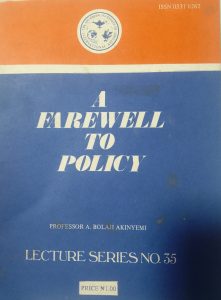
Both the right and the Left wing imagined Nigeria heading for the sky as the star of the black world but only to start a dangerous descent!
Three, the participants in the ritual are a pleasure to sit down with because of the quality of the grooming they underwent as undergraduates. We should not forget that the Department of Sociology at the University of Jos at the time had boundary breaking academics such as Omafume Onoge (who broke records at Harvard); Itanibi Alemika with a PhD from another American Ivy League university as Onoge; Dr Zack Williams, the Sierra Leonean who studied in the UK and Dr. Robin Toboat, a British Marxist scholar. There were also Dr Hulk, (hoping the spelling is right) a German who specialised in sociological theory; two Ghanaian lecturers by name Dr Bonsi and Dr Yeboah who left to join the Jerry Rawlings government and, of course, Dr Iyorchia Ayu and so on. Prof Justin Tseayo left at a point to join NIPSS.
This quality of staffing explains the quality of products of the department we encounter now among John’s classmates who were at this birthday conclave, whether it is Mohammed Yakubu or Festus Ossai or Engineer Kpue or John. (I am the only BUKite in their midst). Mohammed, for instance, went on to the UK for a Master’s degree and further to the Institute of Social Studies at The Hague. Ossai went on to read Law in addition to a degree in Sociology from a department like that. And the list can go on. They have served the country to the best of their ability. Yet, the country hasn’t quite moved.
Additionally, what bigger tragedy for a potentially significant nation if 40 years or so later, one cannot find any Department of Sociology with the quality and diversity in the staffing comparable to the above listing. What sort of future is it possible to contemplate for a country in which majority of the graduates from the universities have been trained in Entrepreneurial Studies, Marketing, Accounting but less and less in Anthropology, Sociology, Cultural Studies, African Studies, History, Linguistics, Economics.
While it is true that engineers, medical scientists, computer engineering or Physics, Microbiology, Agriculture are the wonder bearers, is it not the case that Anthropology or the social sciences provide the grounding for ideological, policy and institutional leadership as the defining condition of possibility for the wonders of science and technology? As much as no knowledge is unimportant, can graduate of Entrepreneurial Studies master the epistemology that will make them useful to the armed forces, the federal bureaucracy, journalism, diplomacy, business and even politics? Although these larger, national backgrounds never came up as such in the conversation, nobody missed their presence. Intervention may be wrong but the ritual wasn’t as inspiring as previous year’s and the reason was not farfetched from the dampening background.
But no one has given up. Who knows if the National Universities Commission (NUC) might not have reversed itself on privileging Entrepreneurial Studies over critical theory by this time next year? Or if there wouldn’t have been a conversion process of Pauline proportion of the Nigerian power elite and an end to bleeding. The resilient Nigerian Left could, by this time in 2027, equally have picked some lessons from the deft move in hegemonic articulation that the Catholic bishops have just taught the nation. The bishops provide a classic in that template, the full import of which is still in gestation, considering a few developments that followed their outing in discursive change politics. Younger cadres such as Omole Ibukun are drawing attention to the hegemonic power prospects locked in unusual sites such as the Redeemed Church were it a Left institution.
There is no knowing if Cde John has political ambition. It would be interesting to see him as a minister or a governor, humanising power. For instance, anyone who could make me go for anything outside my abode that day at such a short notice must, indeed, be powerful. With deadlines to respond to, zoom sessions to attend later in the day, battles with fatigue from prolonged mental engagement, going out of the house was out of it for the day. Only a John could make the opposite happen. Onah Iduh is probably right in tracking aspects of John’s character to his training in political sociology in his piece: Unbroken: A Compelling Story Of Comrade John Ejoha Odah. It must, therefore, be good to be a John Odah!