By Prof Hassan A. Saliu
Opening
I consider it a profound honour to be invited to chair this National Conference on a theme that is both timely and intellectually compelling: The Politics of Belonging: Who has a stake in Nigeria’s Future? I wish to express my sincere gratitude to the organisers, particularly the Department of Political Science, Alvan Ikoku University of Education, Owerri, for conceiving this conference and inviting me to chair it.
My appreciation also goes to the Vice-Chancellor for graciously approving the hosting of this conference within the University. The approval is particularly significant given the salience of the theme to Nigeria’s contemporary political trajectory. I equally commend members of staff of the Department, paper presenters, and all participants who have taken the time to be part of this intellectual engagement.
Contextualising the Theme
The theme of this conference is apt and topical, especially as Nigeria transits to another political phase. It is hardly coincidental that at a time when politicians across the length and breadth of the country are engaged in intense politicking, canvassing and mobilising for votes, scholars are gathered here to interrogate the more fundamental question of belonging (Saliu, 2026a; Saliu, 2026b).
The central question that this conference compels us to address is: What happens after the elections? The answer, invariably, is governance. This underscores the extreme importance of our gathering today.
Nigerian political studies have established that while our political class has shown remarkable dexterity in politicking, the same cannot be said of governance. Indeed, if there were a trophy for politicking, Nigerian politicians would win it effortlessly. We have witnessed an excess of politics and a deficit of governance. As Achebe (1983) and later Ake (2001) observed, the Nigerian State has been enmeshed in governance deficits that stare us all in the face.
The Problematique: The Crisis of Belonging in Nigeria
Among the numerous pathologies of the Fourth Republic, the crisis of belonging and the attendant lack of inclusivity remain the most glaring. The persistent cry of marginalisation has become a defining feature of Nigeria’s democratic governance. Whether in the North or the South, the refrain is the same.
The prevailing pattern suggests that governments are run while leaving people literally at the polling booths. At all levels, the Nigerian State has failed to cultivate a genuine sense of belonging among its citizens. The Nigerian political elite has prioritised self-accumulation over collective good. The collectivity of the people is rendered peripheral, even under a supposedly democratic order.
At this juncture, allow me to outline three structural factors that have made marginalisation inherent in the Nigerian governance system. First, the Nature and Character of the Nigerian State. The Nigerian State, as explicated by Alavi (1972) and refined in the Nigerian context by Ake (1985) and Ibeanu (1997), was birthed under colonialism to serve the imperatives of capital accumulation by all means possible. Decades after political independence, the State remains alienated from the people, exhibiting anti-people tendencies reminiscent of the colonial State. National integration and inclusive belonging were never the raison d’etre of its colonial construction, and this alienation has persisted.
Second, the Character of the Post-Colonial Elite. The inheritors of the colonial State have, to borrow a phrase, been more Catholic than the Pope in defending capitalism at the expense of the citizenry. As Dudley (1982) and Joseph (1987) have shown, what matters to the ruling elite is access to and control of state apparatus for prebendal accumulation. The people are never central to managing their colonial inheritance.
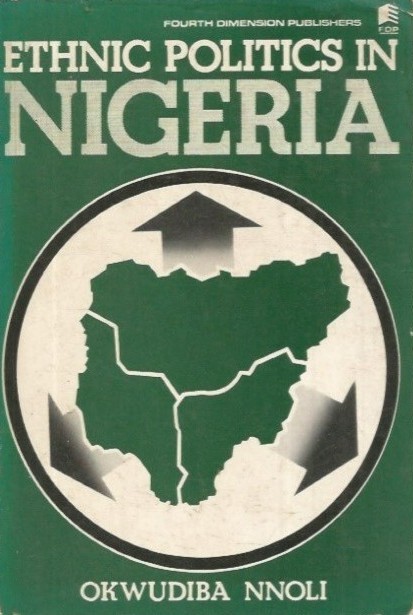
Third, the Instrumentalisation of Ethnicity and Other Fault Lines. Ethnicity and other primordial cleavages have become useful instruments for elite domination. As Nnoli (1978) and Osaghae (1995) have demonstrated, the more the people are fragmented and made mutually suspicious, the easier it is for the elite to consolidate their class interests. It is therefore not surprising that a genuine politics of belonging, capable of correcting the colonial construction of Nigeria, has failed to take root. One can then ask the question: Has Nigeria incurred any cost for not practising an all-inclusive governance system? It has, and one of the major ones is the weakened level of national unity and cohesion: for now, Nigerians are still suspicious of one another, retarding national unity. Another is the slow level of development in the country. Since not all hands are on deck, the kind of economic development desired in the country has not been achieved. The country’s external relations have been characterised by some noteworthy impacts. However, one argues that the politics of lack of belonging, combined with other factors, has translated into the evident fragility of the Nigerian State and has been image-lowering rather than image-boosting for Nigeria’s foreign policy.
Towards an Inclusive Political Order: Policy Recommendations
To redress this anti-national tendency, I wish to propose two broad policy pathways for this conference to interrogate:
- a) Constitutional Re-engineering: The 1999 Constitution as amended requires further amendments to de-emphasise all that discriminate against Nigerians as a basis for citizenship rights and access to opportunities, and to entrench residency and merit as determinants of belonging.
- b) Electoral Vigilance and Citizen Agency: The ongoing campaign season presents an opportunity for citizens to exercise greater circumspection in their electoral choices. As we approach another round of general elections, Nigerians must critically assess aspirants who solicit their votes, focusing on programmes that promote inclusivity rather than exclusion (Saliu, 2026a; Saliu, 2026b).
Fundamentally, all Nigerians deserve a sense of belonging, engendered through openness, equity, and accessibility to national resources and opportunities. As Marshall (1950) theorised on citizenship, no nation can attain greatness when a segment of its citizenry is systematically excluded from competitive participation and national development efforts.
Conclusion
Once again, I thank the organisers for this laudable initiative. I urge all participants to engage robustly and freely with the issues raised. Nigeria and its people eagerly look forward to the scholarly and policy-relevant outcomes of this conference, which will hopefully chart a new course towards fostering a genuine sense of belonging for all citizens and constituent parts of the federation. There is no ambiguity about who is a Nigerian. The 1999 Constitution as amended is very clear on that. Where we have been having issues is the expression and demonstration of the concept of Nigerian-ness to all Nigerians. Do all Nigerians truly belong and derive opportunities and advantages from the nation in the shape and magnitude desired by citizens who are equal? Changing the narrative about the reality of this not being the case is the reason why we have gathered here today at this conference.
I thank you all for your rapt attention.
References
Achebe, C. (1983). The Trouble with Nigeria. Enugu: Fourth Dimension Publishers.
Ake, C. (1985). A Political Economy of Africa. Harlow: Longman.
Ake, C. (2001). Democracy and Development in Africa. Washington, D.C.: Brookings Institution / Rowman and Littlefield.
Alavi, H. (1972). The State in Post-Colonial Societies: Pakistan and Bangladesh. New Left Review, I/74, 59-80.
Dudley, B. J. (1982). An Introduction to Nigerian Government and Politics. London: Macmillan.
Ibeanu, O. (1997). The Nigerian State and Politics of Democratisation. Paper presented at a Conference on Comparative Democratisation in Africa, Cape Town.
Joseph, R. A. (1987). Democracy and Prebendal Politics in Nigeria: The Rise and Fall of the Second Republic. Cambridge: Cambridge University Press.
Marshall, T. H. (1950). Citizenship and Social Class and Other Essays. Cambridge: Cambridge University Press.
Nnoli, O. (1978). Ethnic Politics in Nigeria. Enugu: Fourth Dimension Publishers.
Osaghae, E. E. (1995). The Ogoni Uprising: Oil Politics, Minority Agitation and the Future of the Nigerian State. African Affairs, 94(376), 325-344.
Saliu, H. A. (2026a). 12 major factors likely to affect the 2027 general elections. Intervention. https://intervention.ng/23099
Saliu, H. A. (2026b). Eleven emerging issues on the road to the 2027 general elections in Nigeria. Intervention 25 October
Being a text of the author’s statement as Chairperson’s at the National Conference on ‘Politics of Belonging’ by the Department of Political Science, Alvan Ikoku University of Education, Owerri, Nov 12-13, 2026