By Adagbo Onoja
A world at war has pushed heightened discussion of the Chinese move from the frontpages for now but it is bound to bounce back when fully operational. That is the zero-tariff for African imports which China announced on February 14th, 2026 and is scheduled to take off on May 1st, 2026.
There is an elusive hint that this is not another move but an initiative with worlding outcome. It was personally announced by President Xi Jinping himself. That carries its own symbolism.
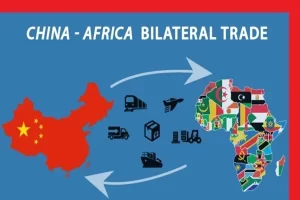 Reading the global media reporting of the announcement leaves no one with a clear reason for the move or its timing. Some were suggesting it is geopolitical, coming at a time the US is levying a tariff war squeezing many African countries. Others say it is China’s move the reduce the trade imbalance. The New York Times pointed out how “For years, African leaders have expressed concern about what they perceive as a lopsided relationship with Beijing, with China devouring Africa’s natural resources while flooding the market with its manufactured goods”. The January 15th, 2026 edition of China Daily attributes to unnamed analysts and policymakers the analogy that the zero-tariff move reinforces South-South cooperation “at a time when developing economies are increasingly seeking more predictable and mutually beneficial trade and investment partnerships.” The fourth but rarely mentioned reason could equally be a response to recent averment in some of the literature on China-Africa relations to the effect that Africa is losing out in overall China’s grand strategy.
It could be any or even none of the above reasons. What would seem to matter now is how Africa identify and seize the opportunities the initiative embodies. That remains to be seen. Otherwise, nobody has said there are any things fearful about it.
Is Nigeria one of the countries feared to capture the most gains of Chinese zero-tariff?
Prof Lauren Johnston who argues that it has positive and negative dimensions also drew attention to China now having neutralised an element of distortion in its earlier tariff policy which was to just 33 of the 53 African countries. As for the negative dimension, her point is that it the new move carries with it the risk of creating conditions in which Africa’s stronger economies capture the most gain at the expense of weaker economies. A point well-made but hardly a negative dimension, given the distribution of comparative advantage on the continent.
Why might no one be seeing negative sides? One plausible reason must be the demographic weight involved in the initiative: China is a billion plus in population. Africa too is put at the same or slightly higher figure. That gives it a potentially game changer status.
Two, unequal distribution of capacity between China and Africa will not be an issue in this case. It won’t because this is a case where one party (China) is removing a capacity constraint on the other (Africa), meaning a deleting of unequal capacity from the list of problems that could hinder full potential.
The bureaucrats at the AU Commission and the trade departments in China and in respective African countries may already know the format but that doesn’t seem to be common knowledge yet. What has always been the scope for private actors in the phalanx of commercial relations between China-Africa? Is that going to widen with the zero tariff regime?
This may seem superfluous but important although whether the scope remains traditional or widens, everything still points at a coming era of higher productive activism for export to China. However this is organised, it must involve thousands of jobless youths. The game changer in it come quicker should individual African countries quickly turn to organising their young millions roaming the streets into producers, using the state farm model.