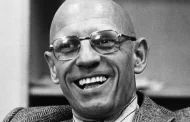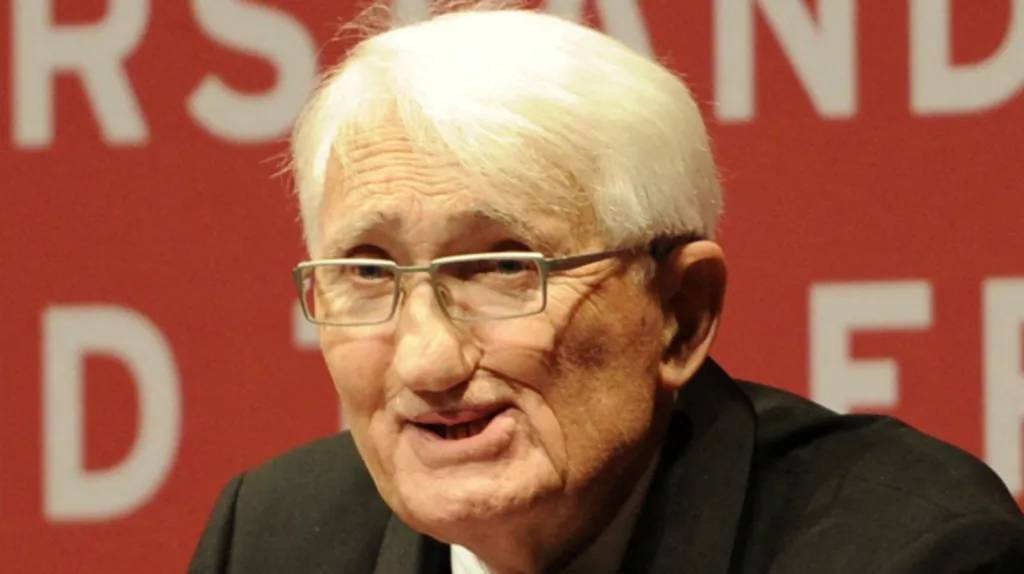
The Habermasian imaginary has come to an end with the death of German philosopher and theorist, Jurgen Habermas Saturday, March 14th, 2026. He was 96 years old. At 96, he has so much to be grateful to God for long life, considering the turbulent intellectual life he lived along with his colleagues signified by the Frankfurt School identity.
Intervention recalls that, besides Lenin and the pre-revolution debates around the Russian movement, the Frankfurt School researchers hold the record of the most extensive, experientially informed interrogation of orthodox Marxism. It is not very clear what the connection between them and Gramsci is but it cannot be ruled out that Gramsci picked up one or two things from them too although the academic trigger for Gramsci’s interrogation of orthodox Marxism came more from his study of language than the experience of Nazism and fascism for the Frankfurters. In the end, both experienced the unusual times in Europe then.
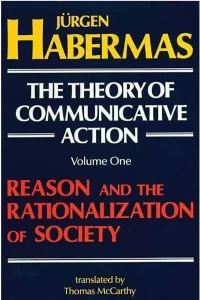 It can be said that, apart from Jacques Derrida, there are few others worthy of celebration than both Gramsci and the Frankfurt scholars. In the case of the Frankfurt scholars where Habermas was, they challenged the determinism of Hegel and Marx. Then they drew the attention of the world to the rudimentary signs of the constitutive force of rhetoric, political agency and even of populism.
In the case of Habermas, it led to his extreme stress on communicative action, thereby planting the seeds that have germinated into the ‘discursive turn’ in social theory now. There is an irresistible comparison between the conclusions the Frankfurt scholars drew from Nazism/Fascism and the ones post-Marxists have drawn from how Thatcher so easily reconstituted the discursive order, leaving the Left in total disarray on the question of organising radical contestation at a time of diverse conceptions of the self – gender, environmentalists, displaced indigenous victims of capitalist expansion, ethnicity, minorities, anti-globalisation, peace marchers, the unemployed and a declassed middle-class category.
For the Frankfurt scholars, this was a no mean achievement. It goes for Habermas, being the group from which he drew his identity, notwithstanding their collective error of overwriting popular culture. The historical specificity of theories would excuse them, given the level of development of media and culture at the time they were theorising. Intervention can assert that if it were now when the gap between high and popular culture has closed, they might not have allowed their kernel of culture mislead them. But that is group guilt, not directly Habermas whose own major failure would be his falling back on Kant/Plato trajectory for his idea of deliberative democracy. Society is not structured in a way that everyone can afford to be rational as to be part of that deliberation. Majority of the population are so busy with survival to be able to think, rethink and process their thinking into a democratic process based on deliberations. As still interesting as Kant’s idea of innate categories, he gave no concessions to cosmopolitanism to be of any help to the Habermasian imaginary. Kant didn’t know the world.
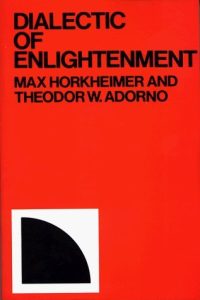
Flagship text of the group and a very powerful argument for that matter!
But nobody can deny Habermas and his colleagues found Critical Theory as well as critical theory and all two are vibrant spaces of academic and ideological contestation across the world today. In particular, the variant of Discourse Analysis that is rooted in their collective works is doing fine. That is Discourse Historical Analysis (DHA) as opposed to CDA, for example, which is a derivative of Marxian realism.
For Intervention, the naughty aspect of their efforts beyond this mourning note is whether the Frankfurt scholars were CIA agents. This is a big speculation in academia, with a number of books claiming to have the evidence. The most interesting of the evidence is that of Herbert Marcuse, a leading member of the group working for the Office of Strategic Services (OSS). While there is no debate that Marcuse and one or two others of the group did work for the OSS, it has to be matched with the huge opposition to the idea of a central intelligence agency in the US for a long time, including the statement that “Gentlemen do not read each other’s mail” by a Secretary of State at the time. It was not until the late 1940s that the US came to have the CIA, a lot of it due to pressure from outside because Americans were still seeing their country as the ‘City on the Hill’ born to beam the light of freedom and civilisation to the rest of the world. Was the OSS doing what the CIA came to do much, much later?
Second, people question why every shift in social theory is linked to the CIA, including poststructuralism. Mischief or dumbness? How can anyone who knows the import of Derrida’s work say such a thing? So dumb it appears to many scholars as for them to say that the CIA must be one great, good thing if it had any influence on Jacques Derrida and poststructuralism, the theory which underlie Rischard Ashley’s “The Poverty of Neorealism”, amongst other similar ground shaking works (it should still be a free download stuff on the internet).
It is not clear how Africa will react to the death of Habermas. Unlike Kant and Hegel and, to some extent, Marx, he is not known to have profiled Africa in derogatory terms. Not anyone from among the Frankfurt scholars either. That is an interesting dimension.
At death, Habermas should be allowed to rest with his God. He has written his name into both history and History. Who knows if the rather ‘circular’ ways of knowledge would not bring the world face to face with Critical Theory again? Rest well, Baba Habermas!