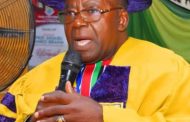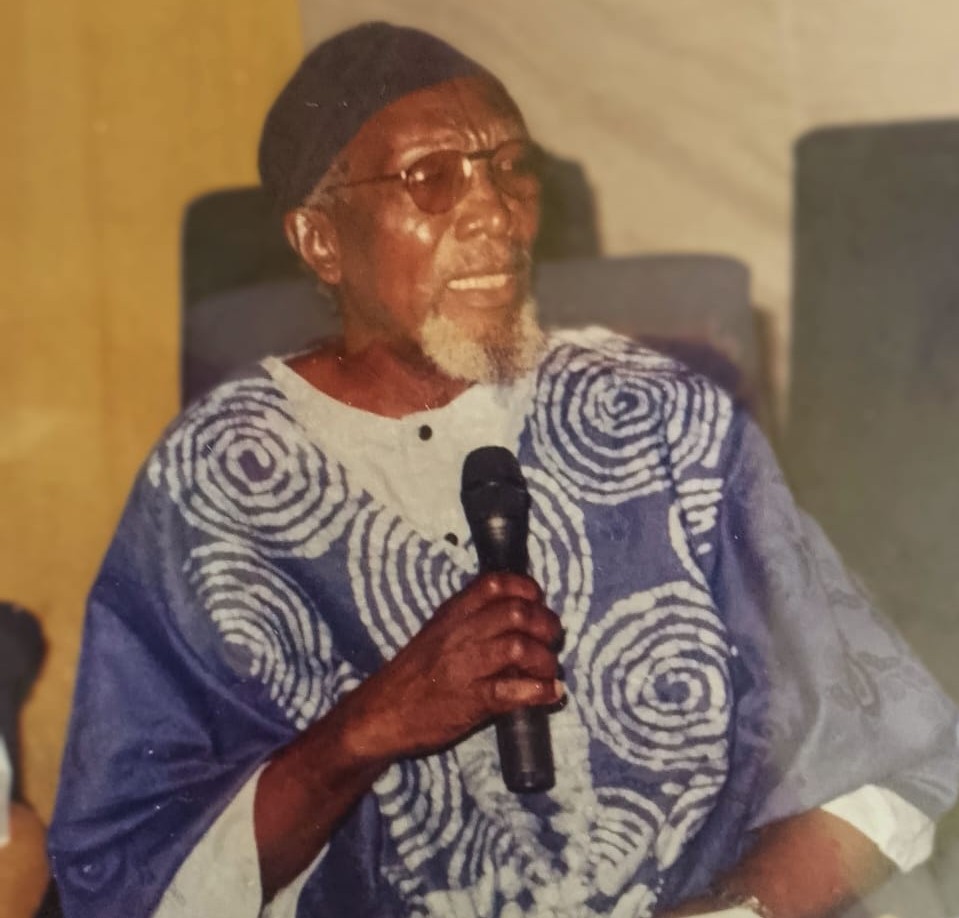
Leading historian, Prof Segun Osoba, is dead. He died earlier today, according to snippets from the Obafemi Awolowo University, Ile-Ife where he used to teach History. Prof Osoba had aged considerably but it is not clear what actually killed him.
The departed historian accomplished fame from two outings. One is his 1978 essay titled ‘The deepening crisis of the Nigerian national bourgeoisie’ which is still powerful because of its descriptive vigour and the predictive insight. The class crisis of mission is generally regarded to have worsened, making his journal article canonical.
 The second outing was his joint authorship of a ‘Minority Report’ with his Ahmadu Bello University, Zaria counterpart, the equally now late Dr Bala Usman. The life-time achievement in that report is that, while others are still at the level of clamouring for a new constitution, the twosome already have one on offer. And this was as early as the late 1970s at the Constitution Drafting Committee (CDC) by the Murtala/Obasanjo regime when the crisis of the bourgeoisie had not reached current magnitude. Although their report was, predictably, rejected, more out of fear of radicals than anything else, it is largely what informs Chapter Two of the current 1999 Constitution as amended. Even though retained, the bourgeoisie have nominalised Chapter Two. Tragically, their alternative constitution is neither featuring in mainstream nor civil society discourses of the much invoked phrase, ‘way forward’ nowadays.
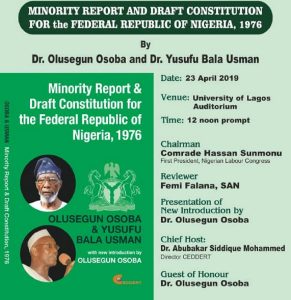 The Nigerian Left has suffered an irreplaceable symbolic loss because, as Obafemi Awolowo University, Ile-Ife’s Prof Chijioke Uwasomba who learnt distantly at the feet of the late Osoba as a younger academic told Intervention, he not only remained a committed Marxist/Socialist, he also lived a life of sacrifice, confronting imperialism and its local prefects with all the informed knowledge at his disposal. As he also put it, his departure marks a big loss to Nigeria, the Socialist movement and the entire anti – hegemonic forces whose alternative ideas and conceptions of development are regrettably thinning out by the day.
Intervention learnt that Osoba trained at the University College Ibadan before proceeding to the Moscow State University where he got his PhD in History, returning to Nigeria in the early 1960s to take an appointment with the then University of Ife (now Obafemi Awolowo University). It was while there that he sought to operationalise Socialism by leading then younger lecturers and others to found the Ife (Socialist) Collective in the early 1970s.
Intervention recalls its coverage of his 90th birthday in January 2025 and the diversity of speakers there, which showed he was a doyen in all ramifications to those in the struggle to rescue Nigeria from the clutches of imperialism and its local representatives generally assessed to have done everything to arrest the development of the country.