
By Adagbo Onoja
Let me begin this piece by refreshing the memories of readers of Intervention about this story of the fate of the old Oyo Empire told by the late US based Nigerian theorist, Professor Peter Ekeh, who illustrated “A Case for Dialogue on Nigerian Federalism” with it in a Keynote Address to the Wilberforce Conference on Dilemmas of Democracy in Nigeria in 1995. And the story goes: Soldiers from an Oyo satellite town, ruled by a Bale, a feudal lord, were pressed by their leader into the civil war. They lost. Rather than being taken as prisoners of war, as it would be the case in previous normal times, they were now sold into the slave trade. Six of these soldiers – all grades of them: general, horsemen, foot soldiers, and of different ages – found themselves as slaves in a Caribbean sugar plantation. One afternoon, as they labored in the field, three new slaves were brought in to join them. One of the ex-soldiers looked up to observe these new labor recruits. He then cried out: “Oh no, oh no, oh my God: It is the Bale himself.” The others joined him in this emotional recognition of their ruler back home in Yoruba land and Oyo nobility and commoner, all now slaves, wept together at the fate of their fallen ruler and their fallen civilization. None of them knew of the fate that had befallen their wives and children and relatives at home. But each of them had paid a heavy price for the mismanagement of Oyo’s public affairs”.
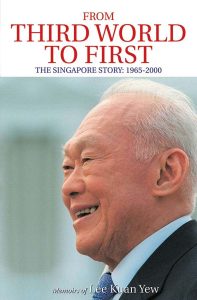
Allison Ayida’s thesis is that Nigeria is only a mistake because it has not had its own Lee Kuan Yew!
Ekeh’s conclusion from the story is that Oyo’s misfortunes in the nineteenth century should provide us with a parable from which to examine Nigeria’s current predicament. That is in the sense that Oyo was not conquered from outside but collapsed under the weight of its own mismanagement even though it could have resolved its problems internally through dialogue and its own tested institutions. Ekeh’s logic remains impeccable, time differential notwithstanding, because what drives sub-nationalistic politics and much of inter-group hostility in Nigeria is the belief in ‘the mistake of 1914’ analogy in some quarters. But it is an informed analogy because there was a time in human history when there was nothing like nation states and there is coming a time when there will also be no nation states as we know them today. What this means is that every nation state existing today, including Nigeria, occurred as a mistake. So, Nigeria is a great ‘mistake’ only because, as Allison Ayida put it, it has never had a populist, transformational leadership to fire national imagination. Those circulating the ‘1914 is a mistake’ analogy on Facebook are, therefore, simply advertising their ideological confusion about state making, not knowing that they are confirming the wisecrack that it is the fool who breaks the pot as a way of showing he (no gender here, yet) could drink and get drunk.
This flashback is an imperative as Nigerians watch the US, Israel and Iran determine their ranking order in the next world order. It has to because it must have been occurring to observing Nigerians that the war in question is not that far away from it as it may appear. The details between US/Israel and Iran are vastly different from the sudden security cooperation between the US and Nigeria but the context is the same. It is the same in the sense that the issue in question is about who arrives at the table of power in the emerging multipolar world and with or without which set of allies. This context unifies Venezuela in the Americas, Iran in Asia and Nigeria in Africa.
The foregone doesn’t suggest that the US is about to do to Nigeria anything comparable to what it has done in Venezuela or is doing in Iran now. No. And that is so because there is no same size fits all in place in this game although the initial phase is usually the same for all. That is the phase of circulating power through a language game. Usually, the response to that phase determines what happens eventually. And it is there that Nigeria has a challenge in responding to the series of American pressures of late, from the designation of Nigeria as a “Country of Special Interest” last October, the military strike in December and boots on the ground since February.
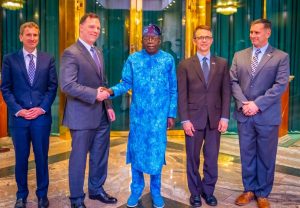
President Tinubu with American diplomats and military commanders in Abuja recently
Nigeria arrived at coming to grips with the series of American actions thoroughly divided. The divide over American pressures is not such a clear-cut divide but taking a Christian – Muslim mapping of it would seem to be adequate for now. That division within Nigeria is sufficiently thick, thereby making the US the newest faultline in Nigeria. This new faultline may potentially be more rapturous of inter-group relations than the traditional fault lines such as the North-South dichotomy, Christian – Muslim, class differences and the gerontological tension. The way the faultline has largely, for now, assumed a Christian – Muslim character is a pointer to that inference.
The Christian community are seeing a messiah in Trump’s statements and commitments to save Christians from a nightmarish spate of violence that has simply lasted too long. Perhaps, the extreme helplessness and felt sense of vulnerability as well as the dominant narrative of ‘Fulanisation’ and Islamisation have led Christians to take Trump’s declared commitments on the face value, taking no more trouble of reading it beyond acceptance or rejection by historicising it. In doing so, the Christian community, knowingly or otherwise, failed the analytical due diligence of trying to link Trump’s commitments to its discursive condition of emergence. Given that every reality is, necessarily, a product of its discursive condition of emergence, the endorsement of Trump’s messiahship could turn out a great move just as it could turn out such a disastrous one. Since meaning takes time to unfold, it is a waiting game for which of the two is proved about Trump’s promise to Nigerian Christians.
The Muslim population is no different from the Christians in rejecting Trump’s messiahship. In fact, much of its opposition ends up in dubbing the intervention as imperialism. In other words, there is an explicit assumption that imperialism has a permanently constituted universal meaning. Nothing can be farther from the truth. Or there will be no imperialists and imperialism by now. Imperialists and imperialism exist because those covered by that lexicon do not believe that what they are doing to their victims is anything but free trade, market expansion or globalisation. What that reality challenge antagonists of imperialism to do anytime they are invoking imperialism is creatively configuring imperialists and imperialism in its most grotesque dimensions rather than merely invoking it as if it is an uncontested lexicon. That is not competent politics in a world in which imperialists and imperialism has a larger share of the audience or control the discursive space more than their antagonists.
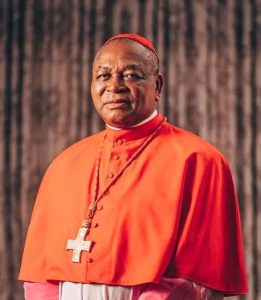
Archbishop Emeritus of Abuja, His Eminence, John Cardinal Onaiyekan
The referencing of sovereignty – the other key concept – by the opposing side is not different from the decontextualised attack on imperialism. Here, it is even more complicated in that the massive reference to sovereignty takes no notice of the battering the concept has received in the post-Cold War. Interestingly, the most frontal attack came from ‘our own’ Kofi Annan who denied sovereignty any absoluteness. Annan who was speaking at the 35th Annual Ditchley Foundation lecture in 1998 in London conditioned sovereignty on what he calls responsible and legitimate power of the state. That is to say that inviolability of the state can only be invoked when there is a guarantee of fundamental human rights and dignity of the people. He grounded his position on the analysis that the UN Charter itself was not issued in the name of governments but in the name of the people and if guarantee of human dignity is compromised, then inviolability of the state becomes problematic.
The implication is that if we follow Annan, Christians do have a point in dismissing sovereignty for now. In one way or the other, intellectuals of sovereignty have, consciously or otherwise, identified with Annan. The most known of them would be Prof Stephen Krasner’s influential 1999 text, Sovereignty: Organised Hypocrisy. In there, he shows or tried to show how sovereignty has not always been complied with, historically. Such a position by a leading American political scientist who straddles multiple strands in International Relations scholarship do have performative outcomes on practical directions. It was thus not surprising when the UN family adopted ‘The Responsibility to Protect’ paradigm in 2005, practically pushing sovereignty to the grave though without saying so.
The point here is that sovereignty, for instance, has moved from the meaning it had in the classics on it. It has been so battered that its usage by historically undermined interests must carry specificity of meaning. Otherwise, it would amount to shooting blindly and wasting bullets if we do not follow the politics of language associated with the shifts.
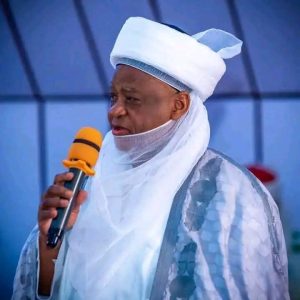
Sultan of Sokoto, His Eminence, Saád Abubakar 111
As a result of the binary reasoning informing both the rejection and the endorsement of Trump’s pressures on Nigeria, none of the two camps is thinking of the intervention in terms of what we make of it. Or thinking beyond unproblematic attack on concepts such as imperialism or sovereignty which are capable of multiplicity of meaning when a wave of irresistible ‘war of position’ is what is required now. Unfortunately, that is not what has happened as both sides assume that the pressures, collectively, bear inherent meaning worth endorsing or kicking against. There is a major error in both sides ascribing a fixed meaning to the intervention and, by implication, accepting the intervention as an unchanging or unchangeable move. A more strategic reception would have been for both sides to undertake a more situated reckoning with the onset of American pressures.
The tragedy lies there because, as scholar Gerald O’Tuathail would say, US making Russia and China the threat to its prosperity, for example, has nothing to do with anything objective but everything to do with “the power of geopolitics as a world-making discourse to shape the recognition of threats and the meaning of security in world affairs.” A reckoning with the world-making implications of geopolitics would have made both Christians and Muslims think twice and conclude that what matters more in this circumstance is mastery of arranging “different actors, elements and locations simultaneously on a global chessboard.” Implied in that is accepting that, at stake, is unequal power relations, something reversible by disrupting a hegemonic narrative which can hardly help both those accepting and those rejecting it and replacing it by producing a counter-hegemonic narrative. A counter-hegemonic narrative can achieve disrupting hegemonic narrative because it embodies in it the set of power relations which will make the hegemonic narrative impossible to operationalise, leading to ascendancy without fisticuffs with anybody, be it Trump, the Nigerian government or whoever. It is not every narrative which overwhelms a subsisting narrative but there are practices by which victory is accomplished. Such an option guarantees for every of them the certainty of getting what they want instead of a binary reading of Trump as either good or bad. In other words, it is divided Nigeria that will guarantee the triumph of Trump’s imaginative geographies.
The dire situation arising from the divide is worth pondering over in the absence of Nigeria’s lack of even one symbolic agentian order such as Nelson Mandela to, for instance, call Christian and Muslim leaders to order by asking them to take another look at how too far they have taken their hostility to each other. And point it to them that their in-fighting on practically every issue is what makes it possible for outsiders to frame their intervention the way Trump, for instance, has done. As dangerous even to the West as Trump’s frame game on Nigeria since no FRONTEX can handle border bursting magnitude of migration should Nigeria experience any variant of fragmentation, the inter-group hostility at home, particularly between Christians and Muslim, carry a heavier blame. With a state too intimidated to read the Riot Act to promoters of permanent Christian-Muslim hostility, only a consensus figure or an active Left acting as a centre of gravity could have disciplined the unruliness. Tragically, Nigeria lacks every of the two at the moment. The hope is that God will not forsake over 250 million Nigerians, the highest concentration of blacks under a single government in human history.










1 Comments
Odoh
This is very thought-provoking for those who are willing to think beyond their today. For most Nigerians, there is an unidentified disdain for the future. Whether they are rich or poor, they seem to be thinking about today: either what to eat today, or which pleasures of life to have today. Their handling of young people is no better than thinking of young people as imbeciles that will never have to run anything in the future.