By Prof Hassan Saliu
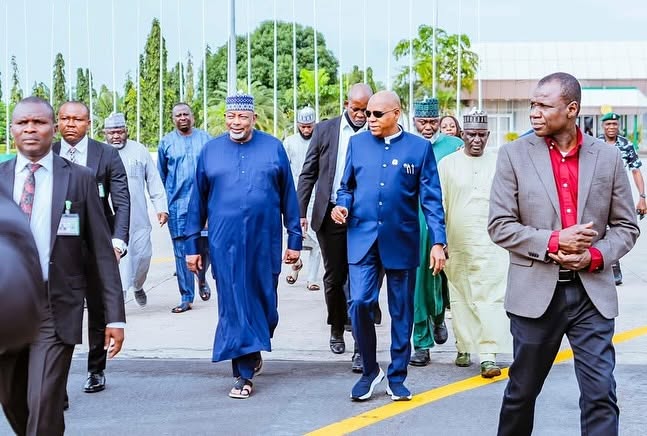
The media space has been congested with insinuations about why President Bola Tinubu has been missing the meetings of the UN General Assembly, instead sending his Vice President, Kashim Shettima, to represent him consistently. For this year’s edition, motives have been imputed for his absence. Leading the pack of those objecting to the President’s absence is Atiku Abubakar, who has linked it to a supposed drug case involving the President in America. Other media commentators have invaded the space to vent their opinions on UN politics.
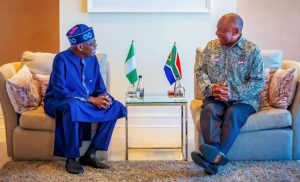
What is happening that neither Tinubu of Nigeria, Ramaphosa of South Africa nor El-Sisi of Egypt is attending this year’s UNGA?
To begin with, every president or Prime Minister looks forward to the event because of the opportunity it offers to strike deals beneficial to their countries. Being an annual gathering of world leaders, it is a thing of pride for leaders to attend to maximize the opportunity for participation and give psychological satisfaction to their citizens that their countries are not missing in action. Many side-line activities are lined up during the occasion to extract concessions, making it unignorable for world leaders. More so, the activities lined up for this year’s gathering, such as those on Sustainable Development Goals, make attendance almost inevitable.
Historically, three major themes have dominated Nigeria’s participation over the years. One, UNGA meetings are an occasion to present a scorecard on the situation in the country and to correct global misconceptions about it. Two, the occasion is always used to speak for the African continent by raising issues of importance to the continent. Indeed, once Nigeria has spoken, there is usually little interest in listening to other African nations, except there are peculiar issues in some specific countries that world leaders want to hear. Three, Nigeria’s speech often reflects the feelings of Africa on major global issues and their pathways. For these reasons, Nigerians and their foreign friends look up to General Assembly meetings with great expectations.
Despite its multiple gains, such as raising the global voice of a country and the accompanying tangible benefits, it has its drawbacks. Before going into that, it is important to note that absence at such an event is not a crime or an impeachable offence for any president or Prime Minister. President Tinubu is not the first Nigerian president to absent himself from UNGA meetings. Presidents Yar’Adua and Buhari also had cause to be missing in action. In one instance, the Foreign Affairs Minister stood in for the president. This is normal and there is nothing problematic about it. President Tinubu has even done better by asking his Vice President to stand in for him.
 Back to the drawbacks of such meetings, which many commentators do not know about, four can be highlighted. One, attendance comes with a huge cost that often makes leaders shun the event on economic grounds, sending representatives instead to reduce cost. This was typically the case under Presidents Jonathan, Buhari and Tinubu, where complaints have been raised about the size of Nigeria’s delegations to UNGA. Two, related to this is the question of tangible gains that accrue to smaller nations. In most cases, partnerships and collaborations are flagged but never consummated during the meetings. Follow-ups are usually required afterwards. So, in terms of tangible gains, UNGA meetings offer little, though their intangible aspects may be phenomenal.
Three, the whole UN platform is an arena for the big players. While smaller countries go to its activities with bowls begging for resources, the big ones who define the outcomes play their politics without the required sense of urgency. It is not the absence or presence of an African president that will make the major players change their orientation.
Four, in the hierarchy of the UN, real power lies with the Security Council, in which five powers have veto over its affairs. What this means is that once any of them is not favourably disposed to an issue, such an issue will not proceed to the next level. This played out when the US used its veto to block further discussion of a second term for Boutros Boutros-Ghali despite overwhelming support for him.
Overall, this piece supports attendance of Nigerian presidents at UNGA meetings but at a reduced cost to the nation, instead of turning them into jamborees. The UN itself has its own problems in turning its activities into platforms for equal participation, as it depends on funding by the major powers. Only recently, it met to redraw the map of Africa largely without significant input from its major organs. Developing countries, including Nigeria, do not contribute much to its purse to enable them to possess the required level of influence. The General Assembly that evokes the feeling of equality is technically deficient to thoroughly express that. Since it remains the best we have for now, Nigeria’s President should prioritize it while blocking domestic leakages that have been frustrating the realization of its tangible gains. However, not being able to attend at the highest level is not a sin. Several genuine reasons may be responsible.