The author
By Fabian Okoye
Prof. Segun Osoba has taken a final bow, but his flame is still blazing, fierce, defiant and unquenchable. His departure is not only that of a scholar, but of a patriot whose patriotism was exemplified in fearless truth-telling, a revolutionary who stood unyielding against injustice, and a teacher whose life was a restless search for justice. Scholarship never left him, and every lecture, every essay; every intervention was a call to conscience, a summons to action.
Today we mourn his voice, but we also stand in celebration of the echo of his ideas, ideas that inspired generations, strengthened movements and paved the way to liberation. His impact extends beyond the annals of history and the confines of academia, permeating the minds he awakened, the comrades he inspired, and the communities he defended. The flame he lit will burn on, long after the weeping has ceased, to guide us in our quest for justice and truth.
Early Life and Academic Journey
The development of Segun Osoba’s ideas took place in the early years of Nigeria’s independence, when the country was struggling with the dualities of colonial past and the problems of independence. He was from the beginning a quick thinker and had a keen interest in the forces that were shaping society. It was not a coincidence that he studied history at the University of Ibadan, he felt that it was the only way to understand the power structures and reveal the origins of injustice.
Osoba’s ability to think deeply was immediately noticed at Ibadan. He was not satisfied with the facts and events being memorized. Rather, he questioned the paradoxes of colonialism and the potentials of liberation. History was a living thing, a discipline that could shed light on the present and point the way to a more just future, for him.
His academic career took off when he joined the Department of History at Obafemi Awolowo University (OAU), Ile-Ife, where he became popularly known as a “radical lecturer” and “father-figure of radicalism”. He was a revolutionary intellectual at the place. Students remembered how he was able to make complex historical events understandable, and how he combined philosophy, politics and lived experience. His seminars were always lively, interactive and aimed at developing critical thinking and proper analysis.
Osoba’s approach to teaching was unique. He did not consider history to be a past reality, but a guide to the present. He taught his students to “read power”, to follow its patterns through time and to challenge its underlying ideology in what is often presented as neutral discourse. He was a dynamo, not in the sense of giving easy answers, but in the sense that he challenged the listener and required courage.
He was distinguished by his intellectual daring. Osoba was one of a few academics who refused to be neutral in this time when many academics were saying the same. He felt that the university was not an oasis of peace from the tribulations of society, but was a frontline in the fight for justice. He was a writer of the highest order, a lecturer of the most inspiring sort, and a man of the most courageous intellect.
So, his youth and education were the stepping stones to a career that combined scholarship and activism. He was a man of ideas not ornaments, a tool not a decoration, a means to destroy oppression and create a freer society.
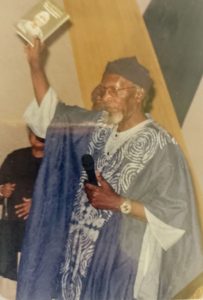
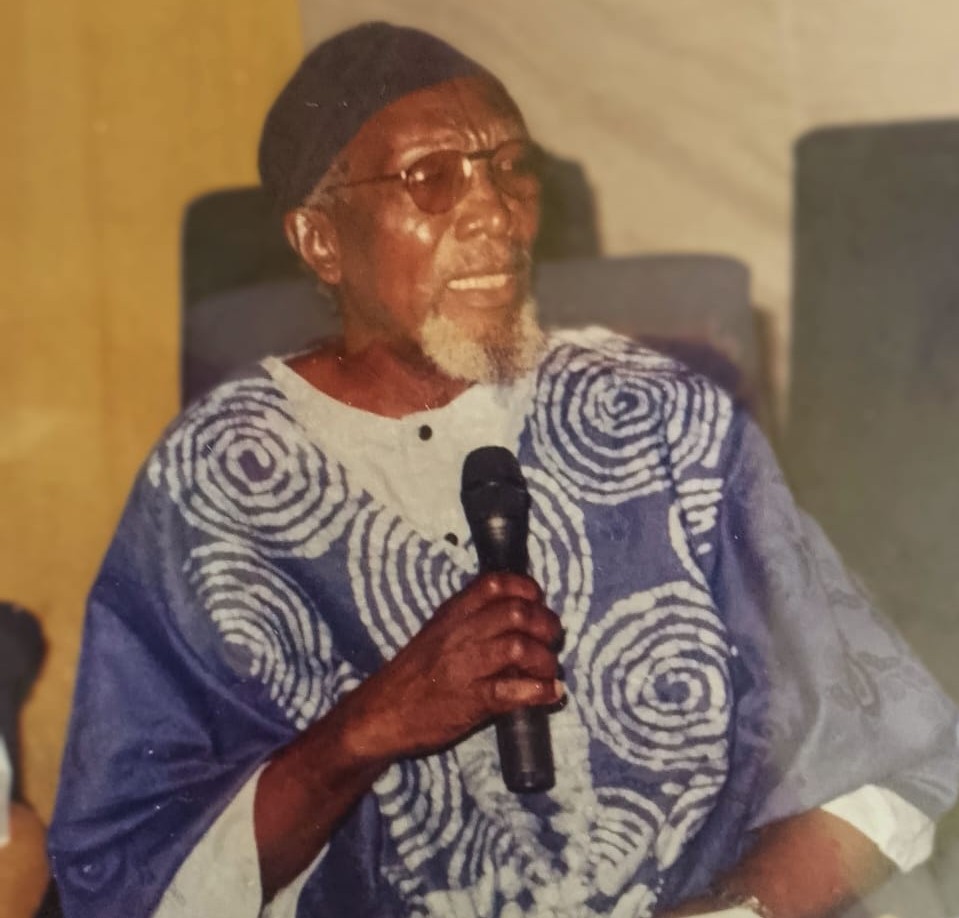
The late Osoba in a 2008 picture. Courtesy: Prof Chijioke Uwasomba Library
Intellectual Contributions
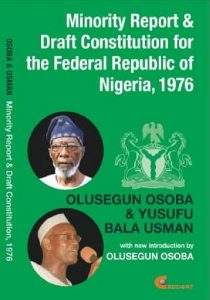
Prof. Segun Osoba’s scholarship was never dry; it was vibrant, timely and relevant to Nigeria’s political landscape. The Minority Report & Draft Constitution for the Federal Republic of Nigeria (1976) authored by him with the late Yusufu Bala Usman is a landmark in the constitutional thought of Nigeria. Osoba and Usman challenged the military regime’s agenda of governance during an era when it was trying to create its own agenda. Osoba and Usman spoke out against a military regime that wanted to impose its own vision of governance, one that was based on equity, representation, and the empowerment of the marginalised voices.
The Minority Report was more than just a report; it was a revolutionary move. It threatened the status quo and revealed the shortcomings of existing constitutional frameworks and provided a template for a more inclusive and democratic Nigeria. Osoba showed that scholarship could be challenging and revolutionary. He demonstrated that academic achievement and radicalism were not mutually exclusive but rather were part and parcel of one another.
In addition to this ground-breaking book, Osoba’s essays, lectures and interventions continually challenged power and privilege. He was a clear and firm voice in warning against the dangers of authoritarianism, the fact that corruption remains unabated and the exploitation of the ordinary Nigerians. His mental audacity was his inability to take anything on faith. He was determined to face the facts of inequality and injustice, whether they were convenient or not to those in power.
He was also a very pedagogical scholar. He educated people in the classroom and public arena that history and political analysis were not a sterile academic pursuit but a means of emancipation. He told his students and colleagues that ideas should be for the people and that truth and struggle for justice go hand in hand.
His contributions to the world of ideas are not just in his writings but in the generations he inspired. His writings were used by activists as rallying calls, by reformers as guides and by scholars as inspiration to combine academic rigor with social responsibility. Thus, Prof. Osoba’s ideas continue to influence the current discussions on democracy, governance and justice in Nigeria.
Revolutionary Struggle
But Prof. Segun Osoba was more than just a mere observer of the world. He was a participant, a warrior-scholar, he lived his convictions. His activism put him at the center of Nigeria’s revolutionary intellectual and political movements, where he was a voice for the voiceless and a bulwark for the marginalized.
Since independence, Nigeria has experienced military dictatorship, dictatorship in the name of the state, and the suppression of opposition. Nigeria has been characterized in the decades since independence by military rule, dictatorship in the name of the state, and the suppression of opposition. Osoba’s courage was at its best in this environment. He was resilient to persecution, intimidation and adversity and inspired generations. He was a man of strong character in the face of authoritarian regimes, who never gave in to compromise his principles. His courage was real and real, sometimes at a high price. He suffered harassment, censorship and the ever-present threat of reprisal, but he was not daunted.
Osoba’s revolutionary ideals were based on solidarity. He felt that justice must be fought for collectively and worked on establishing movements that would enable ordinary Nigerians to have a say. He was not a political activist for personal glory but for the cause of liberation. He joined progressive colleagues and comrades in his quest to see a Nigeria free from exploitation and oppression. They worked together to question the structures of power, and to voice alternatives based on equity and justice.
Osoba was unique in not distinguishing between scholarship and struggle. He knew that ideas had to be put to the test in the arena of experience. His writing was not only condemnatory of injustice, but also a call to action, a rallying call for those who wanted to change. He was a man who lived by the rule that the intellectual should also be an activist, that truth should be defended not only in the lecture hall but in the street, in the union and in the community.
He was not going to give up, he was living his life. Students, colleagues and activists all over Nigeria were inspired by his ability to overcome difficulties. He demonstrated that faith and unity can be a beacon in the darkest of days.
Ultimate legacy through an enduring signifier for struggle!
Mentorship and Legacy
Prof. Osoba’s impact was far greater than his writing and activism. He was truly a teacher, a mentor who formed minds and developed convictions. His classrooms were not empty rooms of teaching, but lively fields of questioning, questioning and awakening. Students who had contact with him frequently commented on his ability to make them think and question authority, and to see scholarship not as a goal itself but as a means to emancipation.
He felt education was a change of life. Teaching to him was not about the transfer of information, but about the development of courage, the courage to face injustice, the courage to question power and the courage to dream of alternatives. His lectures were electrifying because they required participation; they were not to be a spectator sport in the search for truth. Thus he lived the life of the scholar-activist and demonstrated that the classroom could be a space for training resistance.
Many of the people he mentored have become activists, scholars and leaders in their own right. They took up his torch and carried on what he had started and passed on to them, so that his ideas lived on in new generations. His legacy is not limited to books or lectures, but rather in those that have been inspired. The impact of his teaching is evident in the movements he inspired that persist in the struggle against inequality, in scholarship that will not bow to orthodoxy, and in communities built on his example.
He also had an impact on communities throughout Nigeria. He advocated for the downtrodden, stood up for the oppressed, and spoke for the voiceless. His principles became battle cries for justice, movements and policies. He reminded us that people can fail, but ideas based on truth and justice will prevail.
Thus, his legacy is indomitable, and a flame that has been burning in many hearts. It’s a legacy that is found in the books he wrote, the friendships he forged, the courage he instilled in others, and the convictions he cultivated. With Prof. Osoba’s guidance, his ideals of justice were not to be lost, but would continue to live on in the generations he inspired.
Closing Tribute
Comrade and Teacher, you have been good fighters. This indicates that you have completed your course. You have maintained your faith. Your torch is lit and blazing brighter than ever carried by those who do not want injustice to prevail.
You have gone, and we remember that the spirit of conviction never dies, and the body rests. You were a beacon of truth, a watchman of justice, a teacher of righteousness, a voice of wisdom and a presence of great influence in the lives of those you touched. Your efforts were not for your own sake, but for generations to come, and in that unselfishness is the best measure of your greatness.
Rest in power, Prof. Segun Osoba. Our battle cry is your life, our compass your courage, and our un-extinguished light is your flame. Wherever students question, you are there, wherever they rise up against oppression, you are there, wherever they demand justice, you are there. You have joined the ancestors, but your legacy walks among us, and you guide, inspire and remind us that truth, once spoken, can never be silenced.
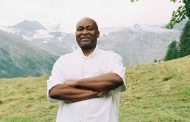
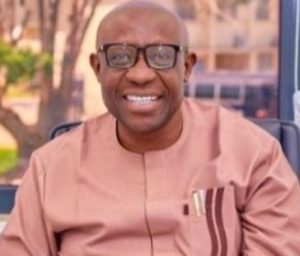
Fabian Okoye, the author, is not only currently a Special Adviser to the Kaduna State Governor on Research, Documentation & Strategy, he is also a development strategist, defence and security analyst, linguist, communications and public relations expert.