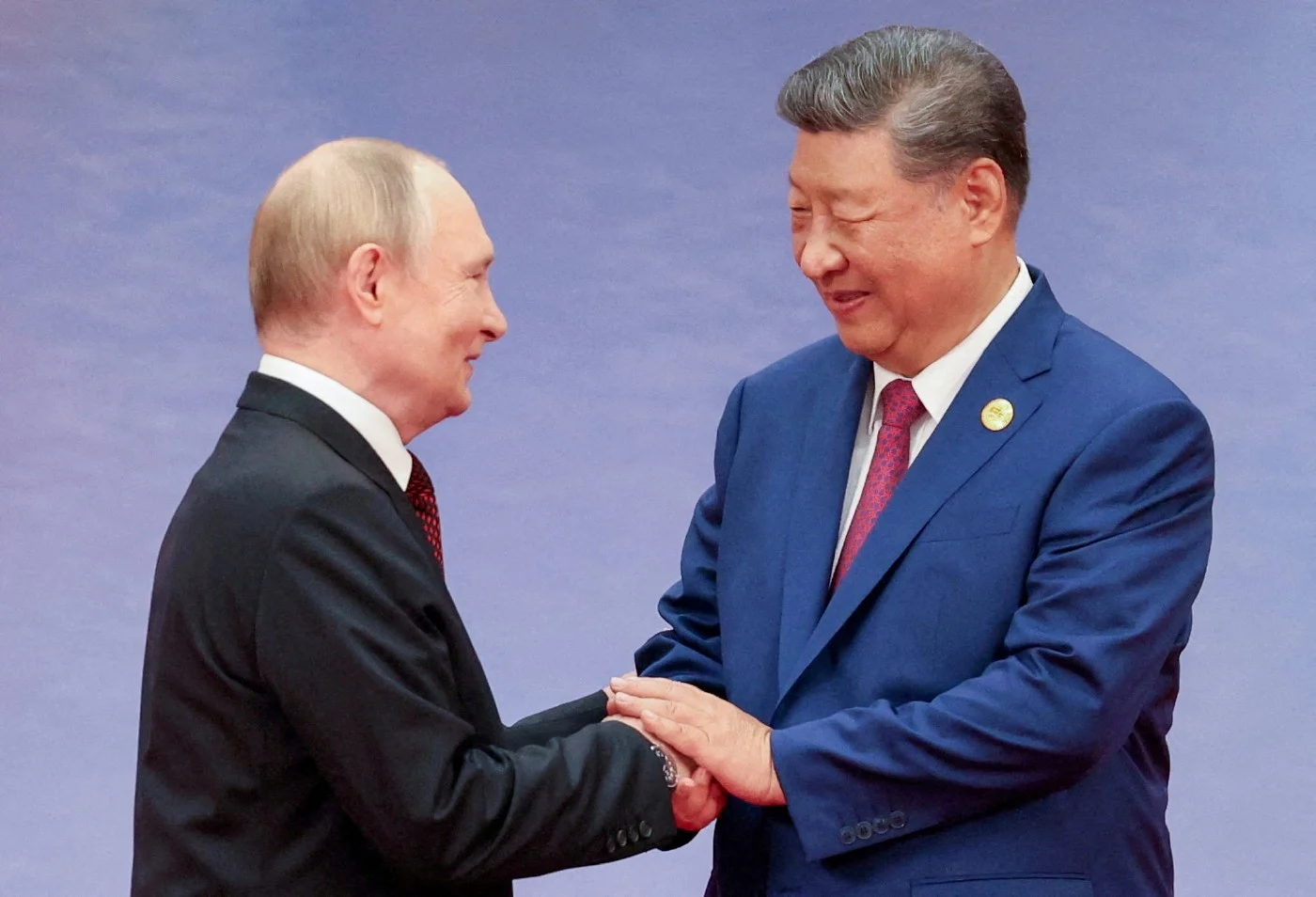
Russian president, Vladimir Putin, is in Beijing, less than a week after US president Trump’s visit to what has simply emerged as the centre of global diplomacy. According to the South China Morning Post, this is Putin’s 25th visit to China within the framework of the ‘Comprehensive Partnership’ undergirding the relationship of the two countries.
The proximity of Putin’s trip to Donald Trump’s will make this trip to attract unusual attention. Russia is not only contiguous with China, the two systems are ideologically closer. Russia and Central Asia constitute ‘the Heartland’ in Halford Mackinder’s 1904 landmark lecture ‘The Geographical Pivot of History’ at Oxford University. To the extent that ‘the Heartland’ was the anti-thesis of the naval power of the then reigning great power, to that extent is Mackinder held by some students of International Relations to have shaped global politics, especially much of the Cold War based on fear of Russia as a land power. Before Mackinder, naval power was held as what was primary. Zbigniew Brzezinski, Carter’s National Security Adviser, confirmed much of these in his post-service books.
The implication is that even if Russia and China habour no anti-Western plots, their coming together will still strike fear in the West. The differences stretch from civilisation to geographical to ideological, although the debate is what the ideology is. In fact, Henry Kissinger was used to saying that China is not a conventional nation state but a ‘civilisational state’ by which he meant it is beyond the state in traditional or Western dominated International Relations.
In Russia, nationalism is more powerful. China has a strong Marxist-oriented party which though has a more culturally creative interpretation of orthodoxy. While Russia is the core state of the Orthodox Church in the world, China is that of Confucianism.
All these make the ‘comprehensive Partnership’ enveloping Russia and China a potent brew for strategists and other minders of statecraft in contemporary international politics although, in most cases, what actors do differ vastly from what the grand ideas and theories tell us. This is important because while a Trump trip to China carried a rather mercantile lens to it, Putin’s is sure to be on calculus of global power and Russia’s place in it.
It remains to be seen whether the specifics of the bilateral sessions between Putin and Xi Jinping a few hours hence (Wednesday in China) will demonstrate or destabilise the above background!