By Sanusi Maikudi FNIM
As the 2027 general elections approach, the Federal Government and its agents are increasingly confronted with the political consequences of declining public acceptance driven, in part, by contentious policy choices and questionable prioritization.
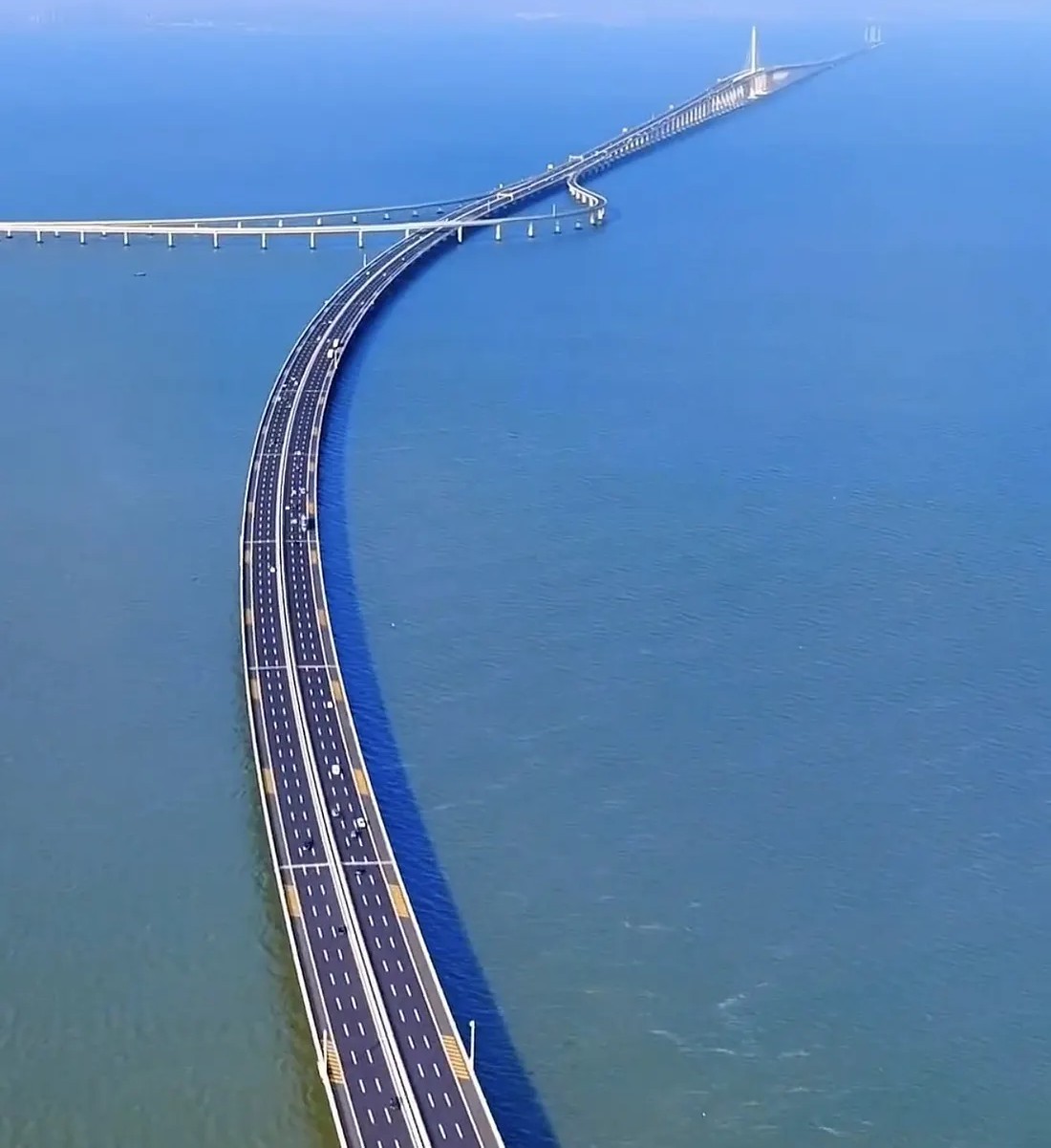
In this context, there has been a noticeable effort to defend and justify the proposed ₦15 trillion Lagos–Calabar Coastal Highway, a project many believe was initiated without sufficient adherence to due process, rigorous project scoping, and comprehensive planning.
I find it rather troubling that what should be a subject of rigorous public scrutiny is increasingly being framed as deserving of unquestioned endorsement, by the FGN and it’s agents even where clear concerns about legality, transparency, and policy rationale exist.
For the record, in any democratic setting, citizens—regardless of their level of expertise—retain the inalienable right to interrogate government policies, programmes, and projects. Indeed, serious policy analysts understand that no government possesses a monopoly of wisdom; constructive criticism is not subversion, but a vital instrument of accountability.
The concerns many observers, including myself, have regarding the Lagos–Calabar Coastal Highway are neither trivial nor politically contrived. They are grounded in economic logic, governance standards, and sustainable development principles.
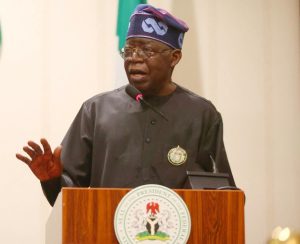
President Tinubu, Philosopher, Chief Engineer and Chief Architect of the Lagos-Calabar Coastal Highway
To begin with, both Lagos and Calabar are coastal cities with established seaports. They are already connected through maritime routes, which remain the most cost-effective and efficient means of transporting large volumes of cargo.
From a purely economic standpoint, it is difficult to justify prioritizing an expensive road corridor over optimizing existing and potentially expandable sea-based logistics.
Furthermore, in the context of 21st-century infrastructure planning, modern rail systems—particularly electric rail—offer far greater efficiency, sustainability, and long-term value compared to conventional road construction of this scale. This raises legitimate questions about whether the project reflects forward-looking infrastructure strategy or a continuation of outdated development models.
Equally concerning is the issue of process. Why did a project of such magnitude proceed through what appears to be executive discretion rather than strict adherence to established procurement frameworks, including the Public Procurement Act and the Federal Government’s procurement policies? Due process is not a bureaucratic inconvenience; it is the backbone of transparency and value-for-money in public expenditure.
Closely related is the apparent absence—or at best, opacity—of a comprehensive Environmental and Social Impact Assessment (ESIA) prior to commencement. For a project cutting across sensitive coastal ecosystems, this omission represents a significant departure from globally accepted sustainable development standards.
There are also questions regarding procurement integrity. The award of the project to a company with comparatively limited track record, without clear evidence of open and competitive international bidding, raises concerns about value, capacity, and fairness.
The choice of the project’s starting point—reportedly from the vicinity of Eko Atlantic—has also generated public unease. A more technically and socially considerate alignment might have reduced the scale of property destruction and the associated human and financial costs.

An angle to Eko Atlantic
Additionally, the widely discussed relationship between the owner of the construction firm and the President introduces concerns about potential conflict of interest. Whether justified or not, such perceptions can erode public trust and raise legitimate questions about whether national interest or private considerations are the primary drivers of the project.
It is also difficult to reconcile the decision to commission the project at a stage reportedly below 20 percent completion. Such actions risk reinforcing the perception that symbolism is being prioritized over substance.
On the broader national narrative, attempts to draw equivalence with a so-called “Badagry–Sokoto Road” appear more like political balancing than evidence-based infrastructure planning. This framing risks deepening regional skepticism rather than fostering genuine national integration.
Ultimately, Nigeria faces numerous infrastructure deficits—many of them smaller in scale but far greater in immediate economic and integrative impact. The prioritization of mega-projects of questionable urgency and transparency risks diverting scarce resources into ventures that may struggle to deliver proportional value, thereby exacerbating existing fiscal pressures.
Beyond these concerns, there is a compelling need for rigorous Value Engineering and disciplined Priority Setting in the conception and execution of projects of this magnitude. Public infrastructure must not only be ambitious; it must be optimally designed to deliver maximum value at minimum lifecycle cost. This requires systematic evaluation of design alternatives, cost-benefit trade-offs, and long-term economic returns.
Equally important is the question of national priorities. In a resource-constrained environment such as Nigeria’s, government must carefully sequence investments, focusing first on projects with the highest impact on economic productivity, social welfare, and national integration. Without such prioritization, there is a real risk that scarce public funds will be tied up in capital-intensive ventures whose opportunity costs far outweigh their projected benefits.
Finally, beyond official projections and political messaging, there is a noticeable absence of rigorous, independent efficiency analysis—such as Stochastic Frontier Analysis or Data Envelopment Analysis—of the projected ₦15 trillion investment. In an era where public finance must be guided by evidence and measurable outcomes, this gap is significant.
These are not expressions of cynicism, but of concern. If there are compelling, evidence-based responses to these issues, they would not only enrich public understanding but also strengthen confidence in the project’s intent, execution, and ultimate value.
The author is of Network for Justice, Kaduna.