By Sanusi Maikudi (FNIM)
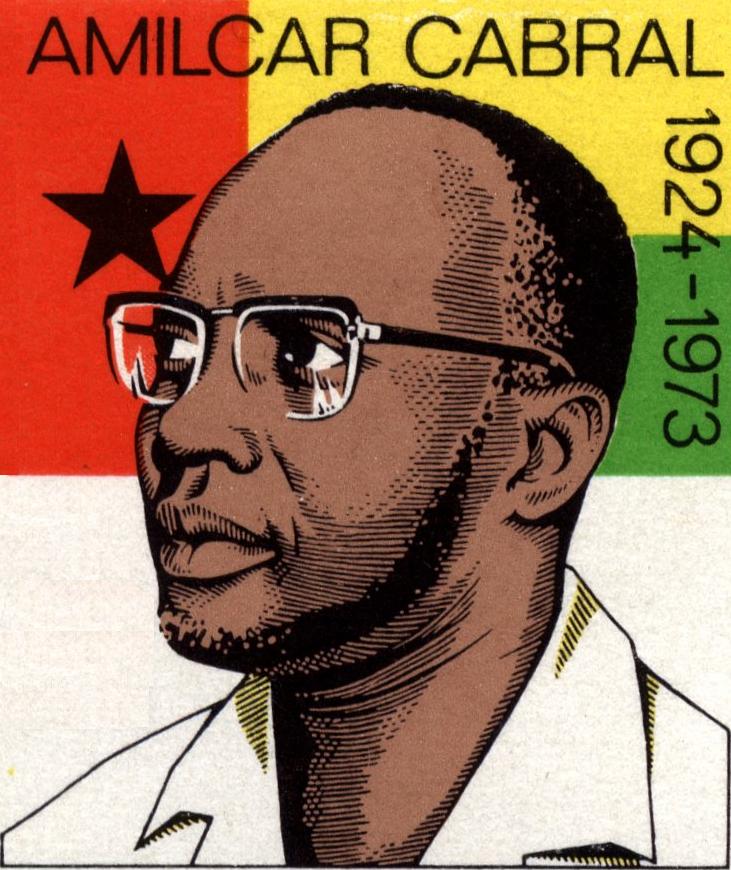
Amílcar Cabral, the renowned African revolutionary, political thinker and liberation leader, offered an enduring insight into the relationship between political struggle and the material conditions of ordinary people when he observed:
“Always bear in mind that the people are not fighting for ideas, for the things in anyone’s head. They are fighting to win material benefits, to live better and in peace, to see their lives go forward, to guarantee the future of their children.”
Although Cabral made this observation within the context of Africa’s anti-colonial liberation struggles, its philosophical relevance extends far beyond the battlefield. It speaks directly to the purpose of democratic participation, particularly the power of the ballot in determining the direction of governance and the future of society.
The transition from why people fight to why people vote is, therefore, a journey from revolutionary consciousness to democratic praxis. If people once fought to liberate themselves from colonial domination, citizens in a democratic society must recognise the ballot as their peaceful instrument for pursuing freedom, justice, human dignity and improved living conditions.
Cabral’s central argument is that political struggle must ultimately be judged by its capacity to transform the material conditions of the people. This proposition provides an important framework for examining the relationship between political power, democratic governance and the expectations of Nigerian voters.
- Negation of the Parochial Allure of PBAT’s “All Is Fair in Politics” Dogma
The political maxim commonly expressed as “All Is Fair in Politics”, particularly when invoked to justify expediency in the acquisition and retention of power, represents a narrow conception of political engagement in which political victory can become an end in itself, sometimes at the expense of ethical considerations and the public interest.
Cabral’s iconic statement challenges this conception by placing the material conditions and welfare of the people at the centre of popular struggle. Political power, whether acquired through revolutionary struggle or democratic elections, must ultimately derive its legitimacy from its capacity to advance human welfare.
Democracy cannot be reduced to the ingenuity of political manoeuvres, the sophistication of campaign strategies, the manipulation of ethnic and religious identities or the ability of political actors to win elections. Neither should political expediency become an excuse for abandoning integrity, accountability and the social contract between the governed and those entrusted with public authority.
The fundamental question should always be: What tangible difference does the exercise of political power make in the lives of ordinary citizens?
The iconic statement of Amílcar Cabral negates the proposition that political victory, irrespective of the means employed or the consequences for society, is sufficient justification for political conduct. It reminds political leaders that the ultimate purpose of power is not personal aggrandisement, partisan domination or the perpetuation of political interests, but the advancement of the collective welfare.
This is the essence of Cabral’s argument and an important standard by which democratic leadership should be understood and evaluated.
- Growth and Development Must Transcend Statistical Data
Economic growth and development are frequently presented through macroeconomic indicators, budgetary allocations, GDP figures, investment statistics, revenue performance and records of infrastructure projects.
While these indicators are important instruments for measuring economic performance and public-sector productivity, they do not, by themselves, establish whether ordinary citizens are experiencing meaningful improvements in their living conditions.
Growth and development must go beyond statistical data insulated from the daily lived experiences of the people.
What is the value of impressive economic growth figures when households struggle with food affordability, unemployment remains a major concern, healthcare is inaccessible to many, educational opportunities are constrained and insecurity disrupts livelihoods?
What is the significance of increased government revenue, taxation and public expenditure if their benefits cannot be meaningfully experienced by the wider population?
Achievements on paper and in theory must translate into concrete outcomes: better living standards, productive employment, affordable essential services, accessible education and healthcare, improved infrastructure, security of lives and property, and expanding opportunities for citizens.
The ultimate test of public policy is not simply what government reports it has accomplished, but what citizens can reasonably identify as improvements in their everyday lives.
Development must therefore be measured not only by what government builds, spends or announces, but also by the quality of life it enables people to enjoy. Macroeconomic stability, fiscal reforms and increased public revenues are important policy objectives, but their broader justification must ultimately be reflected in inclusive prosperity and improved human welfare.
The distinction between economic growth and inclusive development is particularly important. Growth may be reflected in national statistics, but development must be experienced by people in their homes, communities, workplaces, schools and hospitals.
- The Risk of Democratic Disillusionment
The failure to prioritise Good Governance, Social Justice and Sustainable Development poses a serious challenge to the legitimacy and long-term sustainability of democratic institutions.
When citizens repeatedly exercise their franchise without experiencing meaningful improvements in their circumstances, public confidence in democratic processes can gradually diminish.
When political promises are disconnected from actual performance, when public resources are perceived to benefit a narrow circle, when accountability is weak and when inequality and insecurity persist, democratic participation risks becoming an exercise in electoral formalities rather than a meaningful instrument of popular sovereignty.
This disillusionment creates fertile conditions for political apathy, declining institutional trust and the rise of populist movements that promise alternatives to established political arrangements.
Populism is not a uniform political phenomenon; it can emerge from different ideological traditions and circumstances. Nevertheless, frustration arising from perceived failures of governance can be exploited by movements that present themselves as alternatives to existing political institutions.
The challenge, therefore, is not merely to preserve democracy as a system of elections and constitutional arrangements, but to make it deliver the social and economic outcomes that give it meaning.
Good Governance, Social Justice and Sustainable Development must remain central to the democratic project. Good Governance provides the framework for transparency, accountability and responsible management of public resources. Social Justice demands fairness, inclusion and equitable access to opportunities. Sustainable Development ensures that present needs are addressed without compromising the prospects of future generations.
Without these fundamental pillars, the distance between the expectations of citizens and the performance of political institutions may continue to widen.
Democracy must therefore demonstrate its value not merely through the periodic transfer or renewal of political authority, but through its capacity to improve human welfare, protect fundamental rights and expand opportunities for all.
- The Nigerian Voter and the Responsibility of the Ballot
For Nigerian voters, Cabral’s message presents a fundamental question: What exactly are we voting for?
Are we voting primarily because of ethnic affiliation, religious sentiment, political loyalty, personality cults, party slogans and the distribution of political patronage? Or are we voting for security, affordable food, decent housing, quality education, accessible healthcare, employment opportunities, reliable infrastructure, social justice, accountable leadership and economic prosperity?
The distinction is fundamental.
Voting is more than a constitutional right or a periodic political ritual. It is an expression of the people’s collective aspirations and their determination to influence how they are governed.
The Nigerian voter must therefore approach electoral choices with a greater consciousness of the relationship between political promises, public policies, expenditure priorities and measurable outcomes.
Political parties and candidates should be subjected to objective scrutiny based on their manifestoes, records, conduct, policy proposals and demonstrated commitment to the public interest.
Citizens must also recognise that democratic accountability does not end after elections. It requires continuous civic engagement, responsible public discourse, institutional oversight and the willingness to demand explanations from those entrusted with public resources and authority.
The electorate must understand that political sovereignty ultimately belongs to the people. Political office is a public trust, not a personal entitlement, and electoral victory is not an unconditional licence to govern without accountability.
Consequently, the Nigerian voter must look beyond the immediate attractions of electoral campaigns and consider the long-term implications of political choices for national cohesion, economic prosperity, social justice and the future of succeeding generations.
Conclusion: The Ballot as an Instrument of Popular Struggle
Ultimately, Amílcar Cabral reminds us that the purpose of political struggle is not the glorification of political leaders, the triumph of abstract ideologies or the acquisition of power for its own sake. It is the improvement of human conditions.
The historical struggle for political independence was fundamentally about freedom, dignity and the right of people to determine their collective destiny. In contemporary democratic societies, these aspirations must find expression through accountable governance, social justice, economic opportunity, peace and sustainable development.
For Nigeria, the challenge is to move beyond the politics of sentiment and electoral expediency towards a democratic culture that places the welfare of citizens at the centre of public policy.
The ultimate measure of democracy is not simply who wins elections or occupies political office, the volume of government announcements or the impressive statistics presented in official reports. It is whether the lives of the people become better, safer, more dignified and more prosperous.
That is the enduring connection between why people fight and why people vote.
The ballot must remain an instrument of popular sovereignty, political power must remain a public trust, and the improvement of human conditions must remain the ultimate purpose of democratic governance.
The author is a Kaduna-based entrepreneur, politician and an active citizen