By Adagbo Onoja
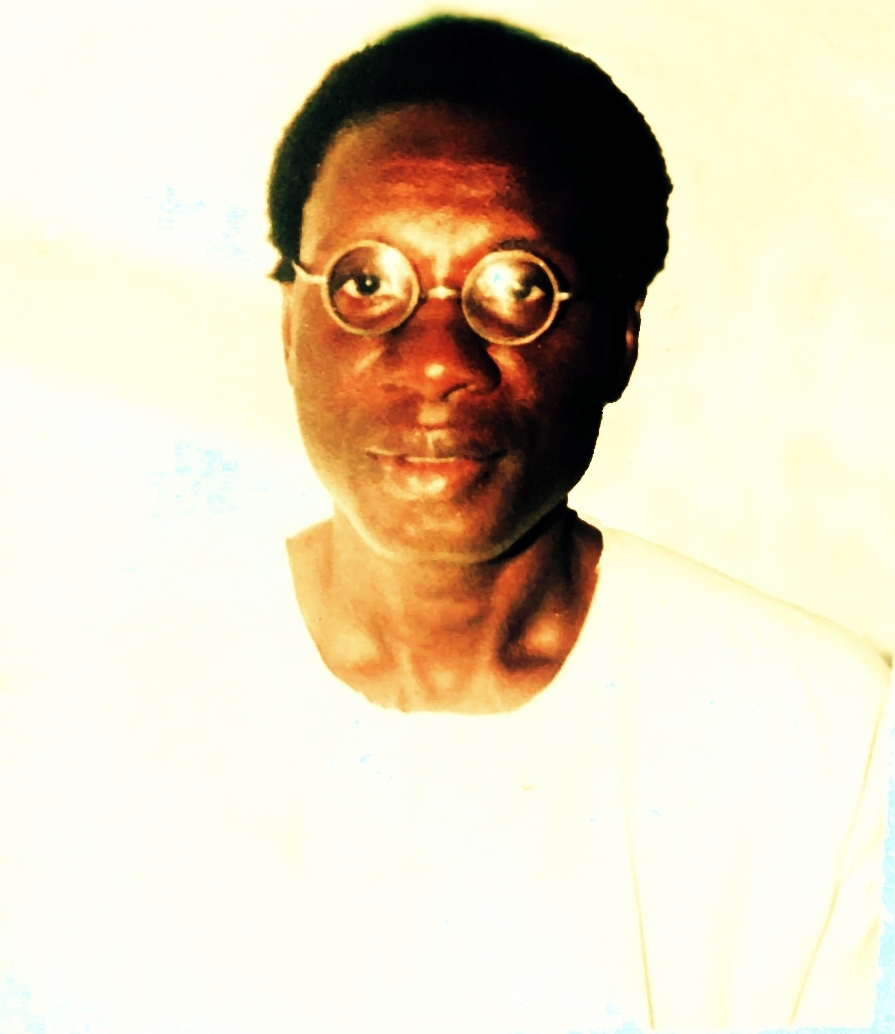
By midnight of November 7th, 2026, it came to 30 years since Prof Claude Ake has been dead. For scholarly, ideological and the Afrocentric cause, Ake is a scholar of priority. Notwithstanding one’s anthropological animosity to the concept of subalternity, one has to agree that Africa is the only remaining subaltern in world politics today. At least, the Asians and the Latin Americans have a core state, each. Prioritising Africa in the theoretical combat space as Ake did makes engaging with him at the 30th anniversary of his demise worthwhile. What is most crucial out of the huge scholarly works he left behind, with particular reference to the challenges unfolding as the global hierarchy is being reconfigured in the wake of the rise of a new great power. The 30th anniversary of the death of Prof Claude Ake is a particularly inviting moment to reflect upon as the struggle for transformative politics shifts decisively to its most discursive stage ever across the world. Ake, arguably more than anyone else, anticipated this moment as early as 1987 when he started talking about ‘How politics underdevelops Africa’. That was the second of such outing that year from Ake.
The first substantive assault!
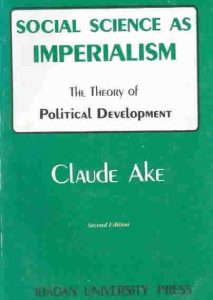
Early in January 1987, Ake made a presentation titled ‘Strategies for National Development’. It was to the National Seminar on ‘Strategy for National Development’ organised by the Institute of Public Policy and Administration at the University of Port Harcourt. It will outscore any other critiques of SAP as it applies to Nigeria, particularly in the context of the 1986/7 debate on the topic in the country. It has an uncommon clarity and situatedness, all combining to make it the text all presidential aspirants in Nigeria must be made to score a pass mark as a minimum requirement hence rather than watery presidential debates circumscribed by a mediocre landscape.
Any text with the title ‘How politics underdevelops Africa’ is at once paradigmatic in ambition because it is allocating to politics the creative force for change. As politics is “ontology which has forgotten its name”, Ake’s claim looks elsewhere away from dominant emphasis on determinism and materiality. ‘How politics underdevelops Africa’ is thus the sort of position only an Ake could pose in 1987, less than a decade after Margreat Thatcher and her neoliberal philosophers had created so much intellectual and ideological confusion everywhere by discursively articulating capitalism into a creatively destructive version of it.
In both ‘Strategies for National Development’ and ‘How politics underdevelops Africa’, Ake was not the usual critic of neoliberalism or typically deploying Marxist analysis. He was at the peak of his mastery of the synthesising act in both. In other words, his understanding of how neoliberalism complicates and how Marxism helps were done from a specificity of meaning. So, he could afford to say, for instance, that the colonial power structure depoliticized economic matters, unleashing powerful social forces, including a form of political competition which has rendered overcoming underdevelopment impossible. In Ake’s language, politics by both the colonial operatives as well as their successors has been practiced with the aim of ending politics. It is not clear if we have all pondered on what this could mean even as we grant that Ake’s language game here is capable of illimitable number of alternative meanings.
Here, I read it as an Akeseque attribution to power relations the explanation for the social stalemate across much of Africa. Power relations that came from rhetorical politics. That is where rhetorics is not Plato’s understanding of it as persuasive speaking but rhetoric in relation to David Howarth’s four variables of historicity, primacy of politics, contingency and power. The implication is that Ake reasserts Gramsci’s position on intellectual and cultural leadership in the civil society as the way out except that Gramsci maintained class leadership of the working class and all the other binaries in his works. It is not clear why Áke did not establish this linkage in his 1987 paper.
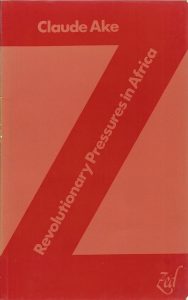
Also not too clear is where his whole position was coming from. Was it a product of Ake’s own reflexivity or his conversation with other texts unfolding at the time, making him to begin to pivot from Revolutionary Pressures in Africa while still reinforcing it? Or, was he beginning to situate his works in other works within this scholarly territory? Quijano, Walter Mignolo and his colleagues hadn’t arrived with their ‘coloniality of being’/coloniality of power’ thinking in 1987 but Ernesto Laclau, a fellow Third World scholar as Ake had, two years earlier, broken into global theoretical combat with Hegemony and Socialist Strategy (HSS), saying almost the same thing Ake was beginning to say in the 1987 paper under reference. Most readers, supporters and critics alike, agree that the kernel of HSS is where Laclau and Mouffe argue that:
What is now in crisis is a whole conception of socialism which rests upon the ontological centrality of the working class, upon the role of Revolution, with a capital ‘r’, as the founding moment in the transition from one type of society to another, and upon the illusory prospect of a perfectly unitary and homogeneous collective will that will render pointless the moment of politics. The plural and multifarious character of contemporary social struggles has finally dissolved the last foundation for that political imaginary. Peopled with ‘universal’ subjects and conceptually built around History in the singular, it has postulated ‘society’ as an intelligible structure that could be intellectually mastered on the basis of certain class positions and reconstituted, as a rational, transparent order, through a founding act of a political character. Today, the Left is witnessing the final act of the dissolution of that Jacobin imaginary (p. 2).
 About this time, Prof Bjorn Beckman, the late Swedish political economist, had been emitting vocabulary and usages that did not conform to dialectical reasoning. Although Prof Claude Ake and Prof Bjorn Beckman were not to be found on the same page on the application of Marxism to Africa’s developmental stalling, there is something unifying of them.
For instance, it was from Beckman I first got a query on my free use of ‘we’. We were going for a photograph session at a meeting of Women in Nigeria (WIN) in Daula Hotel, Kano when he seized me to ask what I always meant in my regular use of ‘we’. That must be around 1994 because it was the last year of my undergraduate programme. Steeped in the essentialism and Realist theory of meaning in our university education, his question made no sense to me. And it never did for more than a decade thereafter.
It was only upon my coming across the ‘we’ problematic in Mark Laffey and Jutta Weldes’ 2004 short journal article on discourse in 2014 that I pinched myself. ‘We’, wrote Laffey and Weldes, is the ‘shifty-shifter’ of a pronoun by which speakers silence whichever subject position(s) they want to while privileging those they want, all in the struggle to universalise a particularistic claim. This is what is at work whenever we hear spokesmen and women speaking of huge constituencies embracing multiplicity of subject positions as if such constituencies are that homogenous. In most cases, it is just a minority group usurping a heterogenous constituency for some hidden agenda.
The late Beckman did not manifest a Saussurean conception of meaning but he was not a Realist either. How he could be a Marxist without being a Realist is part of the mystique around him. But that’s unifying for him and Ake in spite of their disagreement on Marxist interpretation of Africa’s development conundrum.
Lastly, Ake’s texts (certainly not all of them) embody a wave – like quantum approach to measurement which enables him to critique himself. No text brings this out as much as his essay “How Politics Underdevelops Africa”. It is, arguably, his most audacious undertaking, given the way he reverses the materialist interpretation of history that structured his The Political Economy of Africa, thus moving away a bit from Marx while expanding Rodney’s How Europe Underdeveloped Africa towards Lenin. This may not be as farfetched as it may look, considering that the material backwardness of Russia that infuriated Lenin to politicise Marxism can also be found in Ake’s disgust for Africa’s existential non-starter. And it is in “How Politics Underdevelops Africa” that one finds the most concentrated version of that drastic cutting-in into the African elite’s developmental disorientation.
The discursive ecumenism that runs through the essay renders it interpretable as an endorsement of the radical democratic politics paradigm argued by the broader discursive turn. Interestingly, while Ernesto Laclau and Chantal Mouffe’s text which has the most original outline of how this works came out in 1985, Ake’s came out in 1987. None of the two acknowledges each other but a link between the two is sustainable. And I argue that both texts are saying that politics can only underdevelop Africa if the ensemble of counter-hegemonic forces have not succeeded in the creation of hegemonic relations and the primacy of the equivalential coalition for that becoming but are still rather hooked unto a strictly class frame. The class frame does not adequately capture the frontiers of antagonism anymore with the rise of new social movements along identity fault lines that did not have the strength they now have (ethnic, religious, indigenous, anti-environmental degradation, anti-war and, of course, gender movement.
 Other than the equivalential formula, there is the ontological issue. Ontology is not sweater. It is not worn or pulled off casually. The idea of deterministic outlook freezes the political which is a domain of the ‘war of position’ or rhetorical innovation. According to the late Abiola Irele, proverbs constitute the ‘horses of discourse’. Although he had Yorubaland in mind, it is a generalisable statement to much of Africa, pointing at proverbs as rhetorical device by which the world is unveiled and constituted as well. This is also the position of Achebe in the sharp notion of proverbs as the palm oil by which the Igbos make reality legible.
Interestingly, Achebe (but not Irele) preceded Ernesto Laclau saying that all defining 20th century philosophical currents which sought to reinforce immediacy or fixed meaning failed, be it analytical philosophy (which Wittgenstein undercut with the thesis of language game); phenomenology which fell to Heideggerian distinction between existence and being and, lastly, structuralism which poststructuralists collapsed or critiqued to a collapse (not minding the resistance still coming).
It is, therefore, a matter of great concern that there are those in the struggle for socialist democracy for whom any deviation from concepts and practices such as class, bourgeoisie, working class, class struggle and so on constitute an aberration, selling out and all such vacuous language game. For them, it is as if Lenin, Frankfurt School, Gramsci, Saussure, Derrida, Foucault, Laclau, Quijano, Mignolo and the various splits in the history of Marxism and the struggle for socialist democracy did not happen. Unfortunately and before our very eyes, struggles and victories are being recorded that have depended more on the discursive practices outlined in the more political rather than essentialist metaphysics in the classical version of Marxism.
The resilience in this regard is what makes Latin America the pole of attraction in creativity and innovation in the organisation of struggle and even in the scoresheet. The folks there have remained on top, be it in the realm of theorising subalternity (from dependency to Laclau’s ‘Hegemony and Socialist Strategy’, Quijano and co’s ‘coloniality of being’/’coloniality of power’ cluster down to decoloniality argument) as well as in equivalential coalition politics. So determined in this realm that they are endlessly trouncing neoliberalism by winning elections and gaining power through the parliamentary pathway. It is no less when politics takes the radical nationalist tradition.
The strategy of assembling a ‘historic bloc’ made up of incommensurate elements – students, labour, urban poor, peasants, middle class professionals, patriotic technocrats, progressive politicians and even traditional rulers and elements from the cleric has been defining of the struggle for change in Nigeria except that this tradition preceded its formalisation into the ‘Hegemony and socialist strategy’ argument or the theory of radical democratic politics or any similar framework.
Thus in Ake, Africa finds the intellectual voice to re-engage with towards enacting a new becoming. It requires training thinkers and cadres or tacticians and fieldworkers and a lot of organising but it hardly fails in undercutting all the instruments the other side uses to overwhelm the political space – tactics for producing obsequious surrogates with a thick mercenary and menacing sense of agency to the popular cause.
Ake and his numerous works provide the ground from which to search for non-essentialist framing of the socialist strategy more appropriate for the African social formation away from the alienating Enlightenment frontiers which define classical Marxism. If that worked in Asia, particularly the unbelievable Chinese success story, and Latin America, it should work in Africa. The problem here is squarely the dearth of cadres with the capability for the required interpretive verve in the contemporary politics of the struggle for change through discursive Marxism.
This is hoping that Ake is together with Fela, Osoba, Bala Usman, Iyayi, Bala Mohammed, Chima Ubani, BF, Jubril Bala Mohammed, Mahmud Tukur, Chris Abashi and all of them for whom there was no closure but unending interrogation and reconfiguration of ideas.