By Prof Hassan A. Saliu
Introduction
The past week has been tense among informed Nigerians over the 81st UNGA meeting currently underway in the United States. Opinions differ on whether the President should have attended in person or as a representative. Some even insinuated that fear of his likely arrest drove the President’s absence from New York this year. Nigerians are always good at making conjectures, mostly for several reasons.

Gen IBB
This was the case under General Babangida, when he was to attend a UNGA meeting. The rumour then was that he would be arrested in New York over drug-related issues, as is being speculated about the current President of the country. When that did not happen in the former case, the rumour mill said he was only restricted to the UN premises to deliver Nigeria’s national speech and then leave immediately for Nigeria. Similarly, under General Sani Abacha, the rumour mill was also in session, with reports that Abacha was avoiding arrest in America, which was why he shunned UNGA meetings. It is instructive to note that Heads of Government attending UNGA cannot be arrested and tried. Some Nigerians have not reckoned with this law and tradition in commenting on the ongoing UNGA. General Abacha, however, travelled outside Nigeria a few times and even outside Africa, as one of our junior colleagues and mentees has presented the details of his travels to me.
Case Studies
I hasten to point out that Nigeria’s scorecard with international organisations is not as good as one would have wished. I will reference the following issues to support my verdict. I will cite just three.
- As significant as the UN was and still is to Nigeria, in 1997, the country was put on the spot over its non-democratic behaviour when a UN Fact-Finding Mission was sent to Nigeria. For a giant African nation, it was a diplomatic setback for Nigeria to be taken down that route.
- In 1995, Abacha’s Nigeria walked along the path of infamy in the Commonwealth when the organisation slammed a two-year suspension on Nigeria, triggered by the execution of the Ogoni 9 in 1995 at a time a Commonwealth meeting was being held in Auckland, Australia. It was later extended in 1997 for another two years. The subsequent restoration of democracy saved the country from another embarrassment of extension.
- Under the Obasanjo presidency, there were occasions when Nigeria sought to head some organisations/institutions, including the AfDB. One of these meetings even took place in President Obasanjo’s second term, and Nigeria’s diplomacy failed to secure the position for its candidate in Abuja. Nigeria, however, succeeded in getting the AfDB position under President Buhari.
Apart from heading some international organisations at intervals, Nigeria cannot be judged successful in dominating these organisations. This is the reality in the AU and ECOWAS, where three of its initial members have called Nigeria’s bluff, apparently on behalf of ECOWAS, to form a sister Association.
The Challenge
Consequently, as partly suggested by Prof. Hudu, I believe our searchlight should now focus on two questions:
- What gains are accruing to Nigeria from its UNGA participation without the personal presence of Mr. President vis-à-vis what the country is losing arising from his non-participation?
- What can Nigeria do to make its future participation more rewarding for it?
I elect to kick-start the debate on the second question. As a flagship platform for discourse on international relations issues, our scenario-building effort may improve our country’s participation at the highest level. While our attendance at UNGA in recent years has been relatively strong, it remains a concern.
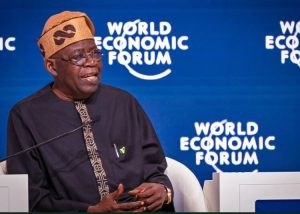
Presidents and foreign policy
Roadblocks to Nigeria’s Participation
To properly appreciate this piece, it is necessary to note the constraints on Nigeria’s historical participation in the UN and other international organisations. There are many; I ask the reader’s indulgence to limit myself to six.
One, the issue of cost. The people who go to UNGA in New York from Nigeria are transported and catered for by the Nigerian State. From experience, most of these people are not in the proper frame of mind for the business of the day; shopping and visits to relations matter more to them. This is not a phenomenon unique to UNGA. The same attitude attends other platforms of conference diplomacy where the wrong Nigerians are taken to them in a jamboree fashion. Emir Sanusi Lamido Sanusi once had cause to berate Nigeria’s delegations to international engagements who may not be found at the venues when their attention is needed most. Despite the ink expended on whether the President should have attended UNGA in person, the reality of the country’s participation, at whatever level, is that the cost is always staggering for Nigeria. Indeed, this issue of cost has led some countries to avoid UNGA meetings. When the cost is juxtaposed with the immediate gains accruing to Nigeria, the gap is so wide as to suggest no correlation exists between them most of the time. Most ordinary Nigerians, battered by the harsh economy at home, care less about Nigeria’s foreign policy as a topic of discussion, let alone the President’s absence in New York for UNGA; it is an elite matter.
Two, preparations for UNGA meetings always leave much to be desired in the Fourth Republic. The Ministry may do its best in this regard, but one cannot say much about the politicians who seem to prioritise the list of attendees at the expense of substance and the value they will add. Ultimately, when persons of lesser quality are called to duty, we should know the outcome: a poor outing.
Third, as of today, the objectives of Nigeria’s foreign policy are too broad, making participation in international organisations lack precise meaning and fail to serve as a good navigation map. For now, that is lacking. Every time, I understand the Ministry of Foreign Affairs prepares papers for politicians, but they treat them less seriously, stemming from the broad foreign policy objectives the country parades.
Fourth, in 1992, Rauf Mustapha angrily observed in an article that Nigeria, as a country, approaches foreign relations from an entitlement mindset: it parades the feeling that it has arrived on the international scene to be adored and worshipped. This wrong assumption has worked against greater achievements in the international system. As the late Mustapha had argued, ‘no country is born great, but all are struggling to attain greatness individually.’
Five, Nigeria’s foreign policy suffers from a disturbing lack of coordination. Attending UNGA requires synergy among government agencies involved in foreign policy and those concerned with UNGA matters. Currently, Nigeria is not among the countries that have institutionalised coordination in their foreign relations.
Sixth, the hand of the late Tafawa Balewa is still evident in the current debate over the usefulness, or otherwise, of Nigeria’s high-profile role in international organisations. Balewa framed our participation as a moderating influence to escape cut-throat rivalry and as a safety belt to safeguard Nigeria’s independence and security in a chaotic world. That frame has been altered but only slightly.
The list of constraints also includes poor funding for foreign policy, poorly articulated foreign policy doctrines, a weak research base due to underfunding, and a disjointed domestic environment, among other factors.
The Nigerian President’s absence from this year’s United Nations General Assembly (UNGA) in New York has generated considerable public concern. While such concern is legitimate, the more fundamental issue is not the President’s physical presence per se, but Nigeria’s substantive presence and the cost-efficiency of that presence. Even the Vice President’s participation has cost implications that public discourse rarely interrogates. Conference diplomacy, by its nature, rarely yields immediate, quantifiable returns that can justify its huge expenditure, especially where planning is deficient, and the imperative of patronage overrides strategic considerations. This, regrettably, has been the pattern in Nigeria, including under the current dispensation.
There is also an emergent cynicism about the utility of the United Nations itself. While such scepticism is understandable, it is misplaced. The UN remains relevant, but its relevance must be interpreted beyond the euphoria of immediate post-independence diplomacy. The international normative order has slackened; power, rather than morality, has become the dominant currency of international politics. The moral restraint associated with the Balewa era appears to have evaporated, giving way to the primacy of raw power. This disorderly international environment, coupled with domestic instability, makes the UN platform strategically relevant to smart states.
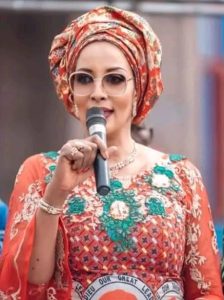
Foreign Affairs Minister, Bianca OJukwu
Nigeria’s Multilateral Footprint: An Inconsistent Pattern
Nigeria’s long-standing engagement with international organisations should have produced a coherent and predictable pattern, one that commands consensus among its citizens and international partners. Occasionally, however, Nigeria tends to play, in football parlance, “over the bar.”
For instance, given its enormous material and diplomatic investments in ECOWAS, Nigeria should not need to be vociferous to be recognised. However, paradoxically, it often has to shout to get things done. Similarly, at the UN, securing seamless outcomes has historically involved considerable stress. At the continental level, Nigeria’s standing within the African Union [AU] is relatively stable, but there is room for improvement. This paper examines how Nigeria can improve its participation in UNGA and, by extension, other international organisations.
UNGA: Nature and Limits
UNGA is one of the UN’s principal organs where the principle of sovereign equality is both preached and, on occasion, practised. It convenes every September; all member states are expected to attend. Each delegation is allocated a fifteen-minute speaking slot and a seat arranged alphabetically.
Beyond its political symbolism, limited economic benefits, and its role in galvanising global responses to pandemics and other transnational concerns, UNGA primarily functions as a facilitator of bilateral and network diplomacy. The Assembly provides a platform for states to network, after which substantive negotiations often revert to bilateralism. Group negotiation is possible, but often occurs outside the full glare of the Assembly. In essence, UNGA is more of a political outing with indirect facilitative potential.
Crucially, whatever resolutions are adopted at UNGA, their implementation depends on the body language of the members of the Security Council (UNSC). The UNSC remains the strategic engine room of the UN system, and its membership remains outside the reach of most member states. Thus, while UNGA is strategic, it is not as powerful as the UNSC. UNGA can be likened to a global talk show where figures such as Gaddafi, Castro, Mugabe and Rawlings eloquently articulated the concerns of the developing world, without fundamentally altering the international system. This helps explain why some world leaders deprioritise attendance when they face more pressing domestic imperatives.
For decades, issues such as UNSC reform and the call for a New International Economic Order [NIEO] have featured prominently on the floor of UNGA, with little significant progress. Leaders have often expressed anger against the West on that floor, yet the West remains dominant. These limitations do not render the platform unimportant; rather, they underscore that strategic outcomes are still largely mediated by Western powers whose defined objective is preserving dominance. The question, then, is why countries like Nigeria should compound domestic economic pressures by attending with unwieldy entourages.
This is not to suggest that UNGA has been useless to Nigeria. Historically, it has not been. Much of the international prestige Nigeria enjoys today was baked in its active participation at UNGA. For example, Nigeria’s principled commitment to the eradication of colonialism and apartheid in Africa found notable expression on the UNGA platform. Repeated interventions by Nigerian Presidents and Heads of State, which highlighted the dangers of these twin evils, attracted global interest and won Nigeria considerable diplomatic capital. Nigeria’s emergence as a leading voice coordinating the Third World agenda in the 1970s and 1980s cannot be divorced from UNGA. The impactful roles of diplomats such as Maitama Sule, Joseph Garba and Ibrahim Gambari in the anti-apartheid struggle largely derived from their effective use of the UNGA platform to ring the alarm bell against that obnoxious policy.
UNGA has also provided a platform to challenge the world’s moral conscience, where its podium has been used to highlight the debilitating effects of external debt on Third World economies. In this context, Castro, Mugabe, Obasanjo and other leaders were notable voices, making it possible for Egypt, in the context of the Gulf War, and later for Cameroon, Nigeria, Ghana and others, to benefit from varying regimes of debt forgiveness and relief.
Nigeria’s voice has never been muted on the lingering case of colonialism. Using the UNGA platform, the country has drawn world attention to the Sahrawi Arab Democratic Republic, SADR, which Morocco has refused to recognise.
Economically, numerous Memoranda of Understanding have been struck on the margins of UNGA. Whether these have translated into concrete, beneficial action plans for Nigeria remains debatable. The absence of diligent follow-up has stalled the implementation of many (MOUs)
Virtually every new Nigerian leader looks forward to attending UNGA for its symbolic value, often regardless of cost. Against this backdrop, how can we ensure more purposeful participation of Nigeria in UNGA?
May be the roadblocks are here
What Nigeria Can Do: Pathways to Improvement
1.Repositioning Foreign Policy in the Governance Architecture: Foreign policy is a strategic instrument deployable for both domestic and external objectives. Nigeria has consistently downplayed its potential, resulting in low dividends.
2.Improving the Quality and Ownership of Nigeria’s Statement: While Nigeria’s statements often electrify the hall, their preparation and delivery require improvement. The vetting process should be enhanced, and the designated speaker must be thoroughly familiar with the content to establish coherence between the speaker and the speech. The statement should reflect Nigerian realities and clearly articulate the country’s direction and policy positions. Sourcing speechwriters from outside the traditional foreign policy establishment undermines institutional memory and continuity.
3.Institutionalising Coordination: Foreign policy implementation involves multiple agencies. A dedicated coordinating centre is needed to ensure a whole-of-government approach that reflects the moment’s mood.
4.Managing the Domestic-Foreign Nexus: The dichotomy between foreign and domestic policy has collapsed; contemporary international relations are cutting-edge and interconnected. Domestic challenges should not act as a pin in the balloon of external pursuits. The recurring spectacle of Nigerians and other nationals staging protests at UNGA venues against the Nigerian state should be proactively managed and discouraged.
5.Consulting Constituencies: Nigeria operates in at least two, if not three, spheres of influence: West Africa, Africa, and the broader Global South. Nigeria should consult these constituencies before UNGA to ensure its statement carries them along.
6.Rationalising Representation: The age-old problem of unwieldy delegations must be addressed. Attending UNGA with girlfriends, boyfriends, unconcerned governors, relations and other persons unconnected to the Assembly creates logistical and coordination challenges and does not befit Nigeria’s status.
7.Pre-UNGA Domestic Preparation: Each UNGA session has an advertised agenda. It is imperative to convene pre-departure inter-agency meetings in Nigeria to review the agenda and assign clear responsibilities to delegates before the New York meeting, to avoid delegates moving in different directions, as is often the case.
8.Streamlining Government Communication: There is a need for seamless communication between headquarters and field officers. Government organs and agencies must coordinate communication flow before engaging global platforms and contests. Streamline candidate nominations for international contests to ensure success and effective representation.
9.Ensuring Follow-up and Implementation: A common complaint is that after the speeches at UNGA, Nigeria’s position on global issues becomes unclear. This stems from a lack of follow-up. The government must institutionalise mechanisms to track and implement UNGA commitments.
10.Re-articulating Foreign Policy Objectives: Nigeria’s foreign policy objectives, as currently articulated, are too broad to serve as a navigational compass. They need precision to be achievable.
11.Leveraging Nationals in International Organisations: The essence of penetrating international organisations is to benefit from advance information to aid national planning. This is not currently the case. Many Nigerians who secure positions in these organisations on their own do not feel obliged to share strategic information with their country, partly because of the Nigerian state’s uncaring attitude and the disjointed nature of Nigeria’s foreign policy.
12.Reconnecting Citizens with Foreign Policy: Nigerians are no longer following the trajectory of their country’s foreign policy. Misgovernance and the failure to recognise the role of domestic legitimacy in foreign policy contribute to this. Reform programmes need to be reviewed to reunite citizens with their government.
13.Comprehensive Review of the Balewa Tradition: There is a need for a comprehensive review of Nigeria’s foreign policy to determine whether the Balewa tradition remains adequate, rather than resorting to incremental and disjointed adjustments. Such a review should define the type of foreign policy agenda Nigeria should pursue and the resources required. If undertaken, it will address the prevailing deficit in domestic and external support. Not everything in modern diplomacy is transactional. This is especially true for Nigeria, given its preoccupation with continental, extra-continental, and diaspora constituencies.
Conclusion
The point here is that several issues have been raised and discussed in this intervention. One of them is that UNGA is not a useless platform. Another is that what matters is Nigeria’s participation in its annual event, not necessarily the President’s presence if he does not feel like attending. The piece also acknowledged the exploits the country has made on the platform. It later turned its attention to what can enhance the country’s participation in UNGA and, invariably, other international organisations. These include adequate preparation for international conferences, effective communication, slim representation, necessary follow-up, and clearly defined goals for participation, among other issues.
Nigeria’s overall external climate is not as bad as people are taking it to be. That is not to dismiss the transactionalism that is overshadowing the initial political objectives that gave it a voice in global affairs.
The other key point is that multilateralism has been a conspicuous principle of Nigeria’s foreign policy that the Balewa administration saw as a safety belt. However, decades later, the nation still wallows in that frame despite major changes in interstate relations. Additionally, succeeding administrations have shown little interest in international relations, to the point of failing to prepare adequately for the game nations play. Nigeria has bought into the concept of manifest leadership without preparing for it. Little wonder that, because of many things it has failed to do to expand its influence, Nigerians who still follow its trajectory in interstate relations have been noticeably disappointed. Adequate preparation, informed by a clear understanding of the foreign policy platform, is an urgent task the country must undertake to reverse the trend.
The author is a University of Ilorin Professor of Political Science