This policy paper is premised on the simple assumption that Africa does not lack peace and security institutions. It lacks sufficient political urgency, operational coherence, predictable financing and consequences to make those institutions work before crises become wars.
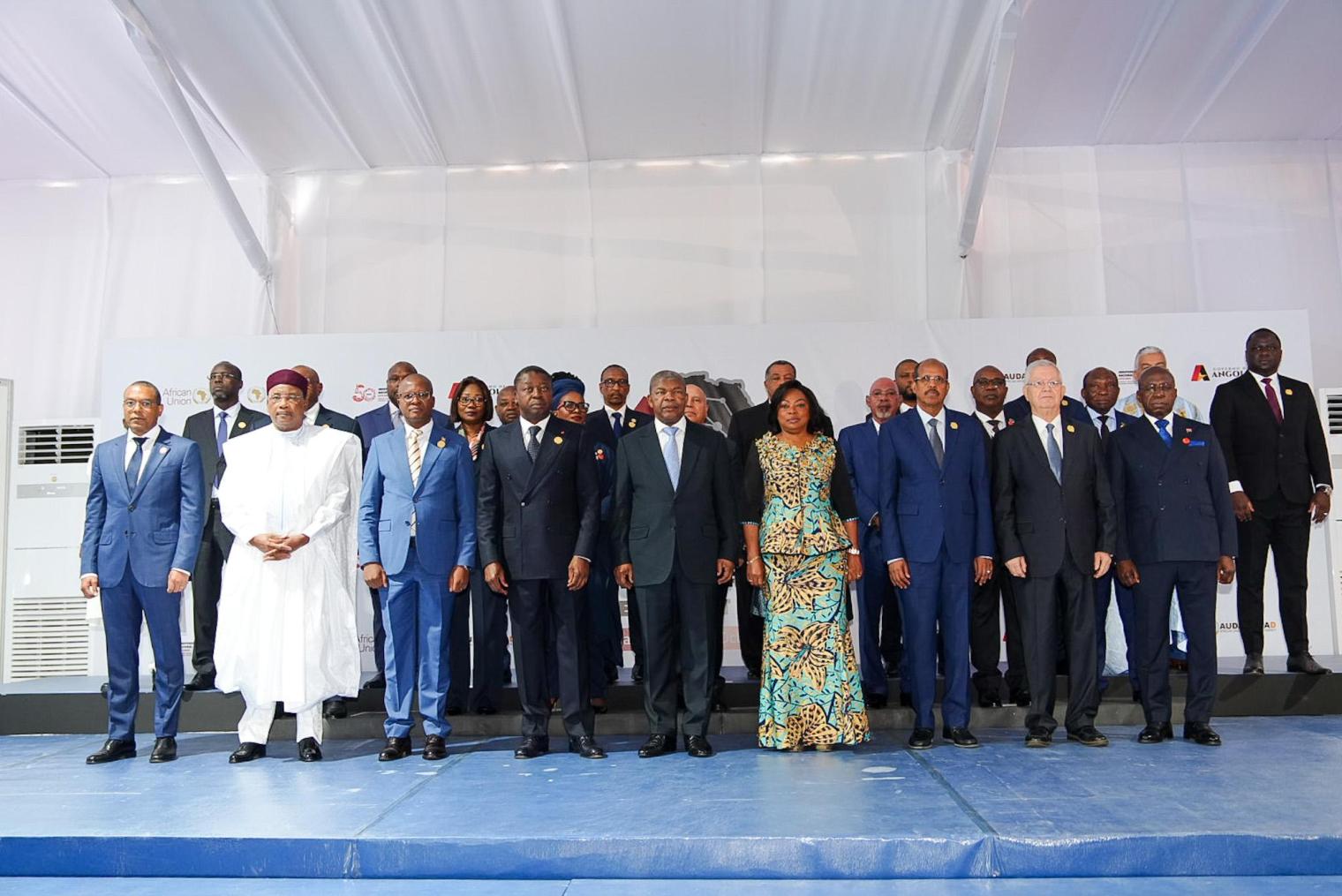
The African Union enters the Luanda Extraordinary Summit with an unusually important opportunity. The Summit, scheduled for 29–30 August 2026, will bring together the Executive Council on 29 August and Heads of State and Government on 30 August to consider the strengthening of Africa’s conflict prevention and resolution mechanisms. The African Union has not yet published a detailed programme and agenda, making this moment particularly suitable for a bold, forward-looking agenda rather than another catalogue of existing commitments.
The central proposition of this paper is simple. Africa must move from a system that detects conflict to a system that acts on risk. The continent already possesses the essential components of a sophisticated peace and security architecture: the Peace and Security Council (PSC), the Continental Early Warning System (CEWS), the Panel of the Wise, the African Standby Force, the Peace Fund, the African Governance Architecture (AGA), the African Peace and Security Architecture (APSA), Regional Economic Communities and Regional Mechanisms (RECs/RMs), and a growing network of mediation and peacebuilding actors. The PSC remains the AU’s standing decision-making organ for the prevention, management and resolution of conflicts.
The Luanda Summit should therefore produce not another declaration of concern, but a Luanda Compact for Conflict Prevention and Resolution built around six aspirations:
Early warning → early action: establish a credible continental trigger mechanism that automatically generates political and preventive-diplomacy options when defined risk thresholds are reached.
Fragmented architecture → one prevention system: integrate APSA, AGA, CEWS, APRM, the Panel of the Wise, RECs/RMs and relevant AU organs into a genuinely interoperable prevention architecture.
Ad hoc mediation → standing African mediation capacity: create rapidly deployable mediation teams, stronger mediation rosters and a continental mediation reserve.
Peace agreements → peace implementation: establish an AU Peace Agreement Implementation and Compliance Mechanism with clear monitoring, accountability and escalation procedures.
External dependence → African peace financing: accelerate capitalization of the AU Peace Fund toward its USD 1 billion target, while developing additional African and blended financing instruments.
Elite peace processes → citizen-owned peace: institutionalize the meaningful participation of women, youth, local communities, traditional authorities, civil society and affected populations.
The choice before African leaders is therefore not whether Africa has mechanisms for conflict prevention. It is whether those mechanisms will be given the authority, resources and political backing to act before the next crisis becomes another protracted war.
The Luanda Test: Can Africa Prevent the Next War?
Africa’s peace and security challenge has entered a new phase. Conflicts are increasingly interconnected. Political crises can rapidly become security crises; local disputes can acquire regional dimensions; governance failures can generate mass mobilization and violence; climate and resource pressures can deepen existing tensions; and unresolved conflicts can create prolonged humanitarian, economic and displacement crises.
The traditional distinction between “conflict prevention,” “conflict management” and “conflict resolution” is consequently becoming less useful. What Africa needs is a conflict prevention-to-resolution continuum in which institutions act continuously rather than waiting for a crisis to cross an artificial threshold.
The AU’s own policy direction points toward this shift. In September 2025, the PSC emphasized the need to strengthen early warning and early response, revamp CEWS, address the problem of denial of credible warnings, and build stronger cooperation among CEWS, RECs/RMs, the Panel of the Wise, APRM and other AU institutions. It also emphasized inclusive governance and the role of women, youth and marginalized groups in preventing conflict.
In August 2026, the PSC went further, noting that prototypes and principles for an AU Model on Trigger Mechanisms for Early Warning and Early Action, together with a Risk and Threat Mapping tool, had been finalized for validation by the PSC and the Luanda Extraordinary Summit.
The Strategic Diagnosis – Africa Has Six Implementation Gaps:
· The warning–action gap: Africa can often identify risks before violence escalates. The problem is converting analysis into political action. Early warning that does not generate early engagement is simply an early description of a future crisis.
· The architecture–coordination gap: Africa possesses multiple institutions with complementary mandates, but coordination remains uneven, in ways that hampers effectiveness and efficiency.
· The mediation–implementation gap: Africa has developed significant mediation expertise, including the Panel of the Wise, FemWise-Africa, WiseYouth and the AU Mediation and Dialogue Division. But a peace agreement is not peace. The critical question after signature is: Who monitors implementation? Who responds when parties violate the agreement? Who finances implementation? Who protects political space for compromise?
· The financing–ambition gap: Africa cannot build strategic autonomy in peace and security while depending overwhelmingly on unpredictable external financing. The AU Peace Fund has made significant progress. As of February 2026, it held approximately USD 400 million, after disbursing about USD 39 million over the preceding two and a half years, while the AU has endorsed expanding its capitalization target to USD 1 billion. This is progress—but the strategic objective should now be to make the Peace Fund a rapid-response instrument, not merely a financial repository.
· The elite–citizen gap: Peace processes are too often negotiated among political elites while the people most affected by violence remain spectators.
The Luanda Agenda – The Need for Six Urgent Transformation Pillars:
Pillar I — Establish an African Early Action Trigger Mechanism: The Summit should endorse and operationalize the AU Model on Trigger Mechanisms for Early Warning and Early Action. The mechanism should identify a limited number of objective triggers—such as escalating political violence, unconstitutional attempts to alter political order, systematic attacks against civilians, breakdown of national dialogue, severe electoral tensions, mass displacement, or rapidly deteriorating intercommunal relations. Once a threshold is reached, the system should automatically trigger a Preventive Action Brief for the PSC Chairperson, AUC Chairperson, relevant REC/RM leadership and other designated actors.
Pillar II — Build One African Prevention Architecture: The AU should adopt the principle of “One Prevention System, Many Institutions.” The objective is not to centralize every function in Addis Ababa. RECs/RMs often possess the greatest political proximity and contextual knowledge. Instead, the AU should establish a clear division of labour at the continental, regional, national, and local levels. The PSC and RECs/RMs have long recognized the principles of subsidiarity, complementarity and comparative advantage. The challenge now is to turn those principles into operational procedures.
Pillar III — Create a Standing African Mediation Surge Capacity: Africa needs to move from “finding a mediator” to “deploying mediation capacity.” The Summit should establish an African Mediation Surge Facility drawing on: the Panel of the Wise; FemWise-Africa; WiseYouth; former heads of state and government; senior African diplomats; constitutional and electoral experts; religious and traditional leaders; women mediators; youth peacebuilders; ceasefire specialists; and technical experts in natural resources, borders, security-sector reform and transitional justice.
Pillar IV — Make Peace Agreements Count: Africa should establish an AU Peace Agreement Implementation and Compliance Mechanism (PAICM). Its mandate should be to track major AU- and regionally supported peace agreements from signature to implementation. Peace agreements should no longer be treated as diplomatic ceremonies. They should be treated as implementation contracts. Most importantly, it should create consequences. When implementation is satisfactory, technical assistance increases, and financing becomes available. When implementation stalls, the PSC receives an escalation report, mediators are re-engaged, and responsible parties are publicly identified where appropriate.
Pillar V — Finance Prevention Before Financing War: The most radical financial principle the Summit could adopt is to the effect that every dollar spent preventing conflict is an investment that reduces the cost of war. The Summit should also endorse a roadmap to reach the Peace Fund’s USD 1 billion capitalization target, alongside stronger African contributions and innovative financing.
Pillar VI — Put Women, Youth and Communities at the Centre: No conflict-prevention architecture can be effective if it sees women and young people only as beneficiaries. They must be recognized as political actors, mediators, negotiators, early-warning providers and peacebuilders. This is not simply an inclusion agenda. It is a conflict-prevention strategy.
Conclusion:
The promise of Agenda 2063 is an integrated, prosperous and peaceful Africa. Its fourth aspiration calls for functional mechanisms for peaceful prevention and resolution of conflicts and a continent capable of securing peace and stability for its citizens.
The question to be asked in Luanda should be whether Africa will continue to treat that ambition as a long-term aspiration—or begin treating it as an immediate political obligation. The continent does not need another architecture on paper. It needs an architecture that moves; it needs early warning that produces early action; it needs mediation that arrives before positions harden; it needs peace agreements that are implemented rather than celebrated; and it needs financing that is available before violence becomes expensive.
Chris Kwaja is a Professor of International Relations and Strategic Studies at the Centre for Peace and Security Studies, Modibbo Adama University, Yola, Nigeria.