By Adagbo Onoja
An event around Dr Yusuf Bala Usman aka YBU took place earlier today (20/09/2) in Zaria, Nigeria. It was already halfway or so before a caller alerted Intervention. It was probably an event restricted to a select group.
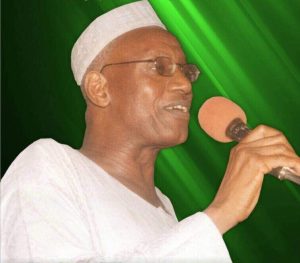
The late Dr Yusuf Bala Usman
 Any event around YBU now is bound to provoke imagination of his standpoint on the ongoing bashing of classical Marxism. He surely would have been at the centre of it because, even by the time of his death, he had started showing ‘deviations’ or innovations, depending on where one stands vis-à-vis him. His case for disaggregating the ruling class in radical tactics is one such contested position peculiar to him. He raises a question worth collective pondering now in questioning the tactical merit of taking on the “ruling class” as a homogenous category at a time of great diffuseness.
Right now, Nigeria is not partaking in the heated debate going on in social theory, much of which is around the axis of Discourse Theory (as distinct from Discourse Analysis) and decoloniality. While those entering into the squabble from decoloniality are striving very hard to marry it to Marxism, those from Discourse Theory took an irreconcilable route away from Marxism. But Laclau and his wife’s book is truly groundbreaking in social reasoning.
At the 25th anniversary of that defining text in Discourse theory – Hegemony and Socialist Strategy: Towards a Radical Democratic Politics at New York University, the moderator said the authors – Ernesto Laclau and Chantal Mouffe – slaughtered sacred cows in the book. At the same event, Robin Blackburn, a former editor of New Left Review wondered about the synthesising power of the book. He was referring to how Laclau and Mouffe brought together the accumulated grumblings against key groundings of Marxism from Lenin to the Frankfurt Scholars, Gramsci, Althusser and the French 7, particularly Jacques Derrida who though rarely attack Marxism but provided the axe with which traducers are cutting down Marxism. Though describing the book to be breathtaking, Blackburn expressed grave doubt about what he called the danger of a “certain idealism in the exaltation of discourse in their (Laclau and Mouffe) methodology”.
There’s no way of knowing now why Blackburn made that statement, given that, in apparent anticipation of the book degenerating into a debate between idealists and materialists, Laclau and Mouffe had stated on page 108 that saying that every reality is a product of discourse has nothing to do with denial of objective reality. In other words, earthquakes or air crashes occur without permission from human beings but an earthquake, for example, could become known as a ‘movement of tectonic plates’ or a manifestation of ‘the wrath of the gods’. It all depends on which set of protagonists assert themselves quicker and better in making any of the two interpretations consensual. After all, don’t we witness prayers for enhanced rainfall in Nigeria to this moment? that is a case of scanty rainfall becoming interpreted as a matter for the intervention of the Almighty rather than the professors of Geography, climatology and so on.
Hegemony And Socialist Strategy is now in its 40th anniversary, having been published in 1985, followed by the Second edition in 2001. The anniversary didn’t pass unnoticed on campuses where Discourse Theory has morphed into the dominant tradition of analysis in Europe, North America and Asia. What we can call ‘the mother of all workshops’ on the 40th anniversary will come up between October 1st – 3rd, 2025 at the Aristotle University of Thessaloniki in Greece. It is a hotbed of Discourse Theory, probably hotter than the Department of Government at the University of Essex in the UK where Laclau was based as a lecturer after migrating from Argentina where he was an activist of Peronism. It is to that university Prof Yannis Stavrakakis relocated after Essex. Prof Judith Butler will be the Keynote speaker at the event where they will be examining, amongst others,
- Rethinking hegemony theory and radical democracy today
- Advancements and limitations of discourse theory in relation to contemporary politics
- Populism beyond Laclau and the Essex School
- Nationalism and patriotism, left and right
- Mainstreaming authoritarianism / right-wing hegemonic strategies and how to respond to them
- Climate change and environmental politics, left and right
- Performative and socio-cultural politics
- The role of new forms of media and technology in relation to political subjectivity and strategy

 Decoloniality, on the other hand, seems the stronger current in Latin America and Africa, especially South Africa. It seems safe to argue that the 2022 Routledge text titled Marxism and Decolonization in the 21st Century: Living Theories and True Ideas. captures the attempt to harmonise Marxism and decoloniality in Africa. edited by Prof Sabelo Ndlovu-Gatsheni and Morgan Ndlovu, that is there to see in nearly every of the 19 chapters.
So, why should all these be a matter of concern in Nigeria? It should because there is a connection between theory and power. Knowledge is productive of power just as every configuration of power ultimately shapes Knowledge in tandem with its logic. It is not for the fun of it that everyone is seeking what China’s theories of International Relations looks like. International Relations has ever since been what Stanley Hoffmann and later Prof Ole Weaver have all called ‘an American social science’. Now, it has to become a China social science too because China is powerful and the discipline has to be able to explain how China behaves as a key player on the global table of power.
That is where the tragedy lies in the current theoretical disconnect in Nigeria. Without a theoretically clear critical mass, nothing can happen. Theory here is not anything esoteric. After all, there’s theory of the everyday.
But it is not all a theoretical void. The good news here is that Intervention is impeccably informed that Prof Jibo Ibrahim is returning to theorising. The last time he moved into that arena, he caused not a little commotion. “History As Iconoclast: Left Stardom and the Debate on Democracy” was a decidedly provocative, ‘post-Marxist’? theoretical castigation of African Marxists of orthodox orientation in the democratic field of play. The ‘elders’ brought out the whips and flogged Jibogram on the pages of CODESRIA Bulletin. Since then, Jibo has turned his gaze into research and advocacy. But Intervention is now authoritatively informed of an impending return of Jibo to theory.
Whichever analytical trajectory he comes in from this time, he will generate the theoretical fireworks that could awaken Nigeria from theoretical slumber and the takeover of the country by vulgarity and philistinism. Democracy has so far been a joke in Nigeria since 1999 because the critical mass has been missing in the event of the destabilisation of the universities as far as the critical enterprise is concerned.
That is a dangerous trend in a world experiencing a geopolitical shift from a quasi- unipolar configuration to a multipolar configuration of power, a process in which discursive power will set the terms through hegemonic articulation. Mastery of Marxism is required but many of Marx’s categories are now tired as far as analysing ‘permacrisis’ is concerned. ‘Permacrisis’, reducible to permanent crisis, is where capitalism is now.
A newer sense of the Zaria School of History is what a YBU would have pursued and put in place by now. If any set of his legatees have done this, then great. If not, then there lies the task!