By Adagbo Onoja
The tribute has been withdrawn but the damage must be acknowledged and apologies tendered to all those who have suffered consequences due to the incorrect information.
Intervention over-relied on a source who himself over relied (or misinterpreted?) hints in a telephone conversation. Now, someone better located in Kano and with excellent access to the family has kindly informed Intervention that Prof Dandatti Abdulkadir is very much alive.
Intervention places a lot of emphasis on stories of death because, even as common as it is, the mystique over it remains. Moreover, there are many whose death is not part of what the mainstream media values but which Intervention takes on board once it knows about it. In all cases, it is more for those philosophical and ideological reasons than wishing anyone dead for whatever reasons.
Intervention may have its own idiosyncrasies just like any platform of this nature but it has not been caught spreading information that is, contextually, incorrect. It is sad it is caught up at last in that and in a case involving someone such as Prof Dandatti Abdulkadir who least deserves mistreatment!
Once again, the error is regrettable. As a ‘compensation’ (if that could be a useful word in this context) the original stuff is reconfigured into a spotlight on a man who may no longer be on the front pages nowadays but who did straddle multiple, significant spaces. It goes as follows:
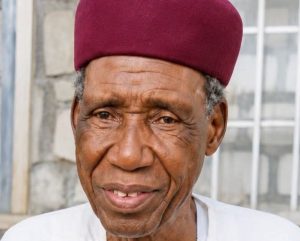
Aged Prof Dandatti Abdulkadir
Prof Dandatti Abdulkadir is an exemplar in straddling multiple spaces. He and fellow scholar, Ibrahim Yaro Yahaya who is been dead since, were highly referenced scholars of folklore and poetry, particularly in the United States. Those who get to read Graham Furniss’s Poetry, prose and popular culture in Hausa, published by Edinburgh University Press will get this point. This may have something to do with his having schooled in the US but just as it must also be about his angle to scholarship.
But Prof Dandatti was also an activist. Again, this straddled student unionism in which he was the first president of the BUK Student Union in the mid-1960s. The activist instinct in him stretched to Chairmanship of the National Committe Against Apartheid (NACAP) as distinct from NAFCA – the Nigeria – ANC Friendship and Cultural Association, (reported in the first version of this text before a reader’s correction alert). Nigeria was then an anti-Apartheid hub.
He was, of course, a former Vice-Chancellor of Bayero University, Kano where he was most known as the VC who would not put on the generator in the Vice-Chancellor’s lodge whenever NEPA went AWOL. His populism dictated against enjoying a facility as electricity if and when students were not.
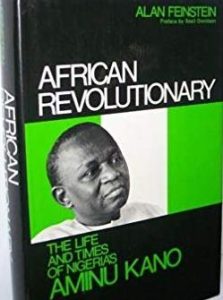
Such attitude in him had nothing to do with showmanship. It was, for him, part of leadership requirement, he being one of the three closest party intellectuals to Mallam Aminu Kano throughout. The two others were Prof Ahmadu Jalingo, the Bayero University Political Scientist and labour activist and Prof M. T. Liman who became the Minister for Education under the late Gen. Sani Abacha.
 The last but not the least of his many spaces of unfolding was diplomacy. Prof Dandatti was Nigeria’s ambassador to Libya under the Obasanjo first term and thus part of the processes leading up to the formation of the African Union, a lot of which took place in Libya, particularly the epochal Sept 9th, 1999 proclamation of the Act in at Sirte, the rural space Gaddafi transformed into a wonderland that could host all African leaders.
Prof Dandatti must have been one of those who deeply felt what happened to Gaddafi subsequently in the hands of NATO because, as ambassador, he experienced Gaddafi at a very close range lot, particularly Gaddaffi’s anti-imperialist praxis.
I cannot recall how I got to meet Prof Dandatti. It must have been through journalism. It happened when I was a mere Diploma student in Mass Communications at Bayero University, Kano. It was when I was torn in terms of which course between English, Mass Communications and Political Science to choose for a first degree which I was not enthusiastic about at all. Prof Dandatti’s intervention made the choice of Political Science easier because of what he said about the Department.
It was also Prof Dandatti who asked me to go and meet Chief Yunus Ellagbaje, a prosperous go-getting Kano-based Idoma businessman. Chief Ellagbaje was an illustrious soul too, always talking about community responsibility, the main reason he never relocated outside the country. The kind of welcome Chief Ellagbaje gave to me when I went to see him makes it clear that Prof Dandatti had spoken to him ahead of my visit.
We met again in Abuja in 1999. It was in a lift at NICON Hilton, now known as Transcorp Hilton. In the lift were then Foreign Affairs Minister, Sule Lamido and all his other aides. Within the few minutes in the lift, Prof Dandatti passed a stunning, over-generous verdict on my person and resourcefulness to the minister. What more could anyone wish for more than such a testimonial from one’s former VC to his minister boss who was also in the NEPU-PRP firmament? This is more so that Prof Dandatti was above sycophancy or any other form of ingratiation for whatever reasons.
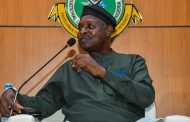
He wasn’t a money man. Money was not the source of power of people such as Prof Dandatti. What you got, other than honest counsel without any element of chuwa-chuwa. As ambassador, what you got from Prof Dandatti if you found yourself in ministerial delegation to Libya (which we did many times because Nigeria was a key force behind the AU process) were the highest quality ‘dara’ cap (the red cap you see on Dandatti’s head in the cover picture).
Prof Dandatti returned to BUK. Although this is what nearly all former VC of that university have done, he added value to that tradition because he could have used the alibi of experiencing Mallam Aminu Kano as well as Muammar Gaddafi, two names that are commonly associated with radical populism, to excuse himself from returning to teaching. But he didn’t. What that means is special homage to what had become his cradle – where he schooled and became student leader, then its VC and thus the ‘natural’ place to return after all said and done.
It is perhaps God’s rewards to him for good works all over that he has lived to a very advanced age. He had lived a great life touching many crucial spheres.