By John Olushola Magbadelo PhD
On 17th August 2026, Prof Haruna Kuje Ayuba, the current VC of Bingham University, Karu, clocked sixty. To mark his 60th birthday, he presented his autobiography titled God Remembered Me: Reflections of a Preacher’s Kid.
This review engages with this work, which chronicles the life journey of a very unassuming, empathic and inspiring leader who, within a short period of his appointment as Vice Chancellor of Bingham University, has transformed the faith-based institution into a prominent citadel of learning, research and scholarship in Nigeria. The background and historical development of such an exemplary leader should naturally be of interest to those aspiring to leadership in the academia and in other spheres of human endeavour. Autobiographies are rich repositories of the hidden stories behind the visible achievements of great men and women. The book under review is no exception.
In the early pages, the reader is greeted with the anchor scripture in Psalm 136, from which the author drew inspiration for both the writing and the title of the book.
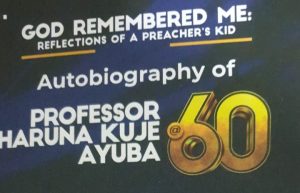
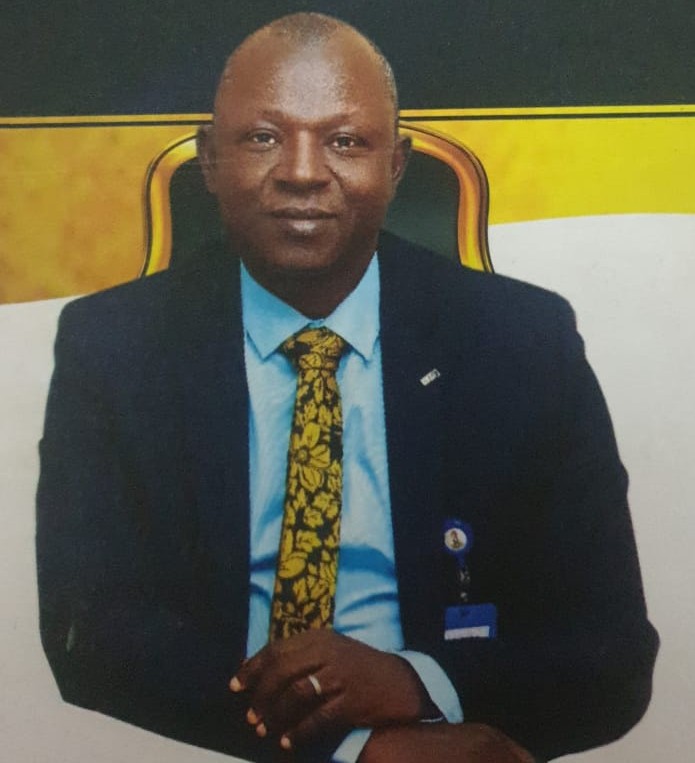
Cropped from the biography cover!
The Foreword by Rev. (Dr.) Job Ayuba Bagat Mallam, President of the Evangelical Church Winning All (ECWA) and Chairman of the Board of Trustees of Bingham University, lends credence to the transformative power of God’s intervention in Professor Ayuba’s life. He describes the book as a beacon of encouragement and inspiration capable of stirring faith and deepening understanding of God’s unwavering love and faithfulness. He also commends Professor Ayuba for the infrastructural transformation of Bingham University and the remarkable development of its academic programmes.
The author’s stated purpose is to inspire those who feel forgotten or overwhelmed by life’s hardships to trust in God’s perfect timing for remembrance and divine transformation.
The book comprises seventeen chapters and a gallery of photographs. Structurally, it can be divided into five parts: genealogical antecedents and roots; early life, socialization and exposure to tertiary education; work life experiences at the University of Maiduguri (UNIMAID), University of Nigeria, Nsukka (NSUK) and Bingham University (BHU); and other life experiences and lessons.
In the first part, the author presents the historical, political and economic records of Maha, his ancestral homeland, noting its geographical setting, patriarchal family structures, the chieftaincy institution and the over 32-year tussle for the stool following the passing of Kigbo Ezza in 1987, as well as his own role in facilitating its peaceful resolution by HRM Lawrence Sylvester Ayih in 2020 (pp.1-10). His extended family ties from both paternal and maternal sides – being of the Edgo and Azhi clans, the two sides in the dispute – positioned him to play that mediatory role effectively. The Sudan Interior Mission (SIM), which came to Nigeria in 1893, did not reach Maha until 1956 – the year the author’s parents and three others were converted to Christianity and subsequently exposed to intensive discipleship training. According to the author, many souls were won for Christ in Maha and its environs within a short period through the evangelical zeal of the five converts (G-5), facilitated by the African Missionary Society (AMS) of SIM and the Evangelical Missionary Society (EMS) of ECWA. Commending the impactful evangelical strategy of AMS and EMS, the author avers that it turned Maha into a beacon of light and hope, expanding the frontiers of Christianity from the little Maha ECWA Church built in 1956 to several churches under the Local Church Council by 1966 (pp.15-21).
The mystery of the conversion of the author’s parents on the same day, when they were still separate individuals who had neither contemplated nor consummated a marriage plan, is presented as a divine arrangement orchestrated to ensure, at a later date, the procreation of godly offspring from their union in 1960. The author, the third child of Rev. Ayuba Kuzhe and Mrs. Assibi Ayuba Kuzhe (née Kigbo Ezza), describes the union as God’s birthing of a direction for generations to come. He gives a brief account of the missionary labours of George M. Foxall, who wedded his parents. Both George and his wife Ruth served the people in diverse ways, including teaching at the Hausa Language Bible School and the English Language Christian Training Institute for church leaders, managing a 250-patient daily outpatient department, training health workers, conducting minor surgeries and caring for over 2,000 leprosy patients in nearby villages. The author’s parents also acquired basic education in Bible knowledge under SIM missionaries in Maha and subsequently funded their own education at the ECWA Bible Training School in Kaduna State from 1961. This decision imposed great discomfort and financial burden, but they persevered and graduated in 1964. Again in 1981, they attended the Advanced Bible School, Zalanga, Bauchi State, graduating in 1982 (pp.22-35).
The ordination of the author’s father as a licensed ECWA Pastor in 1979 conformed to ECWA’s policy of licensing and ordaining only men. In 1990, he enrolled for a Diploma course at ECWA Theological Seminary, Kagoro, and was later ordained Reverend in 1993. Rev. Ayuba’s ministry was impactful, spanning mission fields in the Federal Capital Territory, Benue and Nasarawa States, before his retirement in 2004 after forty years of ministry.
The second part covers the author’s early life. Born under the close guidance of Bible-school-trained parents, he recalls the challenges they faced in raising him and his siblings – lack of health and basic social amenities, cultural pressures, and the civil war that broke out in 1967, a year after his birth. Growing up at Angwan Maikyau, Arusu and Maha, he imbibed such values as community and solidarity, simplicity and contentment, resilience, self-reliance, respect for traditions and culture, connection to nature, patience, hard work, the importance of education, adaptability, respect for elders and authority, and sustainable living (pp.36-44).
At age seven, he began primary school in Keffi, as there was no school in Maha at the time. The school was culturally, linguistically, religiously, ethnically and socio-economically diverse. He and his older brother lived with Baba and Mama James Abele in Keffi – a pragmatic arrangement by his father to avoid daily commuting from Maha. He completed primary education in 1979, having passed the Common Entrance Examination for secondary school admission at Uke. He commends the headmaster and teachers for their role in shaping his academic career, acknowledging their dedication, cultural awareness, discipline, patience, compassion, resourcefulness and community involvement. He devotes a section to paying tribute to Baba and Mama James Abele, “who, in the face of scarcity, sacrificed so much to ensure that the children who lived under their roof received the education and care they needed” (pp.45-60).
At Government Secondary School, Uke, his educational and moral foundations were shaped. The school had committed teachers from India, Ghana, Cameroon and different parts of Nigeria. Although its curriculum was comprehensive, it lacked Chemistry and Physics laboratories, which prevented students from registering for those subjects in the GCE. Nevertheless, the author distinguished himself, winning prizes in Mathematics, Statistics, English, Economics, Biology, Chemistry, Government, Geography and Hausa. He commends the teachers for their sacrifices and for imparting knowledge and values (pp.61-69).
The uncertainties of his post-secondary period took him to Kaduna, where he lived briefly with his older brother David, did menial jobs and learnt to play acoustic and bass guitar. After a few months, he returned to Maha to help his parents’ farm. While there, he gained admission to Bayero University (pp.70-76).
 The third part covers his tertiary education. Admission to BUK came with huge financial demands which his parents and older brother collectively shouldered. After the one-year School of General Studies, he opted for single honours in Geography. He won both a university scholarship and the Plateau State Scholarship, which eased his financial burden. Throughout his four-year stay, he was driven by unusual passion and intellectual curiosity. His experience was a blend of academic pursuit, vibrant spiritual life and modest social life. A stormy incident tested his faith: the misinterpretation by Muslim students of a pictorial figure of a warrior clad in armour in his fellowship magazine – an illustration of St. Paul’s admonition in Ephesians 6:11-13 – as incitement to violence. Protests led to the suspension of twenty-four fellowship leaders, including the author, for three months (pp.77-106).
He recounts his posting to Borno State for the compulsory NYSC year as a product of divine favour. He details the roles played by individuals who facilitated his deployment to the Department of Geography, UNIMAID. He served diligently, readily mentored by senior staff, and was active in the Borno State Christian Corpers’ Fellowship (BOCCF). He appreciates those who made his service year pleasant, including Mr. & Mrs. Ibrahim Sara Bangalu, Bishop David Abioye, Mr. Jacob Abdalla and Professor G. G. R. Thambyahpillay.
Having impressed Professor Thambyahpillay, Head of Geography at UNIMAID, he was encouraged to apply for Graduate Assistantship, which he secured weeks after NYSC. Nine months later, he gained admission for his Master’s at the University of Ibadan. At UI, he was exposed to an atmosphere that fostered critical thinking and intellectual growth, supervised and mentored academically and spiritually by Professor A. O. Aweto. For spiritual nourishment, he attended The Glory Tabernacle near his Agbowo residence. He was among four out of twenty-two students who scored 60% and above to qualify for doctoral studies (pp.107-124).
On his return to UNIMAID after his Master’s in 1992, prolonged industrial action by university unions disrupted academic activities. The challenging period led him to return to Ibadan in 1994 for his doctorate. This was facilitated by a study fellowship from the Centre for Arid Zone Studies (CAZS), UNIMAID, and a generous cash gift of Ten Thousand Naira from Neil Pratt of Silsoe College, UK, then on research at CAZS.
The doctoral programme was challenging due to extensive fieldwork, but he surmounted it through subject mastery, funding support, the gracious guidance of his supervisor Professor Aweto, and helpful comments from Professors Areola and Gbadegesin.
Upon completion of his Ph.D. in June 1998 at Ibadan, he returned to UNIMAID to take on more senior responsibilities in teaching, research, departmental duties and university administration. He rose from Lecturer II to full Professor in 2007. For public enlightenment, he outlines requirements for progression from Graduate Assistant to Professorial cadre.
In addition to academic degrees, he attended various international professional training programmes that equipped him with skills in higher education governance, leadership, mentorship, grantsmanship, quality assurance, conflict management, financial management and accreditation.
He has contributed to national development as a resource person to the Federal Ministry of Environment and has played key roles in implementing the climate change component of the Nigeria Erosion and Watershed Management Project (NEWMAP) and the Agro-Climatic Resilience in Semi-Arid Lands (ACReSAL) project. He has been part of Nigeria’s delegation to the United Nations Conference of Parties on Climate Change since 2012. He has held leadership positions at departmental, faculty, Senate, university management and Governing Council levels, and remains active in several local, national and international organisations. He has been a life member of the Bible Society of Nigeria since 2012 (pp.125-155).
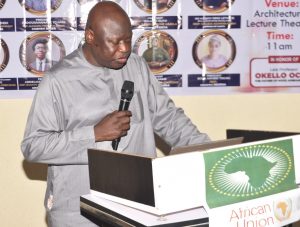
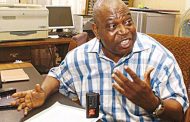
The reviewer in a file picture
The fourth part narrates important personal events, including his marriage. He recounts how his initial hasty proposal to Miss Iya Gyani, during preparations for his younger brother’s wedding, was politely rejected, prompting his return to Maiduguri to focus on academics. Five weeks later, the lady reconsidered and accepted. The message was sent to him in Maiduguri. The marriage was consummated on 5th October 2002 and is blessed with two daughters, Tehillah and Roni (pp.156-168).
On his spiritual journey, his parents, being ECWA ministers, instilled faithfulness, discipline and dedication to service. Loyalty to ECWA is another value he inherited. Since 2016, he has been publishing commentaries on topical Biblical subjects in a series titled Gleanings, distributed free of charge (pp.169-176).
His final relocation from Maiduguri to Nasarawa State in 2016 was informed by his father’s death in 2014, the need to be close to his mother and family, and rising insecurity in the Northeast. The Vice Chancellor of UNIMAID reluctantly approved his secondment to Nasarawa State University (NSUK). He had earlier done his sabbatical at NSUK in 2012, during which he helped secure NUC accreditation for the Department of Geography (pp.177-184).
When preparation meets opportunity, a miracle is birthed. This was the case with his appointment as Vice Chancellor of Bingham University on 8th January 2024. He had prepared his Curriculum Vitae four years earlier in anticipation. He emerged as preferred candidate after a rigorous selection process. In his maiden address entitled “Taking Bingham University into the Future through Value Addition”, he outlined twelve strategies for actualizing the Value Addition Action Plan (2024-2029). In just over two years, Bingham University has recorded significant milestones: out of thirty high-impact capital projects, twenty-eight have been completed while two are nearing completion (pp.185-206).
The fifth part chronicles life experiences and lessons: his mother’s prolonged labour that could have resulted in stillbirth; the civil war a year after his birth; his challenging childhood in Angwan Maikyau, Arusu and Maha; scarcity and deprivation in pursuit of education and career; health challenges; robbery and burglary incidents with huge losses; and the violent attack on his family compound by six armed men leading to his kidnap on 8th October 2023. These experiences taught him lessons about God’s faithfulness, reinforcing his belief in divine guidance and protection. He concludes with a chapter titled “It’s All about God’s Grace and Faithfulness”, noting that God’s hand has been with him every step of his sixty-year journey (pp.222-225). The final pages contain photographs of the author, parents, family, friends and associates at different stages of life (pp.226-246).
Overall, this book is a treatise on the pursuit of vision anchored on God’s unfailing help, grace and faithfulness. Through sixty years, the author demonstrated unwavering faith in God and in the sanctity of personal ambition which no difficulty or opposition could derail. As a man of faith, he exercised his authority as a believer to confront challenges at different phases. His parental guidance paid off; as a preacher’s kid, he resolved to be an exemplar of Christian conduct and virtues. The book is inspirational and capable of spurring positive action. I commend the author’s sincerity and honesty in recounting his humble beginnings without embellishment. He tells his life story with clarity and uprightness. This is the first edition of his memoir, and one expects more to be incorporated into subsequent editions, as the author’s journey continues. I, therefore, recommend the book to all categories of readers – students, adults, parents, teachers, Christian leaders, counsellors, government officials, university administrators and those aspiring to leadership. There is a message for everyone in the biography published by Bar and Bench Publishers Ltd, Abuja, Nigeria.
The author is of the Ambassador Bulus Lolo Centre for Diplomacy, Conflict, Peace and Plural Studies, Bingham University, New Karu, Nasarawa State. He is reachable via ablc@binghauni.edu.ng