By Fred Akpowo Jacob
No people can know where they are going unless they remember where they have been. No civilization can inspire its children to greatness unless it first preserves the stories of those who achieved it. The Idoma nation, rich in culture and abundant in talent, has for too long allowed its heroes to pass into eternity without the formal recognition they deserve. The Idoma Hall of Fame emerges against this backdrop, not as a fleeting ceremony or social jamboree, but as a sacred institutional framework dedicated to the perpetual celebration of excellence.
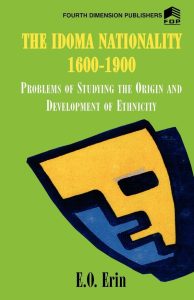 The Idoma people are not a footnote in Nigerian history. Our origins trace back through centuries of migration, settlement, and civilization. From the ancient movements from Kwararafa, through the establishment of our distinct communities, to the fierce resistance against colonial pacification campaigns—including the legendary Ogbuloko rebellion that shook British authority—the Idoma story is one of resilience, courage, and enduring spirit.
Yet for too long, this story has been told by others. Colonial administrators documented our “pacification” as though we were a problem to be solved rather than a people to be understood. Post-colonial historiography often marginalized our contributions. Even today, the Idoma narrative remains underrepresented in national discourse.
The Idoma Hall of Fame is a corrective to this historical amnesia. It is a declaration that we will tell our own story, celebrate our own heroes, and preserve our own legacy.
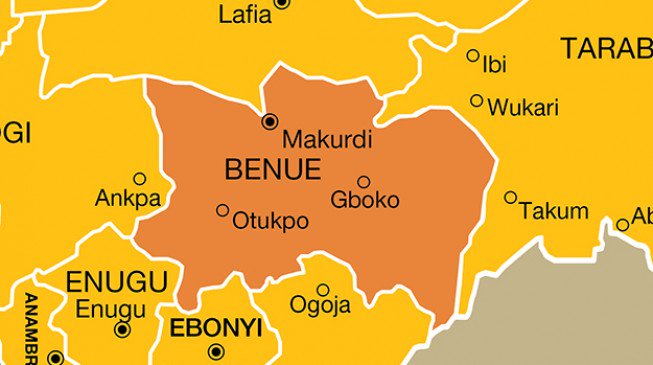
Consider the generation of Idoma pioneers who broke barriers and opened doors. And there are the countless Idoma educators, soldiers, civil servants, entrepreneurs, artists, and community leaders who have contributed to the building of Benue State and Nigeria itself.
 Where are their monuments? Where are their archives? Where is the institutional memory that ensures their sacrifices are not forgotten? The Idoma Hall of Fame answers these questions.
By formally inducting exceptional Idoma figures, the Hall of Fame ensures that the Idoma contribution to Nigerian civilization is visible, documented, and celebrated at the highest levels. When an Idoma child sees a Hall of Fame celebrating Idoma scientists, artists, soldiers, and scholars, they learn that greatness is not the exclusive preserve of any ethnic group. They learn that their heritage is one of achievement. A robust Idoma Hall of Fame also invites other ethnic nationalities to establish or strengthen their own halls of fame, creating a national ecosystem of celebration where each group honors its heroes while respecting the heroes of others. And the Hall of Fame becomes an archive—a repository of biographies, photographs, artifacts, and oral histories that future generations of scholars can access.
The Idoma Hall of Fame is not a one-day jamboree. It is not an all-comers affair. It is not a social event designed to entertain or to distribute honors carelessly.

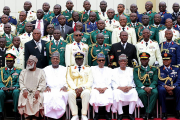
Senator Ameh Ebute, former Senate president
From the benefit of hindsight, the hall of fame is an institution. It has a governing council of historians, community leaders, and distinguished Idoma citizens who set criteria and oversee the process. It operates on rigorous selection criteria based on verifiable achievement, impact, and character. It holds an annual induction ceremony that becomes a fixed date in the Idoma calendar—a time of solemn reflection and joyful celebration. It maintains a permanent physical or digital archive where inductees are permanently enshrined. It runs a research and documentation unit that continuously gathers information on potential inductees. And it operates a youth engagement program that uses inductees’ stories to inspire the next generation.
This institutional character transforms the Hall of Fame from a transient event into a permanent feature of Idoma civilization. Critically, the Idoma Hall of Fame is not a closed door. It is not a one-time event that exhausts its list of honorees. It is an annual institution, meaning that those not inducted this year may be inducted next year. New achievements by living Idoma people can qualify them for future induction. Historical research may uncover figures previously overlooked. Each generation will produce new heroes deserving of recognition.

Two former deputy-governors of Idoma extraction, Chief Stephen Lawani and Engineer Benson Abounu
This is the beauty of an institutional framework: it endures beyond any single ceremony, any single administration, any single generation. The Hall of Fame belongs not to one committee but to the Idoma nation itself—perpetual, evolving, and eternal.
Some may ask whether this is just another social club. It is not. A social club serves its members’ interests. The Idoma Hall of Fame serves the Idoma nation’s interest in historical preservation, cultural pride, and youth inspiration. It is governed by transparent criteria, documented processes, and a mission that transcends social networking.
Others may ask why we should honor people who are already famous. But fame is not the same as formal recognition. Many Idoma achievers are known within their professional circles or local communities but remain unknown to the broader Idoma nation. The Hall of Fame elevates private achievement to public celebration. It transforms individual success into collective pride.
Some may fear this is divisive in a multi-ethnic nation. The opposite is true. Celebrating Idoma excellence does not diminish other ethnic groups. It contributes to a richer national tapestry. When every ethnic group honors its heroes, Nigeria becomes a nation of proud peoples, not a nation of resentful minorities.
And some may ask why we cannot simply write books and articles. Books and articles are essential, but they are not sufficient. The Hall of Fame is a living institution that engages the community, inspires the youth, and creates lasting monuments. It combines scholarship with ceremony, documentation with celebration, history with hope.
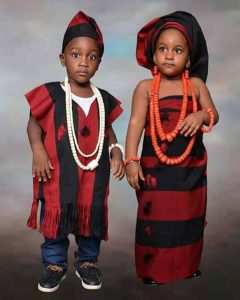
Perhaps, some future Senate presidents of Idoma identity
The Idoma Hall of Fame is not the property of any political party, any religious organization, or any single individual. It belongs to all Idoma people—at home and in the diaspora.
It requires financial support to establish and maintain the archive, the annual ceremony, and the research unit. It requires intellectual contribution from historians, biographers, and researchers to document potential inductees. It requires community engagement from families, communities, and organizations to nominate deserving candidates. And it requires youth participation, so that young Idoma people may learn from inductees, carry forward the legacy, and aspire to be inducted one day.
Eminent historian, Prof Vincent Garba O’kwu wrote that the Idoma people are a people of ancient heritage, of complex identity, of enduring spirit. The Idoma Hall of Fame is the institutional expression of that spirit. It declares to the world: We were here. We achieved. We remember. And it declares to our children: You come from greatness. You are capable of greatness. You will be remembered.
This is not a one-day jamboree. This is an eternal institution. This is not an all-comers affair. This is a sacred trust. This is not a closed door. This is an open invitation to every Idoma person, living or dead, to be remembered, honored, and celebrated.
Kudos to Engr. Agaba, the Initiator, Prof. Yakubu Ochefu and all the organizers of the Idoma Hall of Fame. Though the maiden induction may not be devoid of mistakes, the right path is now framed for institutional reawakening and rebirth of the Idoma nation.
Long live the Idoma Hall of Fame. Long live the Idoma nation. Long live Nigeria.