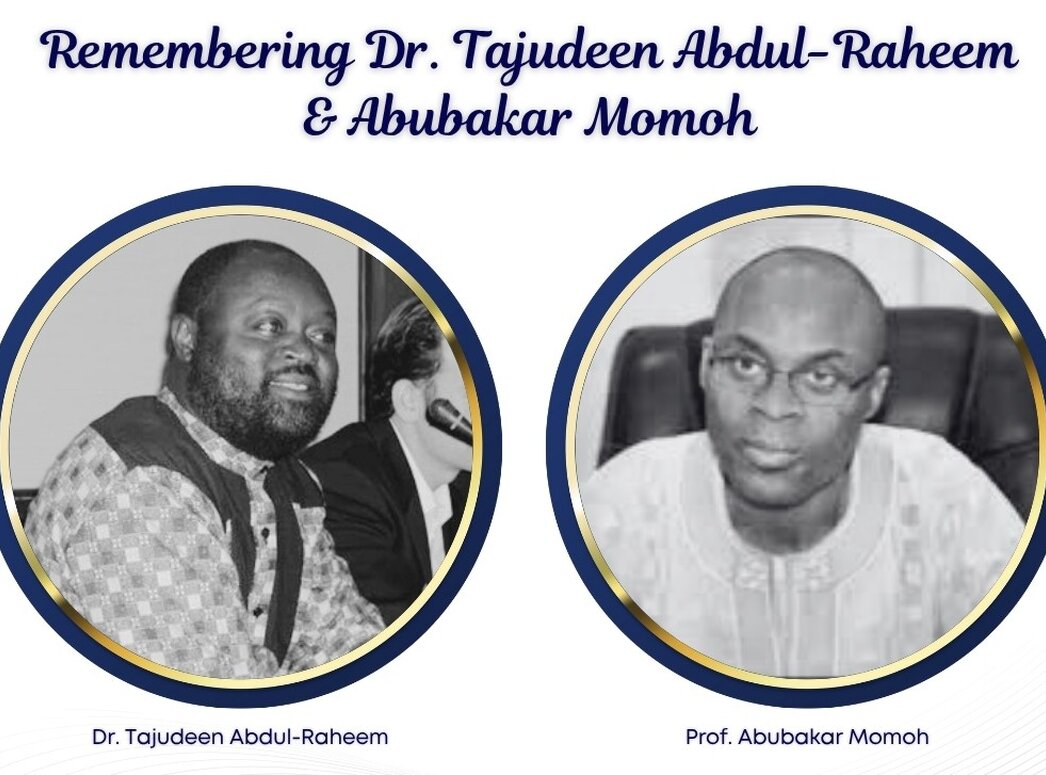
For over four hours on Tuesday, June 30th, 2026, the world stood still for two late Nigerian activists – Tajudeen Abdul-Raheem and Abubakar Momoh – in an annual ritual of homage to their ideological and activist individuality in the struggle for democracy in Nigeria. Tajudeen, an Oxford educated Nigerian political scientist died on May 25th, 2009 officially in a car crash in Nairobi, Kenya while Abubakar Momoh, a former Dean of the Faculty of Social Sciences at Lagos State University (LASU) who had lectured around the world died on May 29th 2017. He was the DG of The Electoral Institute (TEI), the research arm of the Independent National Electoral Commission (INEC).
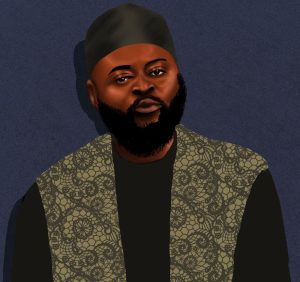
A cropped pix of the late Dr Tajudeen AbdulRaheem
The event put together by the Centre for Democracy and Development (CDD – West Africa) featured tributes to both departed scholar-activists. Most memorable was the tribute from the family of Dr Tajudeen as conveyed by Amina Abdul-raheem on behalf of Tajudeen’s two daughters and the rest of the family. Amina declared the family’s deep comfort from how, 17 years after his demise, his life, services and contributions were still the subject of commemoration by CDD, colleagues and comrades.
It is possible that Intervention missed a tribute from the family of Prof Momoh in one of the several internet reception crises but Amina also paid glowing tributes to Momoh before wishing for the survival of the legacy of the twosome.
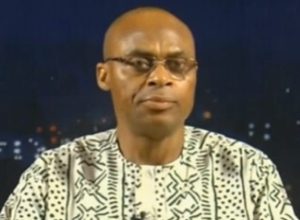
The late Prof Abubakar Momoh
Prof Sam Egwu, the UNIJOS political scientist who delivered the lecture on “From Promise to Paralysis: Political Parties and Challenges of Democratic Consolidation in Nigeria” said Taju and Momoh shared a common political identity in relation to social justice and a democratic society. This was his preface to the lecture in which, amongst others, Prof Egwu argues that there is a problem with the presidential system of government.
Although he made it clear he was not necessarily canvassing for a return to parliamentary or any other system, his argument is that the presidential system defines the limits of democracy. Presidential system is difficult he said before further asserting how the preferred electoral system in Nigeria – first past the post – complicates the difficulty although Intervention didn’t get how he explained the linkage.
Prof Egwu’s paper is the sort of stuff party headquarters, caucuses, candidates, aspiring leaders and other stakeholders of the party system will benefit from reading and holding strategy sessions on, Egwu not being a partisan voice but an intellectual of statecraft in election management.
As usual, goodwill messages, a pan-African performance and a panel session defined today’s event.