By Sanusi A. S. Maikudi
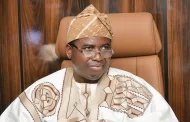
The recent appointment of Major General Adeyinka A. Famadewa (Rtd) as Special Adviser to the President on Homeland Security by His Excellency, President Bola Ahmed Tinubu, GCFR, has generated wide-ranging commentary on its motives, functions, and broader implications for Nigeria’s already overstretched security ecosystem.
This development comes only months after the President declared a State of Emergency on National Security, a move that publicly acknowledged the severity and widening complexity of Nigeria’s insecurity crisis. That declaration raised national expectations of urgent, coordinated, and transformational intervention across the entire security value chain. Yet, for many citizens, the promised sense of emergency-driven resolution has not translated into a visibly decisive shift in outcomes.
The new appointment therefore fits into a broader sequence of institutional adjustments within the security sector. These include earlier leadership changes in the defence architecture, notably the removal of the then Minister of Defence, Abubakar Badaru, and the appointment of retired Chief of Defence Staff, General Christopher G. Musa, whose national reputation and cross-regional respect were widely seen as an effort to restore confidence and operational credibility within the system.
Yet despite these changes—and notwithstanding the declared national security emergency—Nigeria’s internal security landscape remains deeply fragile. Across many parts of the country, citizens continue to live under persistent threats of banditry, insurgency, kidnapping, and communal violence. In several regions, daily life still reflects the grim Hobbesian reality of a condition that is, for too many, “nasty, brutish, and short.”
At the international level, Nigeria’s security crisis has also acquired a troubling reputational dimension. Narratives of religious persecution and allegations of targeted violence have gained increased traction in global discourse, fueling diplomatic tensions and raising concerns about external perceptions of Nigeria’s internal stability. Whether fully accurate or politically amplified, these narratives underscore the urgency of restoring both domestic security and international confidence.
Meanwhile, the political environment is steadily heating up as the country moves toward the 2027 general elections. The rise of opposition coalitions, ongoing disputes over electoral reforms, allegations of institutional bias, and deepening public mistrust of democratic processes have combined to create a highly polarised national atmosphere.
Compounding this is the inconsistency in political messaging from the presidency. At one point, President Tinubu offered what many interpreted as a conciliatory acknowledgment of public dissatisfaction during the signing of the revised Electoral Act. Yet, this was soon followed by a sharp rebuttal of critics, suggesting they needed “special glasses” to properly see the administration’s achievements. Such contradictions continue to weaken public confidence and fuel political cynicism.
As a result, Nigeria’s political temperature continues to rise, dividing citizens into two broad camps: those who believe the administration is on course and deserves a renewed mandate in 2027, and those who argue that it has underperformed, particularly in the critical areas of security, electricity supply, and economic stability.
It is within this already tense and emergency-framed context that the newly created Office of the Special Adviser on Homeland Security under Major General Adeyinka A. Famadewa (Rtd) must be assessed. It should not be viewed as a ceremonial or political addition, but as a functional instrument of national survival.
Nigeria’s Constitution is clear: the protection of lives and property remains the primary purpose of government. On this fundamental duty, successive administrations and institutions have continued to fall short in measurable and unacceptable ways. The current reality demands far more than symbolic appointments, institutional reshuffling, or administrative layering.
The new office must therefore be guided by a clear, measurable, and time-bound mandate defined in SMART terms—Specific, Measurable, Achievable, Relevant, and Time-bound. Within six to twelve months, Nigerians must be able to observe tangible improvements in inter-agency coordination, intelligence effectiveness, rapid response capability, and overall security outcomes across affected regions. Anything less would raise legitimate questions about necessity, efficiency, and institutional duplication.
This is not about undermining the Office of the National Security Adviser under Mallam Nuhu Ribadu, nor is it about speculative narratives surrounding political hierarchy or succession within the security architecture. Those interpretations belong to the realm of political conjecture. The central issue is effectiveness, coherence, and measurable impact.
What Nigerians urgently need is not an expansion of titles or offices, but a demonstrable improvement in security outcomes. Anything short of this amounts to what can only be described as motion without movement—activity without impact, structure without results, and reform without transformation.
If the new advisory office contributes meaningfully to reversing the current security decline, it will be welcomed as a necessary intervention within a declared emergency framework. If it does not, it risks becoming yet another symbol of bureaucratic expansion without performance—further deepening public frustration as the 2027 elections approach.
Ultimately, Nigerians deserve more than reorganised structures and expanded bureaucracies. They deserve safety, stability, and the restoration of trust in the state’s most fundamental responsibility.
The author, a Fellow of the Nigerian Institute of Management (FNIM) is of the Network for Justice, Kaduna in Nigeria