By Adagbo Onoja
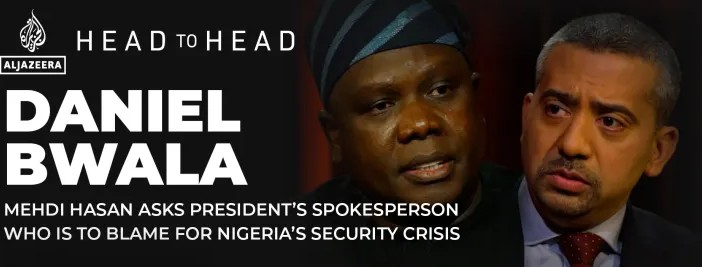
Barrister Daniel Bwala, Presidential adviser on policy communications, is still angrily reacting to the over-lexicalisation of his March 6th, 2026 appearance on Aljazeera. Aside from an initial press statement in which he was suggesting Aljazeera went out of the radius of subject matter coverage in the interview (a statement he ought not to have made), he has issued another, hinting legal action should the station fail to apologise for what Bwala claims to be surreptitious editing of the encounter. At this point, it becomes necessary to advise Bwala to bend backward on himself and re-learn quickly. Threatening Aljazeera with litigation is certainly not the way to go. It is an interesting, understandable move obviously provoked by the traumatic nature of the experience a typically over-confident and careless political office holder in Nigeria never expected to be his or her lot. Unfortunately, it happened.
 And happened, tragically, to a far better prepared Bwala, educationally and exposure wise. It isn’t the unpreparedness that I think Farooq Kperogi attributed the mismatch that played out between the interviewer and interviewee in this case. It is the over-confidence and the resulting carelessness of the Nigerian operative of power. Instructively, Bwala alluded to his ‘ever-ready’ self-scoring as an interview guest any day. The hint in that sentence in his first reaction to the Facebook feast on his productive failure is that he had no situated reading of Aljazeera; he never located Mehdi Hassan (his education, his multiple nationalities, his circuits and the logic of that programme) and he never took note of the intertextual character of questions, generally. In other words, he went to the recording with a very stiff, self-contained sense of the radius of coverage of the questions. So, when the questions started coming outside of the radius he mapped, he could not answer them, particularly about the appointment of ex-governor Bagudu or his own numerous statements on key events and individuals in the past. He tried to seek refuge in contextual analysis. That was brilliant but he could not pursue it to the level where he would have disarmed Mehdi. As a high level player, he could have easily wriggled out and brilliantly by reaching for the many inexplicable or contingent grounding of decision making in Nigeria and take the issue beyond Mehdi’s horizon of understanding. Without doing so, he made himself vulnerable to being labelled as an unscrupulous fellow who had no ethical qualms, especially as it related to previous statements he made in different circumstances. Reference to context could not save him because context is not an objective thing standing there for everyone to see. It is a subjective thing.
But the interview is now in the past. Now, it is time to endure the post-interview nightmare. A minority from Borno State of Nigeria with good education, an aristocratic profession like law and who has, at a relatively young age, not only made a national name but circulated in the camp of two of the most dominant political actors in contemporary Nigeria does not need to get himself trapped in litigation against a major media house. Whatever may be the image of Atiku Abubakar and Bola Tinubu, experience of having worked with them at close range could, somehow, still come handy for Bwala in Nigeria’s radically zig-zag journey to transformation. If it could, then the need for even more caution in reacting to the roasting on Facebook that seems to be pushing Bwala to overreach himself over the interview. It seems safe to suggest that the roasting is nothing but the unfolding of the indirect strategy by which Nigerians fight their succession of unpopular leaders. Too divided along regional, religious and other fault lines and thus incapable of disciplining the Tinubu leadership itself, the people have been waiting for an opportunity for any of his lieutenants to get into the sort of mess Bwala got into and use it to unfold collective frustration.
To the extent that there is no truth beyond what the majority holds to be true, there are grounds for Bwala to worry about the reception of the interview in Nigeria. Still, the heterogeneity of ideological currents and fluidity of perception in the public sphere compels thinking through it all. Addressing the concerns of this public sphere does not require actions with potentially unrewarding outcomes in the future, such as litigation against a media house that gave this appointee its airwave to speak to the entire world. A more promising strategy is to use the moment for reflection. Now is the time to reflect on important questions such as whether Bwala hasn’t moved around too quickly. And whether he hasn’t always been putting his principal at the centre of his image making instead of their value framework.
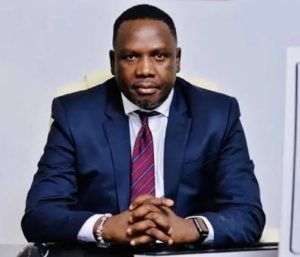
Barr Bwala
An image maker needs such an intervening variable or runs the risk of exhausting him or herself before knowing what is happening. This is because it is such an intervening variable that is deployed to produce a shining image of a principal, not any conceptual nonsense called performance about which there can never be a consensus. Of course, there is a limit to which a media adviser can succeed in remaking a president, a governor or a CEO but an intervening value frame makes elevated abstraction of the agency of the president or governor or whatever office holder much easier. Without first locating and affixing such a variable on the president beyond the plastic slogan of ‘renewed hope’, the Aljazeera interview mismatch was bound to happen. This is the problem with accepting image maker’s job offers in Nigeria today because the whole thing is reduced to a very banal level rather than anything that can defamiliarise the principal or elevate the office and, by implication, the image maker.
The other option for Bwala is to endure this nasty experience as his own share of the contradictions of the mediascape. No player in that scape can escape his or its own share, be it readers, viewers, listeners, writers/columnists, publishers, editors and so on. Even a very limited effort as Intervention encounters its own share every now and then. Initially, it was why Intervention stories were not carrying bylines. When the example of The Economist of London was cited, a paper our elite read cover to cover, that campaign filtered away. A second case of adversity was when a group gathered somewhere and were debating whether Intervention was not anti-North. This was in 2017. Intervention has outlived the group in question.
There was a time Intervention was associated with trifling with state secrets. It came with the republication of a previous article in which I cited the late Mallam Aminu Kano’s letter to the late General Murtala Mohammed to reduce his ‘gajam-gajam’ speed in running Nigeria. A caller was alarmed because he saw that as revealing a state secret. He was not persuaded by my assurance that it is not a state secret. He persisted until I had to remind him that the material is a previously published stuff from the early pages of Gen Joe Garba’s Diplomatic Soldiering. As a military officer and a former minister, Joe Garba could not have published his memoirs without its clearance by the DSS. And in that book, he did write that the secret service removed certain details. In that case, I didn’t read any meaning to it because the person who was alarmed was a senior colleague who meant to shield me from what he thought was a harmful indiscretion.
But that is not the case with a more recent experience where some people started circulating how Intervention taps into private information and publish recklessly. I can talk about this now because, like all previous campaigns against Intervention, this too has evaporated. It collapsed partly because, as God would have it, one of the persons I was supposed to have tapped a telephone conversation without his consent was seated.
 The truth is that Intervention has NEVER published anyone without CONSENT. Consent must have been sought and expressly granted for any and everything published. Or, it must have been published somewhere else previously or been spoken to at a seminar or a public function. This is because, without bragging, I came to the job with more than average awareness of CONSENT and CONFIDENTIALITY in my methodology training which, by the grace of God, I have had the opportunity of studying in some of the best places in the world for teaching it. Additionally, I have not just worked in government but in the heartbeats of government – the Ministry of Foreign Affairs which is but an annex of the Presidency anywhere in the world and at the Government House at the state level. And this for 10 years. And, as a trained journalist, the boundaries of what is publishable and what is not are what I am very, very familiar with. That must explain why there has been no experience of a query or court case in all of about 40 years of being a journalist, in and out of government. Further to all of the above is how Intervention does not engage in investigative journalism even as rewarding as it could be for society. We are not in that domain because we have an unresolved ethical problem with the thick discursive grounding behind it.
Of course, it is not mischief in all cases. Sometimes, it is inadequate media literacy, a theme many people take for granted. Again, a recent example would be apt. Intervention published its mourning of Ambassador Mbanefo. The piece received wide acclaim, especially among diplomats who worked with or knew him but there was a retiree who felt it contained things which should not have been published. I asked him what those things could be. He mentioned two. I then asked him if he ever listened to the late Ambassador speak to journalists, especially in New York. He had never. He barely had anything to do with Mbanefo. So, how did he know that Intervention exceeded the borders? One of the campaigners told him and he accepted the story hook, line and sinker.
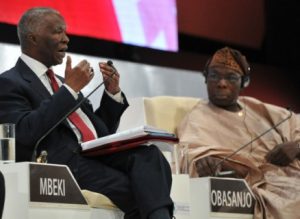
Otherwise, Mbanefo was a replica of Obasanjo who appointed him as Permanent Representative to the UN in New York. Both of them didn’t give a damn. But because Nigeria doesn’t have a New York Times or a BBC to capture the drama of its foreign policy, much of the drama experience what Thabo Mbeki calls the loss of the ownership of the African story. And before anybody says I am revealing South African state secret, this can be found in the 2004 journal article titled “Setting the Agenda for News Coverage in Africa” published in Ecquid Novi African Journalism Studies, (Vol.25, No. 1). Global media platforms have tried for Nigeria but their primary commitment is to their owner countries. So, loss of ownership of the African story is a valid assertion. But for partly the loss of that ownership, no Nigerian would have forgotten Obasanjo’s drama with John Howard, the Australian Prime Minister in February 2002 in Canberra over Zimbabwe. Obasanjo literally dressed him down. And it was in front of the global media already in the country ahead of the first meeting of Commonwealth Heads of Government after 9/11 and which Queen Elizabeth was attending. And Howard was not the only one Obasanjo fixed his gaze. Even as a critic of Obasanjo and for which I have no apologies, his tenure had a pack – himself, his first foreign minister (Sule Lamido who overwhelmed the BBC Hardtalk show in November 2002) and an Mbanefo, amongst others.
 I have gone to this length to show that the mediascape is filled with thorns. Sometimes, the thorns are planted by people with a score to settle. At other times, it is by sheer ignorance of the already published stuff from which a particular snippet has been drawn. It could also be a problem of media literacy just as it could arise from fear of one’s shadow. It is an overdetermined problem but it is such that should Intervention make reference to the late Chief Awolowo never eating egg at breakfast, some of our antagonists will read that as revealing state secret. Yet, that is the story along with a picture of Chief Awolowo’s breakfast table shortly after the 1979 presidential election which gave the defunct Sunday Times its highest sales figure. It seems that people hardly remember anything past. Or something has happened to people’s psyche that a harmless, unattributed snippet used in a manner promotional of someone or an event is read upside down. Ability to develop crocodile-thick skin and move on is part of the survival strategy. It is recommended to Bwala.
But some parts of this piece point to the poverty of the arrangement of the media component of the Presidency in Nigeria. Again, apart from Obasanjo/Atiku who sent their media advisers to the US to retool, no other president has done that. Yet, the spokesperson for the president of Nigeria is, without being arrogant, a spokesperson for the black world even if only because this is the only country in the world with the highest concentration of blacks. Second, Nigerian foreign policy is structured by an uncommon altruism – it doesn’t give with the right hand and retrieve with the left hand. It sacrifices its own soldiers, money and time for others. The spokesperson must thus be someone who can articulate a sitting president within this larger canvas, irrespective of whether s/he is peaking from Pretoria, Brasilia, London, Moscow, Canberra, Rome, Ottawa, DC, Beijing, and where else. Great if Bwala’s current experience puts the idea of reconfiguring that office on the agenda of his next post-disaster session with his boss.