Barely a month after an iroko in the African literary forest fell, a reference to Ngugi Wa Thiongo, there has been the fall of another iroko. He is Charles Nnolim, a foremost critic in African Literature.

Prof Nnolim in a not so recent pix from The Sun newspaper
Prof Nnolim died in Portharcourt. His age at death is not very clear but estimated at mid to late eighties. He remains one of the finest in the discipline as far as criticism is concerned and, according to Prof Chijoke Uwasomba of the Obafemi Awolowo University, Ile-Ife who has familiarity with Nnolim’s works, he left an impressive imprint that is fascinating and worthy.
Prof Nnolim’s passing is the fall of an iroko in so far as literature exists only because there are literary critics. They give the ‘literary’ life only after they are done with it.
Nnolim is a product of Alvan Ikokwu College of Education of the old, capping his intellectual height with a PhD from the Catholic University in the United States of America and returning to Nigeria in the thriving and tempting atmosphere at the time Nigerian universities were seen as the place to be. He landed at the University of Port -Harcourt. It is not immediately clear if he landed before or after Prof Claude Ake, another star who also came in from the United States but through Tanzania.

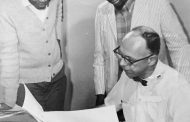
Nnolim at work
It didn’t take long before one of his works titled “Achebe and the Source of Arrow of God” put him at loggerheads with Chinua Achebe whose Arrow of God is considered in some quarters as actually the first of Achebe’s trilogies ahead of the award-winning Things Fall Apart which has defined Achebe’s ouvre. In other words, he accused Achebe of plagiarizing the story of his uncle whose story he said Achebe used to publish Arrow of God. The near – impossibility of proving the originary in social analysis would have made such an allegation a beautiful site for expanding our knowledge of the Igbo imaginative space if his allegation were pursued to a logical conclusion.
Those like Prof Uwasomba who are familiar with his works in teaching African literature insist he was a scholar with all the gravitas. That is what most of those who studied and/or encountered literature in the early 1980s would say, that being when Nnolim became one of the forest critics of African Literature. With many major interventions, this can hardly be contested, amongst them being Approaches to the African Novel; Teaching African Literature Today; Literature, Literary Criticism and National Development.
Intervention will follow the demise of Prof Nnolim as reactions come, particularly how he is situated in the literary domain and which of his works are considered most impactful and why.