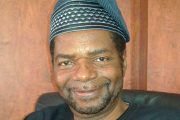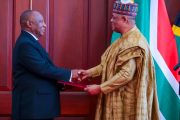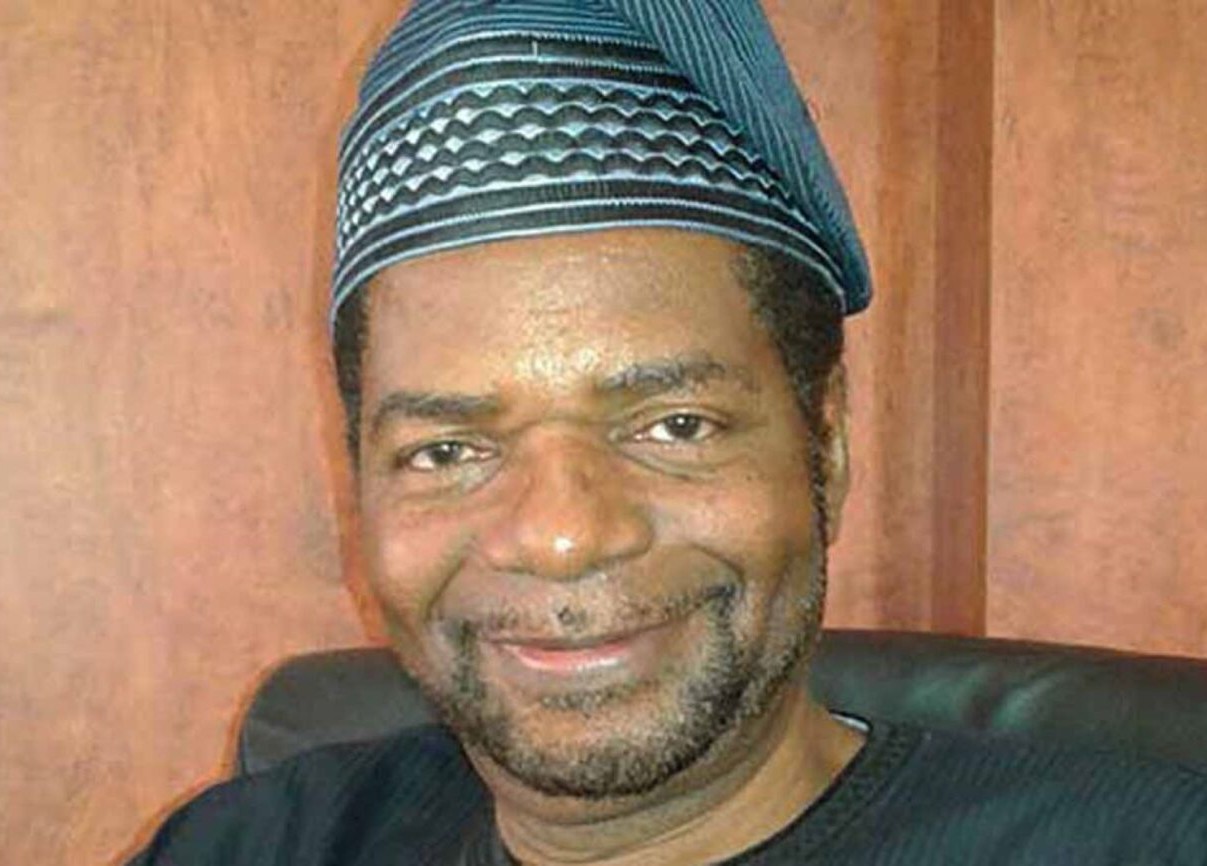
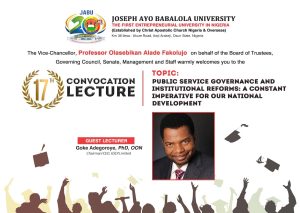
The 17th Convocation Lecture of the Joseph Ayo Babalola University has come and gone but the issues raised at the event remain on the table for reflection. Although not a career academic, Dr. Goke Adegoroye, who delivered the lecture is a source of many pools of knowledge whose claims offer stuff for academic reflection. It cannot but be so when a retired Federal Permanent Secretary speaks, particularly one who began his public service as an academic and rose to the rank of Senior lecturer at the Obafemi Awolowo University, Ile-Ife before transitioning to the mainstream federal bureaucracy from where he retired seventeen years ago. While there, he was the pioneer Director General of the Bureau of Public Service Reforms (BPSR) and then Director General of the Federal Environmental Protection Agency (FEPA). Since retirement, he has devoted his time to reflections on the leadership question in Nigeria’s Public Service and the broader governance challenge, themes on which he also writes.
At the Convocation Lecture the topic of which is ‘Public service governance and institutional reforms: A constant imperative for our national development, Dr. Adegoroye privileged the question of what Nigeria must do to realise its immense potential and achieve national transformation. He found the warrant for this in how a number of countries which either stood at the same level or behind Nigeria at independence have now left Nigeria behind. On his list of such countries are Singapore, South Korea, Malaysia, Indonesia, China, Botswana and Mauritius, amongst others.
He dismissed geology or geography as credible explanation for this, insisting it is governance, institutions of governance, the people who run them, and their values. No nation can rise above the capacity, integrity and efficiency of its public service, he argues. The answer, he adds, cannot be found necessarily in leadership because, as he says, a country may elect a visionary leader and craft brilliant blueprints, but if the machinery of government – the MDAs and regulatory frameworks – remains weak, compromised or archaic, aspirations would remain a mirage.
 He seeks to illustrate this claim by asserting that as a president does not need to know how to fire a gun before being confident of victory at war, so also might a Chief Executive need not know how to write a memo before being assured that government runs smoothly. Assurance, says he, is the essence of bureaucracy, adding, on the strength of his experiential knowledge of the public service, that Nigeria’s reforms had never lacked tools but had lacked integrity.
Nigeria, according to him, has imported the best systems and passed the right laws but lacked the character to make them work. Tracing how the country got to its present state, the speaker tracked the Nigerian public service to British colonial legacy, growing from treaties with kingdoms like Lagos in 1861, Opobo in 1884, and Bonny in 1886, to the Amalgamation of 1914. He said the machinery was never designed for national development but for colonial law and order and resource extraction. He pointed out that early reforms from Harragin Commission of 1945 to Adebo Commission of 1971 focused on wages and Nigerianisation, while the Udoji Commission of 1972-1974 was perhaps the most consequential, recommending a unified, professional, results-driven service led by management by objectives.
His lamentation is that the vision was overshadowed by the massive Udoji Awards wage increase that fuelled inflation and turned attention from productivity to salary agitation. He described the Dotun Phillips Reform of 1988, as Decree No. 43 of 1988, which sought professionalism and decentralisation, as the most maligned reform. He said it made the Minister rather than the Permanent Secretary the Accounting Officer, tied careers to ministries, and decentralised appointments, opening floodgates for all manner of appointments into top directorate levels, clogging career progression and creating a succession crisis that took twenty years and a Tenure Policy to resolve.
Regarding the over two decades of democratic reforms, Dr. Adegoroye recalled that in 1999, former President Obasanjo inherited a nation low on UNDP Human Development Index and a distressed public service. He cited the Presidential Policy Advisory Committee led by General T.Y. Danjuma which described the service as having metamorphosed from a manageable, compact, skilled body into an over-bloated, ill-equipped, poorly paid, rudderless institution lacking morale and beset by arbitrariness and corruption. He said within his first week, the then the president convened a retreat with Permanent Secretaries facilitated by Prof. Adebayo Adedeji and later extended to over 1,900 directors. He disclosed how, as a Chairman of a working group then, he had presented data showing bureaucracy expanded by about 350 per cent between 1960 and 1999 while population grew by about 150 per cent.
The response was a wave of reforms, highlighting Monetisation Policy of 2003 which converted fringe benefits into cash allowances, a move he described as the most successful reform in cost saving and curtailing corruption before adding SERVICOM launched in 2004 as what he calls a compact for service delivery. The Bureau of Public Service Enterprises (BPSR) was also established in 2004.
He outlined emphases of successive administrations. These were due process and rule of law under the Umaru Yar’Adua administration, with the Tenure Policy of 2009 clearing the logjam of Decree 43; the transparency focused version under Dr. Goodluck Jonathan through its FOI Act 2011, IPPIS and GIFMIS aimed at flushing out ghost workers; the financial centralisation through TSA under President Buhari but, regrettably, PSR 020909 operational rule of Tenure Policy was suspended and deep structural change including fuel subsidy removal, fiscal consolidation and automation under President Tinubu.
Dr Adegoroye, however, asked whether President has the bureaucracy with the competence and professionalism to drive such ambitious change.
He first cites World Bank Worldwide Governance Indicators showing Government Effectiveness hovering around minus one on a -2.5 to +2.5 scale, from -0.92 in 2016 to -1.01 in 2024 and placing Nigeria 40th among 53 African countries, far behind Mauritius, Botswana and Rwanda. Then he cites Mo Ibrahim Index which scored Nigeria 45.7 in 2024 below African average of 49.3. on this bases, he avers that public service reforms have not delivered impressive results over the years
The failure he attributes to four sources: administrative bottlenecks with a paradox of over-bloated yet under-capacitated service; drainpipes of corruption and patronage; political interference; and cultural and technological lag. He added a little-understood structural flaw: the absence of a single office coordinating the entire public service as the Constitution does not empower the Head of Civil Service of the Federation to coordinate federal public service because that office has no authority over police, military, intelligence, anti-corruption, revenue or paramilitary services, and its reach is limited to officers appointed by FCSC, less than ten per cent of federal workforce. Neither the Secretary to the Government of the Federation (SGF) arbitrate excesses of boards in parastatals. He likened the federal public service to a jungle of lions, tigers, hyenas, buffaloes, cattle and goats, in which the Head of Service is a cockerel parading comb and wattles expected to bring order among animals with fangs and horns.
 Describing reforms as constant imperative, he argued that reform is not a destination but permanent journey because pressures never stand still: economic pressures demand moving beyond oil and sharp revenue institutions; broken social contract demands rebuilding trust where citizens pay bribes for passports and pensions; demography demands it with median age about eighteen confronting slow analogue administration; and changing world demands agile government against pandemics, supply shocks, and need for AI and data analytics, warning that rigid bureaucracy would leave Nigeria behind.
He observed that like other resilient public service systems Nigeria has four requisite pillars – digital transformation, meritocracy, structural rationalisation, and independent oversight – the missing link was integrity. On digital transformation, he said IPPIS and TSA and automation of passports and tax filing were introduced to remove human bottlenecks where corruption thrives, yet complaints persist, emails go unanswered, loopholes are created, and “network is down” became subterfuge.
On meritocracy, he said institutions speak of talent management but service must still be transformed from dumping ground for patronage into elite corps. On rationalisation, he said there was much talk of Oronsaye Report approved in 2024 yet agencies continue to grow as sponsoring bills became badge of legislative performance. On oversight, he said Auditor-General must be fully equipped to sanction MDAs delaying audits, and EFCC and ICPC need tenure security and financial independence, citing costly international disputes like Mambila Hydroelectric Power Project as reminders of integrity failures. He opined that integrity enables office holders to act independently by upholding national interest. He recalled stating at retirement in 2010 that if President is to function under current practice where ministers seek his approval on matters within their levels of competence and jurisdiction, the President would require transmutation into hydra-headed President with at least fifty heads. He said frequent requests for approval smack of lack of confidence, search for alibi, or cover for untoward intent, and what is needed is commitment to oath to discharge duties faithfully in the interest of sovereignty and to do right to all without fear or favour.
He drove to conclusion by calling for the removal of structural and constitutional impediments on the offices of SGF and HCSF so that federal public service can be effectively coordinated; entrusting of the Office of SGF to individuals with distinguished civil service credentials rather than political prominence which would be in keeping with Sections 169 and 171 of Constitution situating office within Civil Service of Federation; giving the Office of Chief of Staff to President given proper constitutional recognition as third leg of bureaucratic tripod of Presidency and making merit non-negotiable in appointments.
Others are overhauling human resource management especially records, deployment, discipline and remuneration instituting leadership development on integrity; establishing the Federal Public Service Council to provide strategic leadership, strengthen inter-service cohesion and foster common purpose; launching a comprehensive national values reawakening to cultivate culture of integrity, ethical leadership, patriotism and selfless service where national interest takes precedence over sectional loyalty.
Asking rhetorically where next generation of reform leaders would come from, averred that they cannot be imported nor can they emerge spontaneously from broken structures but must be intentionally cultivated, thereby placing heavy burden on universities. He said in Nigeria today modern evils operate at three levels: crude level of kidnapping and terrorism; white-collar level of internet fraud, budget padding, over-invoicing and fake appointments; and level of AI misused to manipulate informed population. He identified the tasks for universities as follows: realign curriculum integrating data analytics, public sector economics, e-governance and AI into social and management sciences and move from memorising lecture notes to learning from real African cases so students know how to re-engineer ministry workflow; become evidence-based think tanks bridging research and policy, writing actionable policy briefs for MDAs and partnering to carry out diagnostics and performance audits serving as scientific conscience; and form character to produce new breed of ethical, value-driven innovative public managers.
Concluding his presentation, Dr. Adegoroye called for administrative revival which he believes new generation of reform champions who must be people of unquestionable integrity whose conduct reflects values they promote, must carry the torch forward. He said nations are transformed not only by ideas and policies but by exemplary men and women who give ideas life through character, sacrifice and service, and that Nigeria’s greatest need today is not absence of reform agendas but scarcity of credible reformers. He returned to where he began, recalling when God called young steamroller driver from Public Works Department and placed upon him mantle of revival, Apostle Babalola did not wait for environment to change, he stepped into the vacuum with transforming fire, challenged old strongholds and brought divine order where there was chaos, proving that one fully committed life can change the course of history.
He said his generation had played its part and was steadily departing from centre stage, and noted that the future now belongs to new generation of reform champions who must carry torch forward, who must be people of unquestionable integrity whose conduct reflects values they promote. He charged them to go forth as agents of renewal, to step into civil service, ministries, agencies, public policy, politics, private sector, technology and enterprise, entering every sphere armed not only with degrees but with entrepreneurial spirit, innovative mind and uncompromising commitment to moral excellence, to create pathways where others see bottlenecks, demonstrate transparency where others tolerate corruption, pursue excellence where others settle for mediocrity, innovate where others merely comply, and become architects of solutions where others complain. He urged them to let the fire of integrity, discipline, diligence and godly character received in Ikeji-Arakeji become transforming force wherever found, saying if they carry flame into institutions, businesses and communities, institutions will be strengthened, economy will prosper, and Nigeria will move closer to its God-ordained destiny among nations. He enthused that the machinery of State awaits their creativity, private sector awaits innovation, society awaits leadership, and charged them to go forth and serve, innovate, reform and lead, praying history records that their generation answered the call of duty and helped rebuild our beloved nation.