At the time Intervention pulled this story from Comrade ex-minister, Solomon Dalung’s Facebook walls, nearly 500 others had done so. That is the first surprise about since this same story appeared before about four years ago. It is either everyone has forgotten it is the same story or there is a quality of newness about the story every time it pops up on Facebook as to attract that readership. It could also be the contextualisation the ex-minister has brought into it. Anyway, Intervention too decided to reproduce it for whatever are the reasons why it attracts such a huge readership every time it appears. The story goes like this:
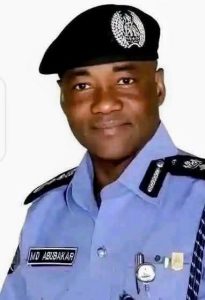
Ex-Compol for Lagos State who later became IGP
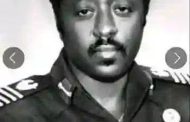
Not so many people would say they have never heard of Mohammed Dikko Abubakar, particularly those who followed developments in the Nigerian Police Force over the years. He is a former Inspector-General of Police who also served as Commissioner of Police in Lagos State.
I just came across a story attributed to him about an encounter he had with some police officers while serving as Commissioner of Police in Lagos, and I found myself reflecting on what the incident says about discipline, professionalism and leadership.
According to the account, Abubakar said he never joked with his job, particularly on Saturdays, when he would sometimes conduct unannounced inspections of police officers on duty.
On one particular Saturday, he woke up as early as 6 a.m., got into his Jeep and headed out. Along the way, he decided to make a surprise visit to some police officers to see how they were carrying out their duties.
But apparently, the inspection did not go quite as he had planned.
At a checkpoint along Herbert Macaulay Road, some young police officers stopped his vehicle.
One of the constables reportedly looked at him and asked:
“Young man, where are you going with your father’s car?”
The officer demanded his vehicle documents and driver’s licence. Abubakar told him his name was Mohammed, but the constable insisted that he produce his identity card.
Abubakar then asked the officer to show him his own identification first.
The constable had none, so he called his sergeant.
The sergeant also demanded Abubakar’s identity card, and he repeated the same request: let the officer show his own identification before he would produce his.
Apparently, the officers were not prepared to let the matter end there. They decided to take him to Yaba Police Station, Panti, to establish who he was.
And that was how a Commissioner of Police found himself being escorted to a police station by officers who did not know they were dealing with their own boss.
But the drama was far from over.
When they arrived at the station, Abubakar reportedly discovered that the only available parking space was the one reserved for the Divisional Police Officer. He parked there without saying anything.
The constable immediately protested, pointing out that the space belonged to the DPO.
Abubakar said he remained silent.
They eventually took him inside and presented him to an Assistant Superintendent of Police, who, according to the account, was wearing shorts.
The ASP asked him to come into his office, but Abubakar refused, insisting that he could not be interrogated by an officer dressed in casual home clothes.
The ASP reportedly became angry and attempted to pull him inside by force. Abubakar said he pulled him back as well.
Then the ASP looked closely at his face.
Suddenly, the situation changed.
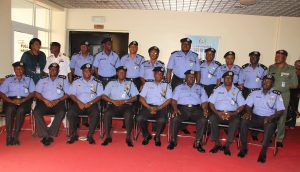
An intervening set between the old and the new Nigeria Police!
Meanwhile, an elderly man at the station reportedly went into the DPO’s office and checked the photographs of police commanders displayed on the wall. When he realised that the man they had brought in was the Commissioner of Police, he allegedly jumped through a window and ran away!
The sergeant who had brought Abubakar to the station was still trying to understand what was happening until another police officer reportedly approached him and whispered:
“Hey, this is the CP!”
And just like that, the people who had been demanding identification from him discovered the identity of the man they had taken into custody.
According to the story, even the ASP in shorts followed through the window and ran away!
One can only imagine the confusion at that station.
Abubakar said the Area Commander later called him to find out what had happened. He was informed that the DPO, the ASP and other officers involved had been detained, awaiting his instructions.
But what troubled Abubakar most, according to the account, was not the fact that he had been stopped or taken to the station. It was the level of indiscipline, inadequate training and lack of professionalism he believed the incident had exposed.
He wondered how an officer could stand at a checkpoint without an identity card and still exercise the authority to stop and detain members of the public.
He also questioned how an ASP could be handling official duties while dressed in casual home clothes.
Now, this is where the story becomes more than an amusing account of police officers who failed to recognise their own commissioner.
Because beneath the comedy is a serious question about the way institutions function when those entrusted with authority do not observe the standards expected of them.
Think about it.
The officers had the authority to stop a vehicle. They could demand documents. They could question a motorist and, where the law permitted, take further action.
But authority is not the same thing as professionalism.
The fact that an officer has the power to stop you does not mean that the officer should operate without identification, training or proper conduct.
And the fact that someone refuses to be intimidated does not automatically make that person a suspect.
Of course, police officers cannot be expected to know every senior officer by face. A Commissioner of Police should not have to be recognised before the law is properly enforced. In fact, that is precisely the point.
The same standards should apply whether the person standing before an officer is a commissioner, a minister, a trader, a student or an ordinary citizen going about their business.
If the officers had done everything properly, the fact that the motorist was their commissioner should have made no difference to the procedure.
That is what makes the story worth thinking about.
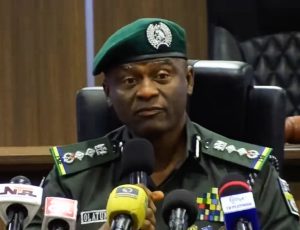
Intervention hears that though suave and relaxed, the incumbent IGP is no less a toughie!
Sometimes, the real test of an institution is not how its officers behave when their superiors are watching. It is how they behave when they believe nobody important is watching.
And this is where leadership comes in.
There is a difference between sitting in an office receiving reports about how an institution is performing and stepping outside to see things for yourself.
Reports can be polished. Briefings can be carefully prepared. Subordinates can tell their superiors what they believe those superiors want to hear.
But an unannounced visit can reveal things that official reports may never capture.
At the same time, supervision alone cannot correct every institutional problem. Proper recruitment, training, equipment, accountability and consistent enforcement of professional standards are equally important.
A leader cannot be everywhere at once. The institution must be capable of doing the right thing even when the person at the top is nowhere around.
Perhaps that is the most important lesson to take from this story.
A good institution is not one that behaves properly only when the boss is watching. It is one in which people understand their responsibilities and uphold the rules even when nobody is watching.
Because if an institution needs the presence of its most senior officer before its personnel can remember the standards they are supposed to uphold, then the problem goes far beyond one checkpoint.
And if the story is anything to go by, the most revealing moment was not when the officers discovered who they had arrested.
It was everything that happened before they discovered his identity.
This account is attributed to former Inspector-General of Police Mohammed Dikko Abubakar and has been reported by Nigerian media outlets.