By Fred Akpowo Jacob
Idoma land has no factories, no refineries, no major commercial enterprises. What it has is politics. In the absence of any real industrial base, political office has become the primary source of wealth, employment, and social mobility in a region of roughly 3 million people in Benue State, Nigeria. This article uses the concept of prebendal politics, which is centred on the idea that public office exists to be exploited for private gain to examine how political competition has become the main economic activity in Idoma land. It looks at how cultism and thuggery have become employment pathways for unemployed youths, how the Idoma elite constantly fragments through internal struggles over patronage, and how all of this has undermined the collective development of the region. The conclusion is uncomfortable: Idoma politics feeds on itself, and until there are other industries, it will remain the only industry that matters.

Barrister Godwin Obla, vocal and notable philanthropist from Idomaland
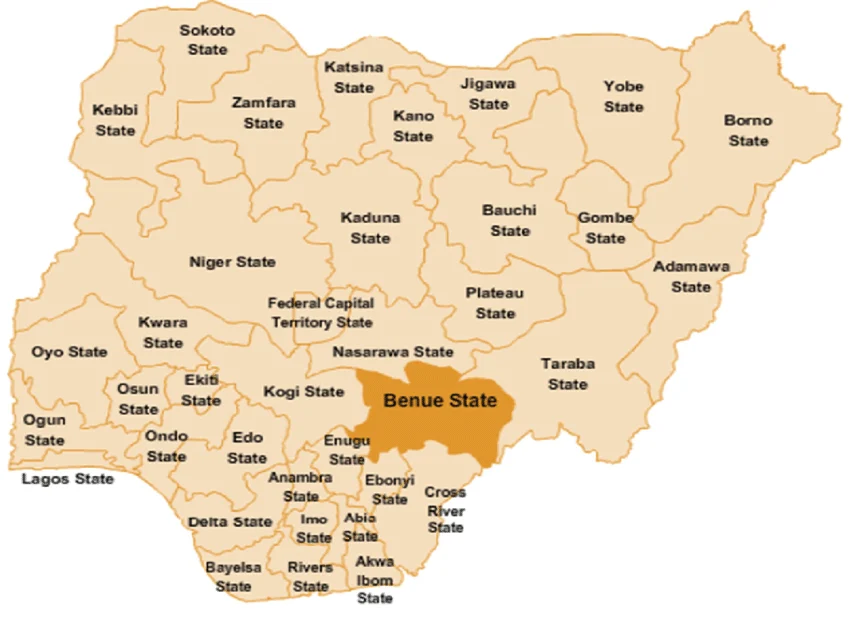
Idoma land sits east of the confluence of the Niger and Benue rivers. It is home to the second-largest ethnic group in Benue State. The region has produced two Senate presidents, federal ministers, military governors, and diplomats. Yet despite all of this, many Idoma communities still lack basic infrastructure. Insecurity is widespread. Development has stalled. Chief Godwin Obla, a senior advocate described the situation plainly: “poor infrastructure, insecurity and underdevelopment.”
How is it possible for a people with such national political visibility to remain so deprived at home? The answer lies in understanding that politics itself has become Idoma land’s principal industry. There is no manufacturing to speak of, no extractive industry, no significant commercial enterprise. Political office is the primary avenue for economic accumulation. The Idoma political class operates in a system where public office is valued not for what it can deliver to the people but for the rents it provides such as the positions, contracts, and patronage resources that can be shared with loyalists and kept for personal enrichment.
In the quest to understand this ugly phenomenon in Idoma land the theoretical framework of prebendalism will give a clear bird eye view. prebendalism is a concept that Nigerian political scientists have long used to describe how politics works in this country. The term simply means that public offices are treated as personal or communal assets to be exploited for private gain. Elections become investments. Governance becomes the mechanism for recovering those investments through access to state resources.
This framework fits Nigeria well because the Nigerian state operates as a centralized, distributive federation reliant on natural resource revenues. Power flows downward from the executive center. Control over state power directly determines control over public resource distribution. The political environment is high-stakes and transactional.
The result is predictable. Electoral competition becomes extremely expensive, creating pressure on political actors to recover their campaign expenditures through access to public resources. Immediate patronage is prioritized over long-term public policy. Governance is reduced to a struggle over federal revenue allocation.
For Idoma land, this is not just an academic observation. In the absence of industrial alternatives, the prebendal system does not merely supplement other economic activities. It replaces them entirely. Politics becomes the industry.
Idoma land’s economic foundations are primarily agrarian. Otukpo, often described as the most developed place in Idoma Land, relies on civil service, commerce, agriculture etc. These are the foundations of a petty-bourgeois economy, not an industrial one.
This economic context creates a specific political dynamic. When formal employment opportunities are scarce, political office and the patronage networks it sustains becomes the most reliable path to economic security. The civil service in Otukpo is not merely an administrative apparatus. It is a system of political appointments and clientelist relationships.
The consequence is that Idoma politics attracts individuals not because they want to implement policy agendas but because they want access to the state’s distributive mechanisms. State institutions focus on sharing resources rather than building productive capacity. In Idoma land, this is not a deviation from the norm. It is the central organizing principle of political life.
The relationship between political competition and youth violence in Idoma land must be understood within this prebendal framework. When politics is the primary industry, the jobs it creates are not primarily bureaucratic positions. They are roles within the informal security and enforcement apparatuses that political competition requires.
This pattern is not unique to Idoma land. It has been documented across Nigeria’s Fourth Republic. In the Niger Delta, the mobilization of youths as political thugs during the 1999 election was identified as an immediate cause of militancy. Cult leaders, political thugs, criminals, and self-centered individuals entered the political space. The same dynamic applies, with modifications, to Idoma land.
The Idoma signification of Benue State through the cultural rebirth platform
For unemployed Idoma youths, political patronage offers what the formal economy does not: income, status, and a sense of purpose. The politician needs enforcers, mobilizers, and occasionally intimidators. The youth needs to survive. This exchange is not incidental to Idoma politics. It is constitutive of it.
The consequence is the proliferation of cultism and thuggery not as deviant subcultures but as rational economic strategies within a system where political competition generates demand for such services. The youth bulge, combined with limited access to startup capital and educational mismatches, creates a pool of individuals for whom political violence represents one of the few available livelihoods.
This dynamic also explains the cyclical nature of the problem. Once youths are integrated into political violence networks, their skills and relationships have limited transferability to peaceful economic activities. The political industrial complex reproduces its own labour force.
The Idoma political elite is not a unified class acting in collective ethnic interest. It is a collection of individuals and factions competing for access to the same limited pool of prebends. This fragmentation is both a cause and consequence of the prebendal system.
An earlier article in which I documented Idoma elites intra class struggles analyze and identified internal fragmentation among Idoma political leaders as a key factor in the community’s failure to produce a Benue State governor since 1976. Time and again, when the opportunity for an Idoma governorship has appeared on the horizon, the elite have fractured, splitting along personal rivalries, generational fault lines, and competing ambitions. Multiple aspirants emerge during elections, dividing the Idoma voting strength and weakening their bargaining power.
This fragmentation is not merely a failure of leadership. It is a structural feature of prebendal politics. In a system where political office is the primary mechanism for accumulation, the stakes of winning and losing are extraordinarily high. The difference between holding office and being excluded is not merely political. It is economic survival. Under such conditions, elite cohesion becomes difficult because the rewards of defection, receiving patronage from the winning faction can exceed the rewards of loyalty to a losing collective project.
The chieftaincy disputes that periodically erupt in Idoma land reflect this same logic. Traditional authority becomes another arena for political competition. The Och’Idoma’s office itself has been subject to accusations of government manipulation. When every institution becomes a potential source of rent, every institution becomes contested.
The prebendal system operates through patron-client relationships that link political elites to broader networks of dependents. Idoma land’s integration into this national system creates specific vulnerabilities. Idoma politicians operating at the state and federal levels depend on relationships with dominant Tiv political elites or with factions within those elites for their positions. Senator Titus Zam acknowledged this reality when he stated that Idoma political advancement depends on a conscious elite consensus to concede power by the Tiv majority.
This dependency creates incentives that systematically subordinate Idoma development interests to elite accommodation. When Idoma political leaders must maintain patron-client relationships with dominant elites to preserve their access to prebends, the cost of advocating forcefully for Idoma interests whether in terms of development resources, security, or political representation becomes the risk of losing patronage.

Dr Sam Ode, a former minister and incumbent Deputy-Gov of Benue State, the highest political office attainable by the Idoma in the state since creation
The exclusion of Idoma communities from a US Congressional delegation’s visit to Benue State in 2025 illustrates this dynamic. Idoma youth activists noted that the omission reflected both external neglect and silence among Idoma political leaders. One activist whose name I won’t mention observed that Idoma representatives are afraid to speak, believing that when they speak, they will be removed from their positions. This is the logic of prebendal dependency of which political survival depends on not disrupting the patron-client relationships that provide access to office.
The cumulative effect of these dynamics is the systematic subordination of collective development to individual accumulation. When politics is the primary industry, and when access to political office depends on maintaining patronage relationships that discourage assertive advocacy, the region’s development needs become negotiating chips rather than priorities.
The contrast between Idoma political prominence and local deprivation is stark. Idoma sons have held national positions of considerable authority such as the Senate Presidents, federal ministers, military governors, diplomats but yet many communities in Idoma land still suffer from poor infrastructure, insecurity, and underdevelopment. As the senior advocate Godwin Obla stated, national political prominence, however impressive, is not a substitute for local development.
This gap is not accidental. It reflects the prebendal logic by which political office is valued, that is for the rents it generates, not the public goods it produces. The Idoma politician who secures a federal appointment or legislative position gains access to contracts, appointments, and influence that can be distributed to clients and retained for personal benefit. The community that provided the political base for that politician receives symbolic representation but not structural transformation.
The absence of recognized IDP camps in Idoma land, despite recurring attacks, exemplifies this subversion. When Idoma communities suffer violence, the political response is constrained by the same calculations that govern all other political behaviour: will advocacy risk patron relationships? Will it disrupt the distribution of prebends? The community’s suffering becomes another factor to be weighed in the calculus of elite accommodation.
The political industrial complex in Idoma land is self-reinforcing. Politics as industry generates demand for thugs and enforcers. Prebendal competition fragments the elite. Fragmentation weakens collective bargaining power. Weak bargaining power perpetuates dependency on external patrons. Dependency discourages assertive advocacy. And the absence of assertive advocacy ensures that the conditions generating the original demand for political employment such as unemployment, underdevelopment, insecurity remain unaddressed.
Breaking this cycle requires recognizing that the problem is not merely the quality of Idoma political leadership but the structure of incentives within which that leadership operates.
For Idoma land specifically, the path forward suggested by Godwin Obla, the establishment of a permanent, non-partisan Idoma Political Consultative Forum capable of building consensus before elections to me, represents one institutional response. Such a body would not eliminate prebendal incentives, but it might create space for collective action that transcends individual accumulation.
Ultimately, however, the political industrial complex will persist as long as politics remains the most profitable industry available to Idoma elites and youths alike. The creation of alternative economic opportunities such as Advocated during the Centenary Plus lecture by Arc Sonny Echono and Chief Godwin Obla, DAJ through investment in education, infrastructure, and productive enterprises is not merely a development goal but a prerequisite for political transformation. Until Idoma land has industries beyond politics, its politics will continue to function as an industry.
The author is a public intellectual