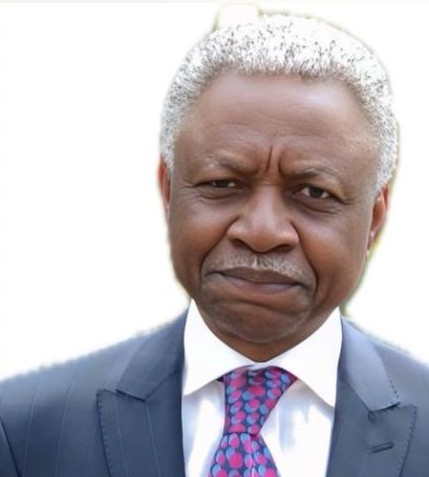
Come May 5th, 2026, Amb Eineje Onobu is presenting his memoirs. His memoirs may turn out to be inviting. He wasn’t just a diplomat but one of their best between the 1970s and the mid-2000s.
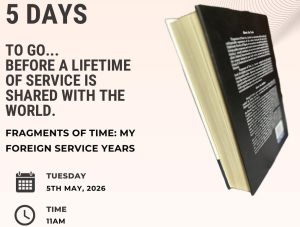 For many years, in spite of his minority identity, he was a foreign policy player, serving in the most crucial foreign policy conception rooms and enactment points. What story has he got? Is it the type that the eggheads in the department of Political Science in top Nigerian universities will rely upon to teach Foreign Policy Analysis classes to third and fourth year undergraduates and postgraduate students? How much does his text clarify on the key enduring questions in Nigerian foreign policy?
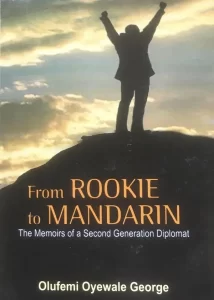
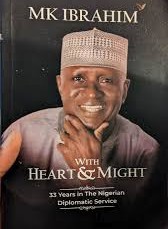
His memoir, by Intervention’s recollection, will bring to three, similar works in recent years. There was Amb Femi George who published his under the title From Rookie to Mandarin: The Memoirs of a Second Generation Diplomat. Amb George was followed by Amb MK Ibrahim’s With Heart and Might in 2022. There has been reference to Dr Martins Umoihibi’s memoirs too. Dr Umoihbi retired as a Permanent Secretary of the ministry a decade or so ago and was a diplomat’s diplomat in his own right.
 An ambassador once argued that retired diplomats have produced a trove of memoirs in a protest note to Intervention. A trove might be true but then only suggesting a turn in the practice of account-giving by foreign policy operatives. Hitherto, the paucity of account-giving by operatives of the main foreign policy institution – the Ministry of Foreign Affairs – constituted a problem in its own category. The career diplomat completes his time in foreign policy and goes home without writing a line of his or her time in diplomacy. It is worse with the Ministers of Foreign Affairs who rarely wrote anything comparable to similar accounts that become compulsory stuff on the reading list of Foreign Policy Analysis classes in global front rank universities.
Compounding that is the way the drama of Nigerian foreign policy does not play out in the Nigerian media enough. Where it does at all, it is not more than descriptive and more entertaining than substantial.
There is no agreement on where the problem comes from. Some people locate the problem in what they see as the conservatism of the Nigerian establishment in their belief that journalists cannot keep secrets. In other words, the Nigerian journalist is contrasted with the Western journalist, for instance, who is told beforehand that the president of the United States, for example, is dashing to a war front but embargoed till he is already on his way back. And there will be no breaches.
 Others argue that the problem is that correspondents covering foreign affairs are rarely trained in the grammar of foreign policy analysis, an area which is not amenable to the generalist training of most journalists.
The resulting situation is such that those who want anything deep on Nigerian foreign policy beyond story telling has to go to foreign newspapers. The tide might be turning but not so fast and still not so comfortably. Memoirs constitute a different angle to foreign policy articulation.
And there is still this dimension. When Robert Kaplan published his “The Coming Anarchy” securitising the entire West Africa or when Christopher Hitchens published his “African Gothic” running into over 11, 000 words, they became stuff of Foreign Policy Analysis classes in top Western academies.
The expectation is that what Onobu, George, MK Ibrahim and others have published will be echoed in a similar fashion in Nigeria’s diplomatic missions, universities, the media and whichever discursive spaces equipped with the conceptual infrastructure to turn them into representational practices capable of materialising Nigeria in the world. Then the memoirs would have become productive of discursive power which is what now rules the world.