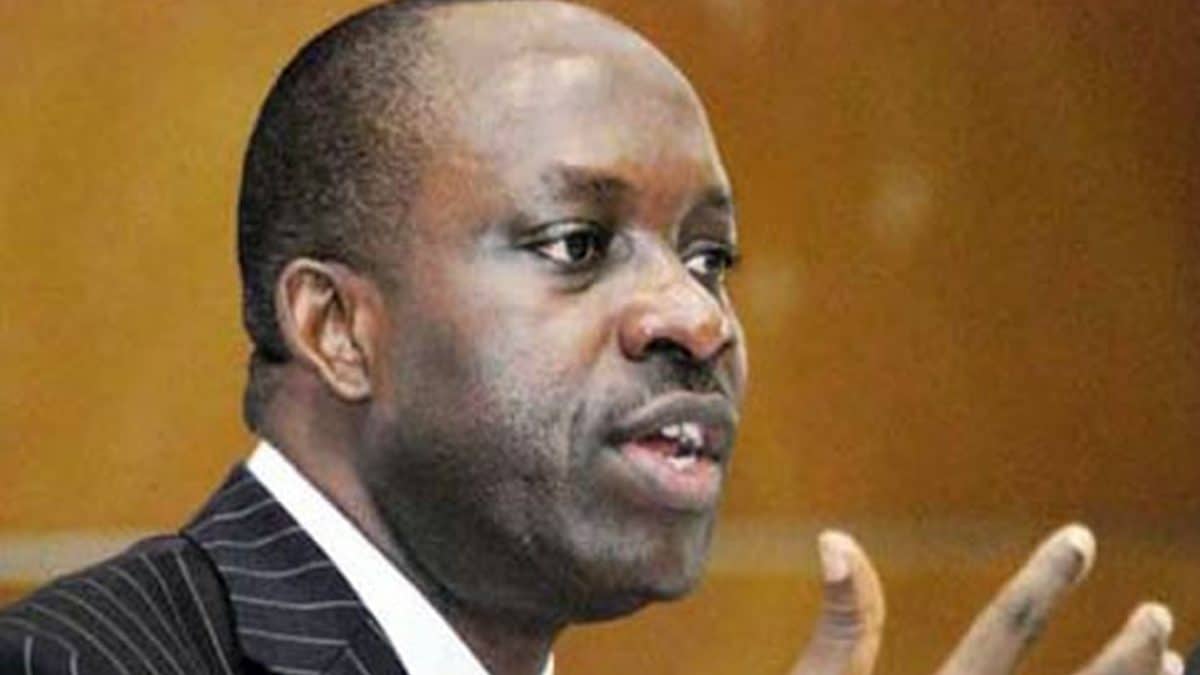
By Adagbo ONOJA
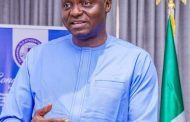
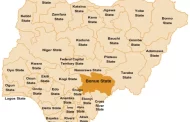
This piece is about a puzzle rather than a campaign for, against or criticism of Prof Charles Chukwuma Soludo who was sworn-in a week ago for his second term of four years as governor of Anambra State of Nigeria. The puzzle arises because Soludo is not a typical politician. He is or is largely thought of as an example of the intellectual in politics and thus sent a signal to a wider audience beyond his Anambra State in reappearing on the scene for governorship of the state four years ago. Like Chief Stephen Lawani, Senator Aminu Tambuwal or Kano Emir, Muhammadu Sanusi 11, all of whom left the federal scene to operate at the state level at different times, Soludo’s too was puzzling as he should have been operating at the federal level. It was thought he set out to set a record at the state level as a launching pad to the federal, typical of the come-back kid. Otherwise, he had accumulated so much he should be operating at the federal level.
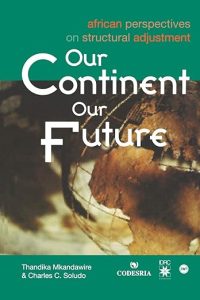
Soludo @ it much, much earlier!
One, he was an activist of some sort as a student at the University of Nigeria, Nsukka. He was not of the radical bent but, at least, he wasn’t a stranger to reaching consensus through argumentation. That is a very scarce quality in Nigerian politics today because of redefinition of loyalty as subservience. Two, he had made it big in global academia. In 2013/4, he was one of the only two Nigerians one sighted on a few reading lists on modules dealing with Africa at the University of Warwick’s Politics and International Studies (PAIS) Department. He didn’t just do that, he taught in several Western universities and published elaborately, with some of Africa’s best and brightest, one of them the late Prof Thandika Mkandawire. Three, he had opportunity of serving in two crucial positions: Chief Economic Adviser to the Nigerian president and later, Governor of the Central Bank of Nigeria (CBN). Four, in 2006, he delivered an address at the University of Benin where, amongst others, he said the world was waiting for Nigeria as the next country to achieve China scale transformation. That is a statement comparable to George Washington’s in the late 1770s that “However unimportant America may be considered at present, and however Britain may affect to despise her trade, there will assuredly come a day when this country will have some weight in the scale of Empires”. American has been an empire, warts and all. In that pronouncement, Soludo was setting himself apart from the very pedestrian politicians promising or listing boreholes, plastering of schools, improving electricity supply, mere consulting clinics and similar deliverables when they should have been talking about transformation. It was what I wanted him to elaborate in January 2016 when I met him at Daily Trust Dialogue in Abuja but he said the clean copy of the speech had received so much responses and been over flogged. But I have kept the speech in view. Even Soludo’s review of Nasir el-Rufai’s Accidental Public Servant showed leadership. In the said review of the book in a ThisDay back page column, he focused on questioning the methodology, thereby transcending pedestrian approaches to book review. I don’t recall anyone else who looked at el-Rufai’s memoir from that perspective.
The totality is that, in him, came a complete package for transformative leadership. He may not be a typically bearded radical but had the pedigree of disagreeing with the IMF and the World Bank, going by Obasanjo’s testimony (which isn’t AI). Ability or disposition to query the two institutions is a great qualification for leadership throughout the old Third World. Only insecure and unpopular leaders need fear the World Bank. It is not everything the IMF and the World Bank do that are unacceptable but every correct “Third World” leader needs to be someone with the intellectual capability and political orientation to slug it out with IMF and World Bank operatives. Otherwise, he has sold his people.
Soludo, by Obasanjo’s testimony, never took kindly to IMF/World Bank’s enforcer role in Nigeria
In that context, starting at the governorship level must have been a stratagem in that his pedigree guaranteed a performance level so transformative as for him to be invited to higher or even the highest responsibility in leadership by acclamation. Even as elastic as the word performance can be in terms of meaning, it was assumed a Soludo should pass the test at a flying rating beyond contestation. As Chief Economic Adviser and CBN Governor, he was a global actor. His experience of the global and national sites of power and knowledge of how the world works put him at an advantage as far as exceptional performance within the shortest time frame is concerned. That is a performance rating so massive that Nigerians would close their ethnic, religious and regional binoculars in voting behaviour. It would be such that no one can rig Soludo out.
The foregone explains why his performance rating is a subject of concern for those keen on performance of intellectuals in government, whether indigenous to Anambra or not. The big question is: where can Soludo be located, performance wise, now? Is he a case of an overwhelming level of performance as governor of Anambra State? Has it happened, quietly? If no, could he still be warming up? Would Thandika Mkandawire’s verdict be that Soludo has shown Africa the way forward if he were still alive and he came to visit to see what Soludo has done or is doing with power? Is it an interrogative verdict on him that Peter Obi gets a louder ovation than he does or is it the case that the higher ovation for Obi is a manifestation of a fantasmatic grip? Might Soludo signify the challenge of the intellectual in government? Might Soludo be a signal that it is an illusion to hope to find that heroic individual with that adequate sense of the transformative challenge? Why did Obasanjo who gave Soludo all the opportunities take to Peter Obi and not Soludo? Could choosing Peter Obi another of Obasanjo’s inexplicable ways rather than any serious commentary on Soludo? Might Nigeria be dealing with the shocker of a Soludo who is not a wonder boy as should have been the case? Could it be that the state government level is an impossible arena for the kind of magical performance being contemplated? Could Soludo’s problem be one of inadequate resources?
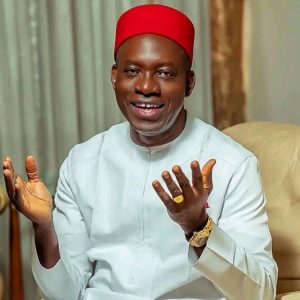
No contradictions in campaigning for Tinubu but where is the Soludo stamp on transformative governance?
Concern with Soludo’s performance is not a criticism of him as a person but a problem for Nigeria to think about, for two reasons. One, nothing will take Nigeria from where it is to where it should be without a leader with a transformative sense of the job. Even if there is a revolution with capital R, a qualitative leader would still be needed to run the show to towards the desired direction. Two, if a much younger, academically and experientially over-prepared Soludo is not turning out a wonder boy in transformative governance, Nigerians have to be interested in what might have constrained him or no one should raise objections against the dominance of the Atiku Abubakars, Bola Tinubus and so on. In other words, unless Soludo has actually raised the stakes in terms of transformative governance corresponding to the power of a state governor, interrogating his failure to do so is more urgent than the next election. The results of that interrogation will or should inform the voting pattern more than anything else. Only through a critical unveiling of Soludo’s constraints would Nigerians have come to terms with the truth or otherwise of Achebe’s ‘the trouble with Nigeria’ contention.
After all, there are many who would say that, in spite of his age, Atiku Abubakar will unite the country and should be voted for. In the context of funded separatist agitations, those who espouse such a position could have a huge audience in grip. In the same manner, there would be those who would say that a Tinubu should be allowed his two terms, a very plausible argument. These are positions that would not fly if there are politicians whose performance is so transformative a leap as to be individuals for whom Nigerians are ready to die in defence of their transition to the presidency (not necessarily in 2027). In the context of the perceived magnitude of looting in contemporary Nigeria, Peter Obi has, from the fact of a clean EFCC bill of health, made a statement in this direction. Even for that alone, he deserves the relative popularity he has got. Peter Obi is, however, not as entrenched in the policy mill, administration, institutions and governmentality as Soludo. The paradox is a more entrenched Soludo but who doesn’t command the ovation that Obi commands. That is a big puzzle: how could someone of his education, exposure and involvement in actual management of power be overshot by Peter Obi who has operated more in business and governing only at the state level and is thus less entrenched?
There is something to be investigated here unless it happens to be the case that Soludo is a massive but silent achiever. Even that would still be puzzling because that will be a shocking failure on the part of a well-educated Soludo to not take seriously the very useful Heideggerian distinction between existence and being. In other words, it is one thing to be an achiever but another for the achievements to be so categorised in time and space or to be so constructed and communicated.
 Let’s Connect to the Source of the Puzzle
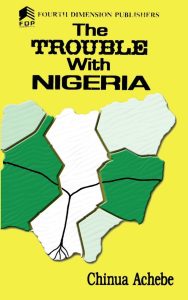
Let’s connect the foregone to where it is coming from. Chinua Achebe argues that the trouble with Nigeria is its lack of decidedly transformative leadership. The debate still rages on whether Achebe meant the hero from nowhere or collective elite leadership. I alone cannot resolve that debate here beyond pointing out that, in whichever sense we understand Achebe, leadership is, ultimately, reducible to one individual who, by a combination of factors, emerges as the master signifier for something (an ideology) or some ground (zoning) or a cabal or whatever the reader calls it.
The point is that once an individual then emerges as such, all eyes are on him to lead the debate as well as supervise the politics of transition – recruiting and training the field commanders especially the cadres who will spread the message; the technocrats who will administer; the professionals who will operationalise the models. The leader becomes the chief thinker, ideologue, chief mobiliser, the ultimate manager of contradictions, tension and conflict.
This is what Mandela did for South Africa. It is difficult to imagine what South Africa would be today if a Mandela were not there to argue for a ‘rainbow’ rather than a vengeance inflected post-Apartheid nation. The merit or otherwise of that cause of action is still being debated and only time may close the debate. Same can be said for Paul Kagame even with all the hostile labels thrown at him, especially about his methods. The point is that he presided over a transformative agenda that made inter-group antagonism a non-issue. I have already made reference to George Washington’s messaging in the late 1700s. By the testimony of Lee Kuan Yew, late Father of the Singaporean nation, Singapore was not meant to be. He wasn’t referring to Singapore’s abrupt expulsion from Malaysia. In the testimony under reference, he was referring to the unspeakable ethnocultural diversity.
The point in all these examples is that a semi-industrial society such as Nigeria cannot go anywhere if it has not been fortunate to have a transformative leader. Allison Ayida’s memorable verdict on this is worth recalling again and again, probably because he put it so beautifully and philosophically upscale He stated clearly that it was not a necessity but that it would have helped if Nigeria had been fortunate to have a populist leader, by whichever means. That is what he stressed in his 1990 booklet, The rise and fall of Nigeria. He has been very correct although Nigeria surpassed Ayida’s level but, perhaps, too briefly to be felt. That was Umaru Musa Yar’Adua, who was a conscious socialist. How much of socialism he still embodied by the time he became president now rests in speculation because his rule ended as soon as it started. The puzzle here is how Obasanjo, a consciously anti-socialist militariat made a conscious socialist a president of Nigeria. That is another debate there to sort out between those who insist it was the old soldier’s reward for his former deputy (Gen Shehu Yar’Adua); those who swear it was to punish Nigeria with a sick president and yet those who say it was a strategy of knocking out the zoning formula to parachute a southerner into power after doing so with Peter Odili got stuck. Whichever side one belongs, Obasanjo’s move there is the stuff of History.
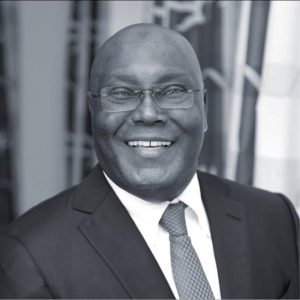
We cannot tell the Tinubus and Atiku Abubakars to get off the stage or begrudge the Peter Obis for getting all the ovation if the Soludos in our midst are not performing wonders!
As things are today, there are neither the Obasanjos whose own contradictions could lead them to the ideologically unthinkable idea of making a socialist president of Nigeria nor is any political party with leadership recruitment worth that practice. Above all, the few individuals who have, on their own, shown capacity for leadership are either no longer very active or dead. That is why no one is hearing a name such as a Prof Sam Aluko. A clear-headed Awoist, always full of punchy and instructive anecdotes and ever a tendentially-assured actor as to be never caught being an apologist of any dubious program or campaign. One can be sure there wouldn’t have been so much of the muddling through in Nigeria since 1999 were Aluko the president. We can infer that from when he was president-by- association. Only under him as such did Nigeria witness the situation where the Minister of Finance would say something and Aluko, as Chairman of the National Economic Intelligence Unit, would give a press conference contradicting and overwriting the minister. There was no way he could have been doing so without express approval from Abacha, hence the notion of him as president-by-association. Of course, Aluko is late.
No one is also hearing a name such as Lawal Batagarawa. He was the Permanent Secretary (Political) in the Abdulkadir Balarabe Musa administration in Kaduna State in the Second Republic. He was one of the unseen ideological operatives behind the throne. Even as hostile as the political environment in Kaduna State in the that Republic, the Balarabe Musa government laid the foundation for agrarian transformation of the state. It was serious enough for the opposition National Party of Nigeria (NPN) to be alarmed. According to Dahiru Maigana, Balarabe Musa had to be impeached, no matter what, because he was cruising to a socialist revolution in Kaduna State. Maigana, one of the more vocal members of the House of Assembly, told Radio Kaduna in one of his regular interviews that it was so because industrialisation was always a harbinger of the working class which is the bearer of a socialist revolution. Batagarawa’s role in that ‘agrarian revolution’ was seen as so substantial that NPN thugs were directed to and went to his house, turned the tap on and flooded the entire house, destroying books, documents, furniture and what have you. The tragedy today is that neither the ordinary Nigerians nor even the educated ones know or talk of people like Batagarawa. It is not clear if Batagarawa is still active in politics. Although the Aper Aku government in Benue State also achieved the same agrarian transformation feat in the 2nd Republic, Aku didn’t face a hostile legislature as played out in Kaduna then.
Senator Aminu Tambuwal was entering this list of politicians of serious national leadership rating before he surprisingly left the national scene to become governor of Sokoto State. Observing legislators-elect in 2011 telling their governors that they will still vote for Tambuwal to become the Speaker of the House of Representatives even if the governors opposed to his election moved their Government Houses to the National Assembly was a spectacle. The tempting inference was that this guy must stand for something as for legislators-elect to put their feet down for him against their governors. And that if he continued like that, he could be a symbol for managing diversity away from Nigeria’s numerous moments of contestation. It was thus a surprise when he left to be governor and subsequently disappeared altogether from the national scene. Now, it is not clear if he has regained the national mystique of 2011.
In this lies the danger when Prof Soludo’s tenure is still not a wonder boy’s story across Nigeria. If not a Soludo, then who? And if not a wonder boy scale of performance by a him, how does Nigeria get out of the culture of presidential candidates promising boreholes, clinics, electricity and the likes in the 21st century? Or, how does Nigeria escape politicians who are too scared to mention transformation? Something to ponder!